In this article
A world people have to live in
I want the people rebuilding this world to have reasons for what they do. The lore helps me work out what they need from each other.
CORPO begins after the systems people depended on have failed. There are corporations, freelancers, robots and a city under construction. Somebody still has to recover the parts, negotiate the work and get the water running. That's where a lot of this world's conflict comes from.
The Old World had real advantages. Servos did useful work. People could communicate across the planet and pay for things without carrying metal around. Those conveniences mattered, which makes losing them matter. I don't want the history to dismiss an entire civilization just because the story takes place after its collapse.
What actually happened
The Turning begins with Divinity attacking one military communications base. The group gives its servos an order to destroy other servos and powered equipment. That order escapes through the network and spreads worldwide in thirty minutes. The same connected infrastructure that made the machines useful carries the catastrophe.
The servos never select human beings as targets. People suffer because the machines destroy the systems keeping them alive. Water treatment stops. Food spoils. Medical care fails. Thirty minutes describes how quickly the order spreads. It does not mean the entire humanitarian disaster happens in half an hour.
Being precise about that changes the present-day world too. A surviving servo can threaten a working pump or an independent synth. People defend the equipment because they need it, and because being next to something a robot is destroying is obviously a terrible place to be.
A synth can say no
Servos and synths have different places in CORPO. A servo still has its broadcast hardware. Converting one into a synth means removing that assembly entirely and leaving a local service connection. The result acts independently. A synth can choose its work, negotiate an offer and refuse it.
I carry that distinction into the pictures and the writing. A contract discussion should look like a negotiation. A synth is a participant in the scene. If a description casually turns that individual into something a Corpo owns or remotely controls, it changes the world I've established.
The same question runs through the human factions. Corpos see corporations and voluntary cooperation as a way to rebuild. Lancers worry that concentrated corporate influence could eventually make their freedom to choose meaningless. They still need one another. A Lancer can disagree with a corporation and accept a contract from it.
The Tower is still unfinished
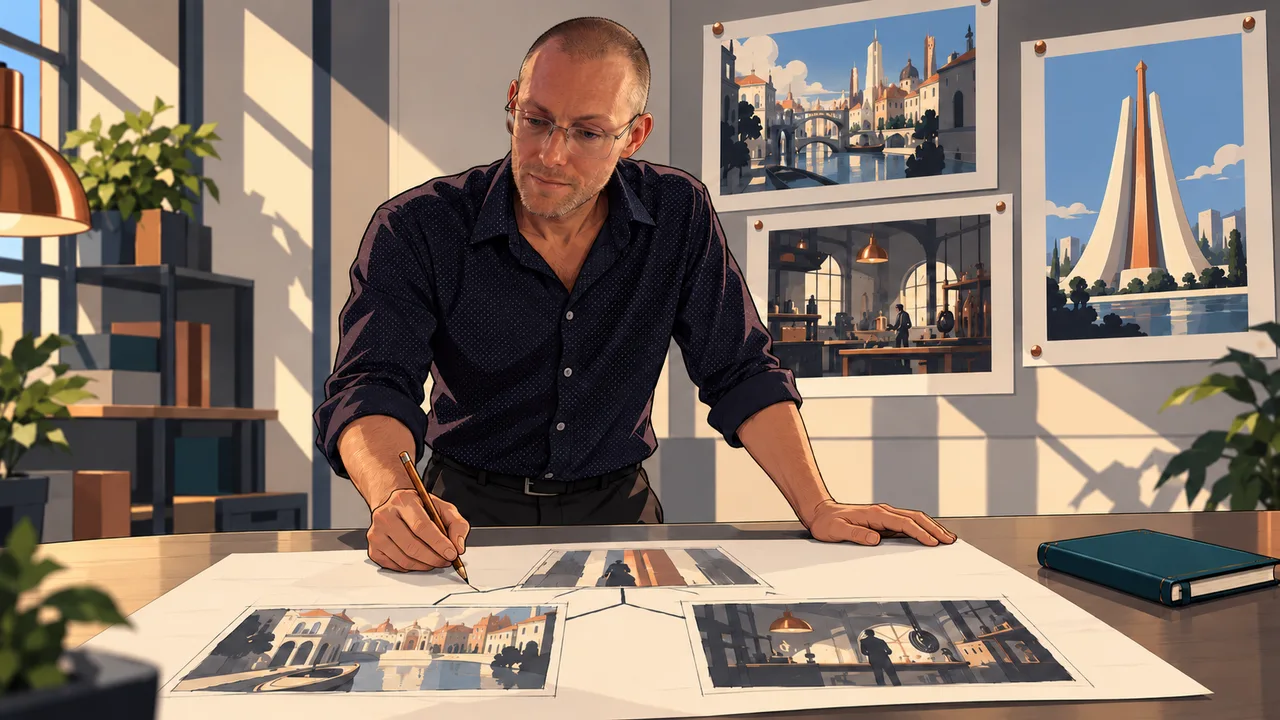
The Tower gives that disagreement a physical place. Corpos want to reconnect with surviving orbital infrastructure and isolated communities. Lancers propose a barrier against outside transmissions. Both positions come from the same history, and neither project is complete.
Its shape is specific: one taller copper center, with two ivory flanks. The center represents the individual. Cooperation and control stand alongside it, with control meaning agency over your own life. The Tower is also the CORPO mark now. I want that same form to remain recognizable in the world and on the site.
The game connects to this through the Corpo you develop. The corporation holds the operational assets and labor contracts for an assignment. Your lasting investment is in your own capabilities. Different assignments change the situation. The talent you bring is what carries forward.
Let people explore it
I want the wiki to let you follow whatever catches your attention. Start with a synth, look at the conversion process, then find the workshop where that work happens. Or start with the Tower and work backward into the history behind the argument. You should be able to understand an entry without reading the entire guide first.
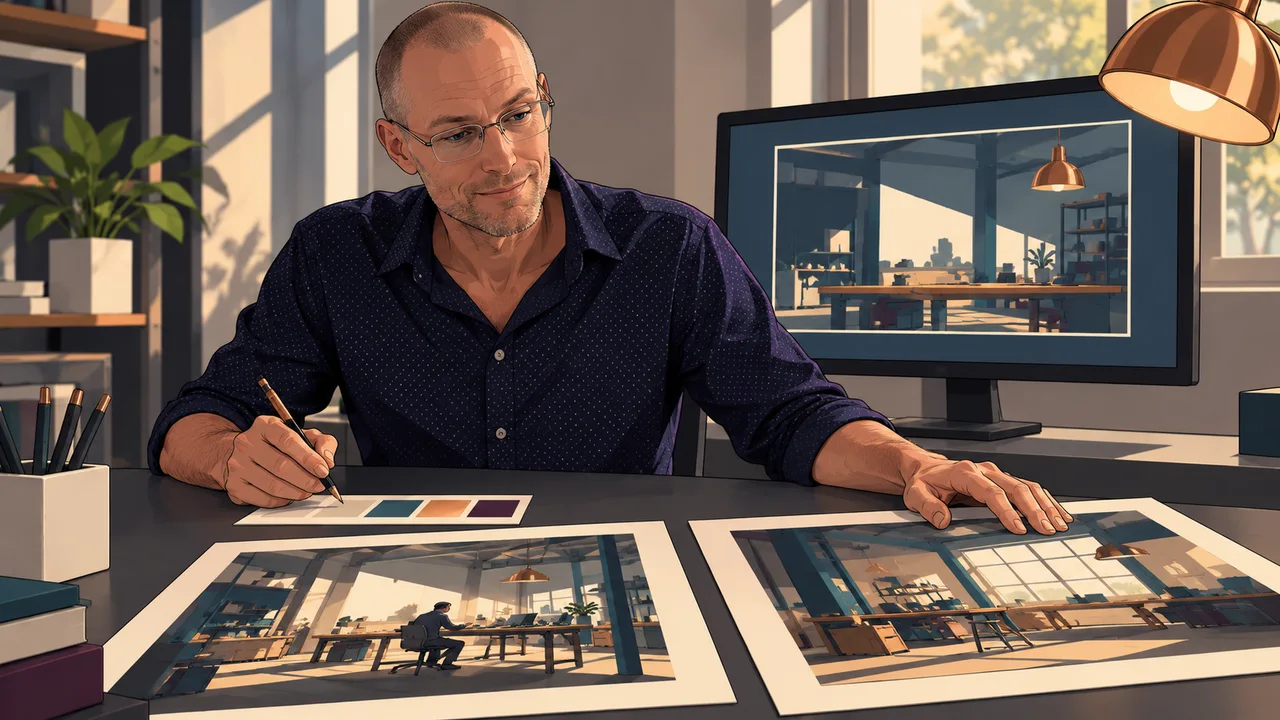
That also means giving ordinary places proper attention. A reclaimed window, a repaired service van or a working cold store tells you how people are rebuilding. Those details give the larger arguments something concrete to affect. It's a lot easier to understand what's at stake when you can see the place somebody is trying to keep open.
I’m the solo creator of CORPO. I want to teach business and independence through a game worth playing.
 Why I’m making it