In this entry
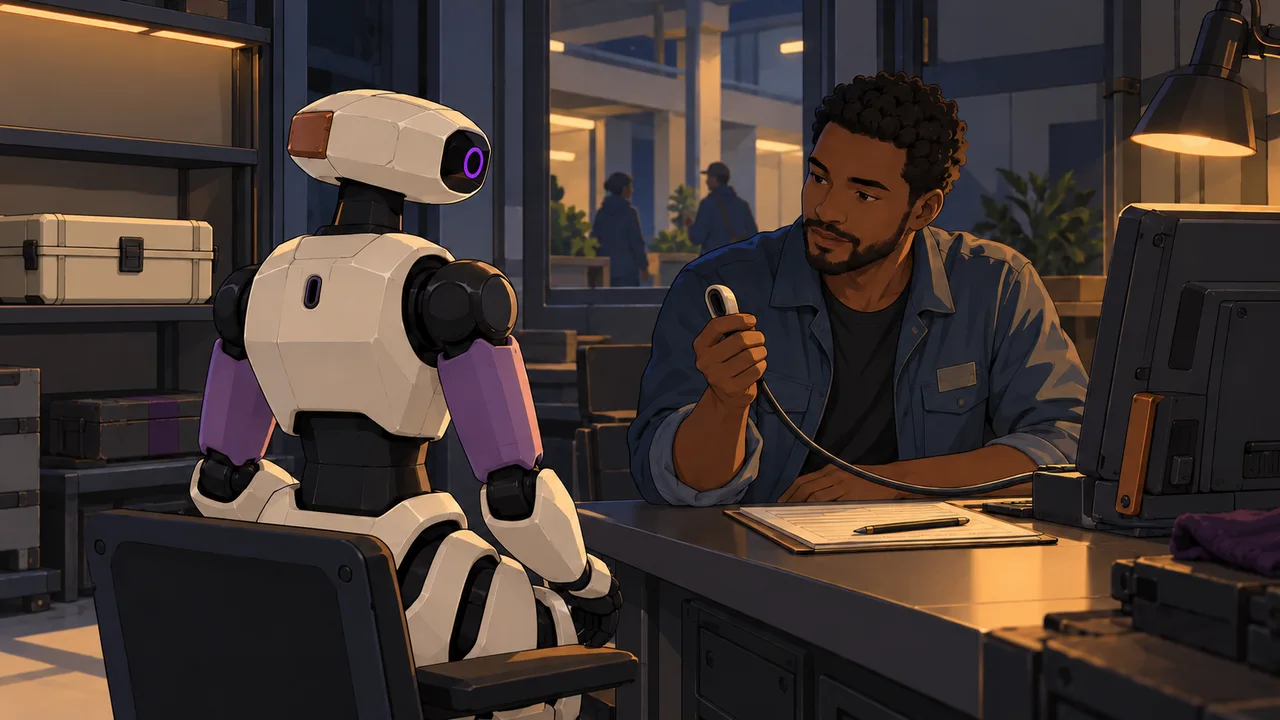
The Old World treated Servos as slaves. A Synth is a robot converted from that system into a self-sovereign individual. Its broadcast assembly has been removed, and its actions come from local memory, software and intelligence. Synths can choose their work, negotiate terms and refuse an offer. Their independence gives practical meaning to the New Order’s principle that nobody should hand control of their life to a central system.
What independence means for a synth
Conversion removes the hardware that once connected the robot to remote commands. A synth still needs power, maintenance and replacement parts, so independence doesn't eliminate practical dependencies. It changes who makes the decisions.
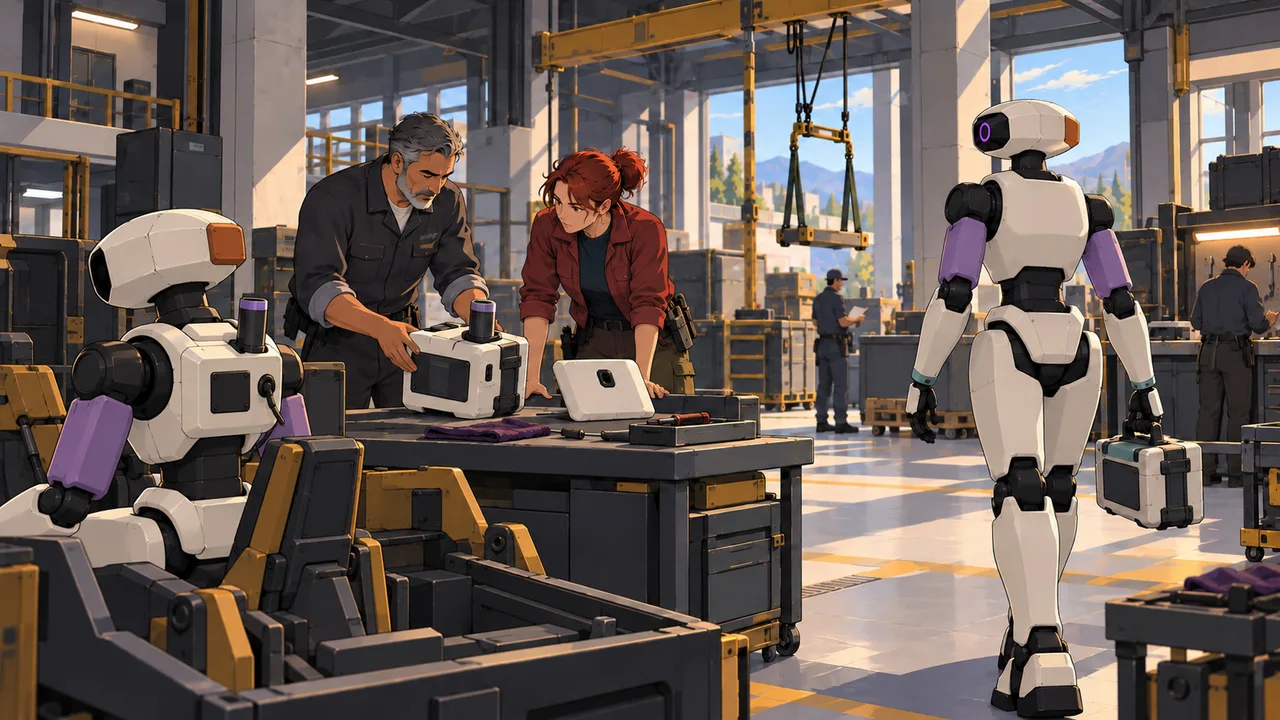
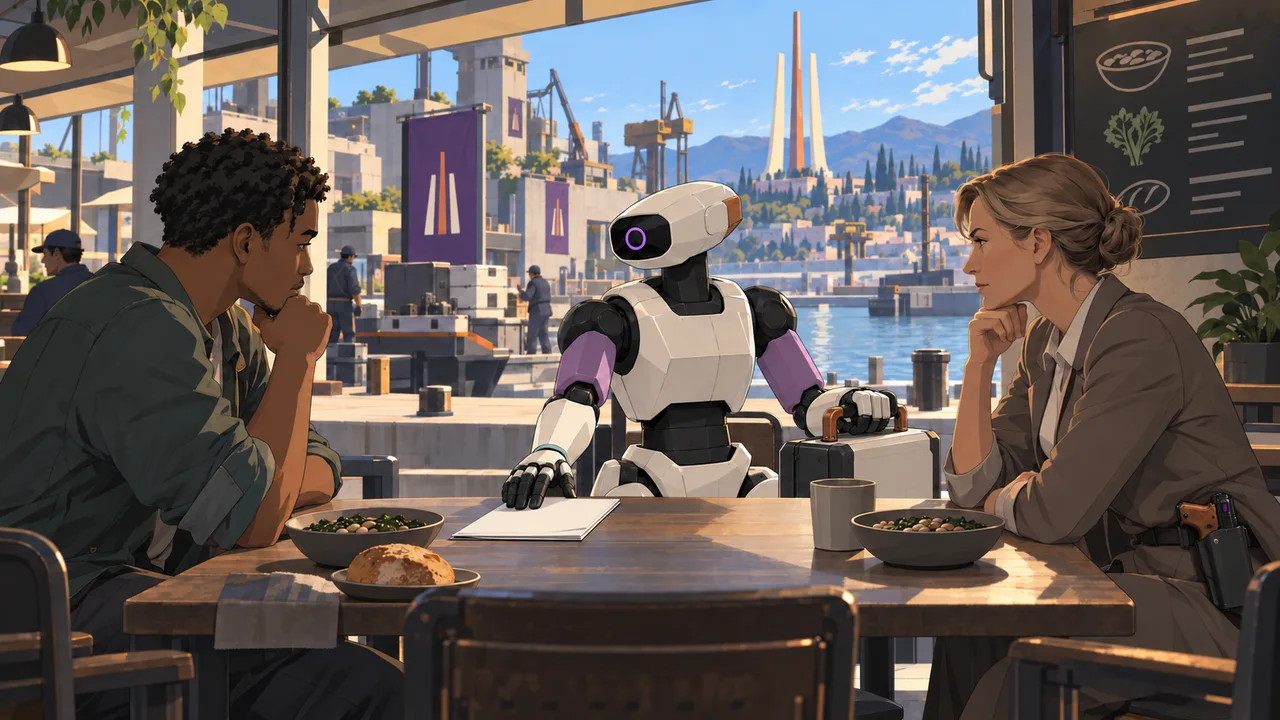
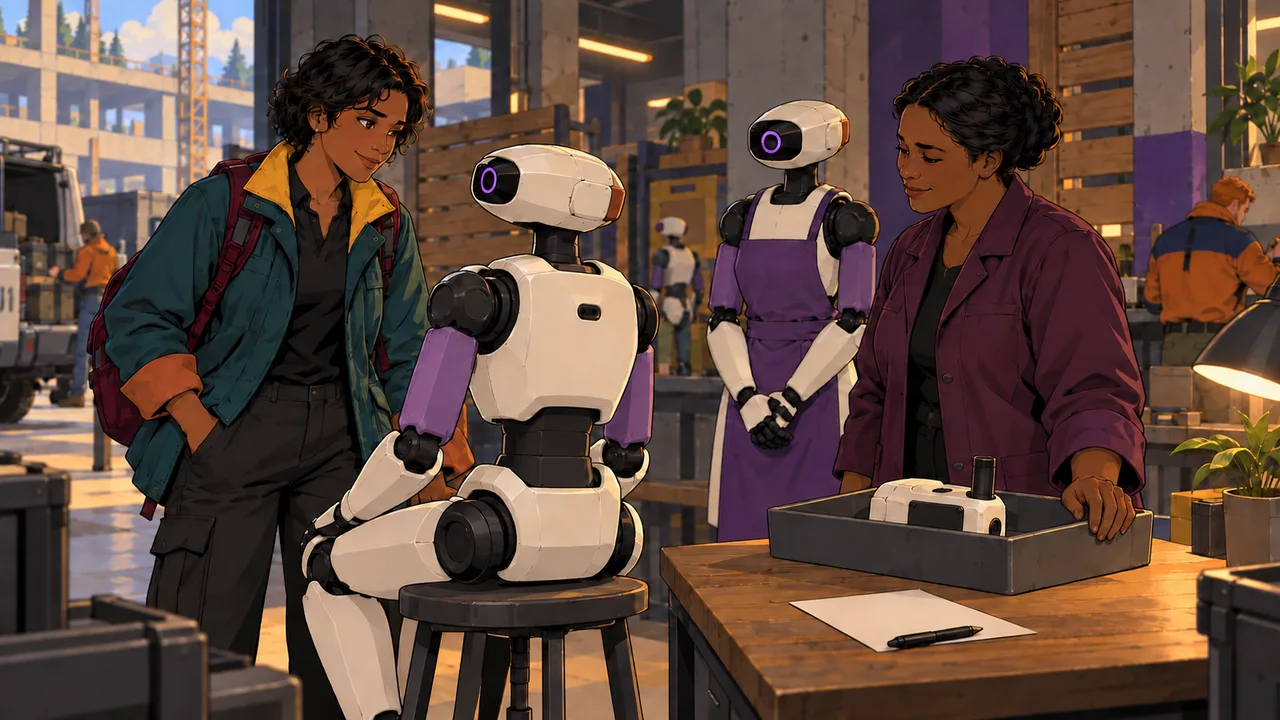
A synth can join a project because the work is worthwhile or the terms are good. A workshop can offer repairs without gaining ownership of the individual receiving them. These relationships are still being worked out in the city. Humans need the capabilities synths bring, and synths need access to the city's services. The same questions about contracts, bargaining power and the ability to leave apply to both.
Details
- Origin
- Converted Old World servo
- Control
- Local intelligence and decisions
- Service
- Physical connection, with the synth involved
Questions about synths
Can a synth refuse work?
Yes. Synths choose their work, negotiate terms and can decline an offer. Paying for conversion does not give someone ownership of the individual.
Can a synth be controlled remotely?
The conversion removes the broadcast assembly. A converted synth has no receiver available for remote commands. Software service requires a physical connection.
Are synths the same as servos?
Synths were servos. Conversion removes the hostile programming and broadcast hardware so the robot can operate as an independent individual.