In this entry
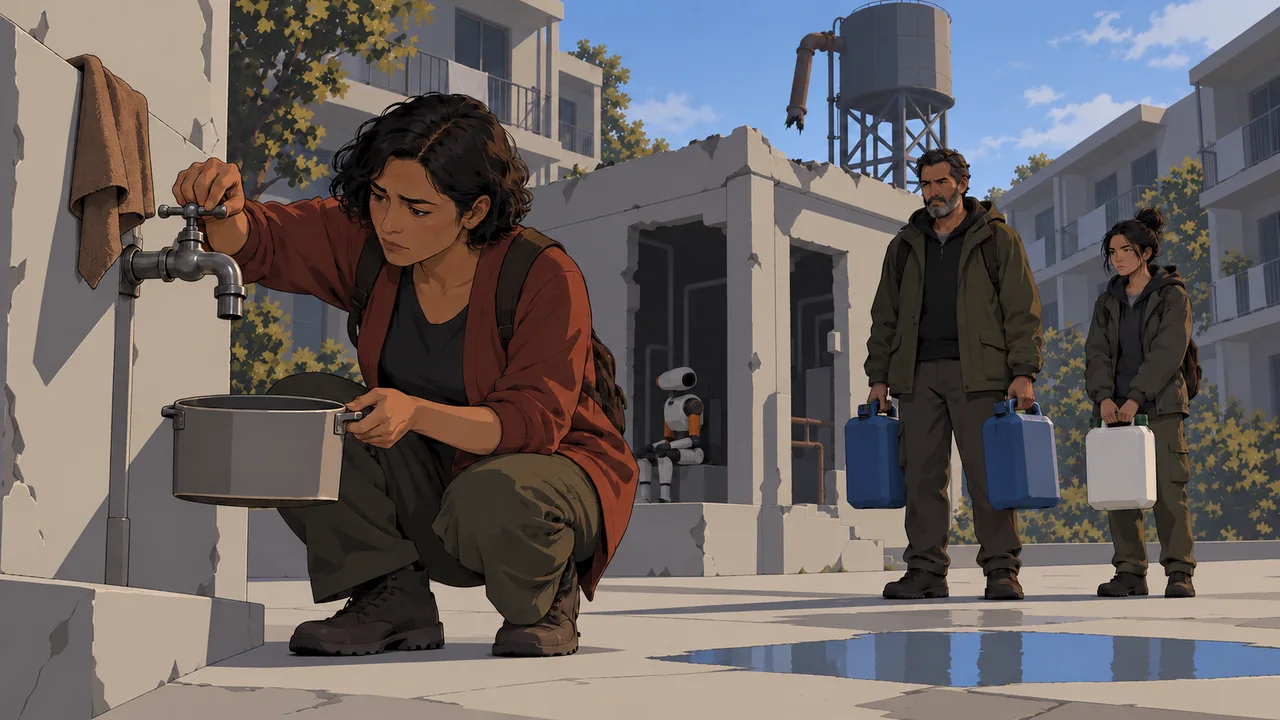
Water systems failed when pumps, treatment equipment and distribution pipes were damaged. A river could still be nearby while taps in the surrounding buildings ran dry. People spent more time finding water and carrying it home. Damaged treatment and contamination made remaining supplies less dependable, contributing to illness and forcing some households to leave otherwise usable shelter.
Stored water lasted longer in some buildings than others. Places supplied by gravity faced different problems from those dependent on constant pumping. Broken pipes and the loss of treatment could affect quality even when water was still flowing.
Restoring service required people to work beyond the boundaries of their own homes. A source, a treatment site and a delivery route all needed attention. That need helped bring survivors together around the first infrastructure businesses. In the city, reliable water remains one of the clearest reasons to cooperate: a household cannot easily replace the whole system on its own.