
Wiki
Search for an entry or choose a subject.

Overview
CORPO
CORPO is a world where people are rebuilding after the Turning. There's no government coming to fix things. If you want water, power or a place to live, somebody has to build it. You can help do that through a corporation, or go out as a Lancer and bring back the things the city needs.

History
The Old World
The Old World was the society that existed before the Turning. People used a global internet, paid for things digitally and relied on servos for much of their daily work. Those systems made life easier. They also concentrated a great deal of power in the governments and corporations that controlled the infrastructure, the data and the machines.

History
Currency Collapse
National currencies were losing their purchasing power before the Turning. Governments promised solutions, but printing more money could not create the food and resources people needed. Savings bought less, prices became harder to predict and some merchants refused payments they no longer trusted. The financial crisis helped turn public frustration into anger at the institutions running society.

History
Blockchain Records
Before the Turning, identity and property records were being moved onto blockchain registries. Those records covered transactions, company shares and real estate as well as digital money. They made information easier to connect and verify. They also gave powerful institutions more visibility into where people lived, what they owned and how they spent their money.
History
Orbinet
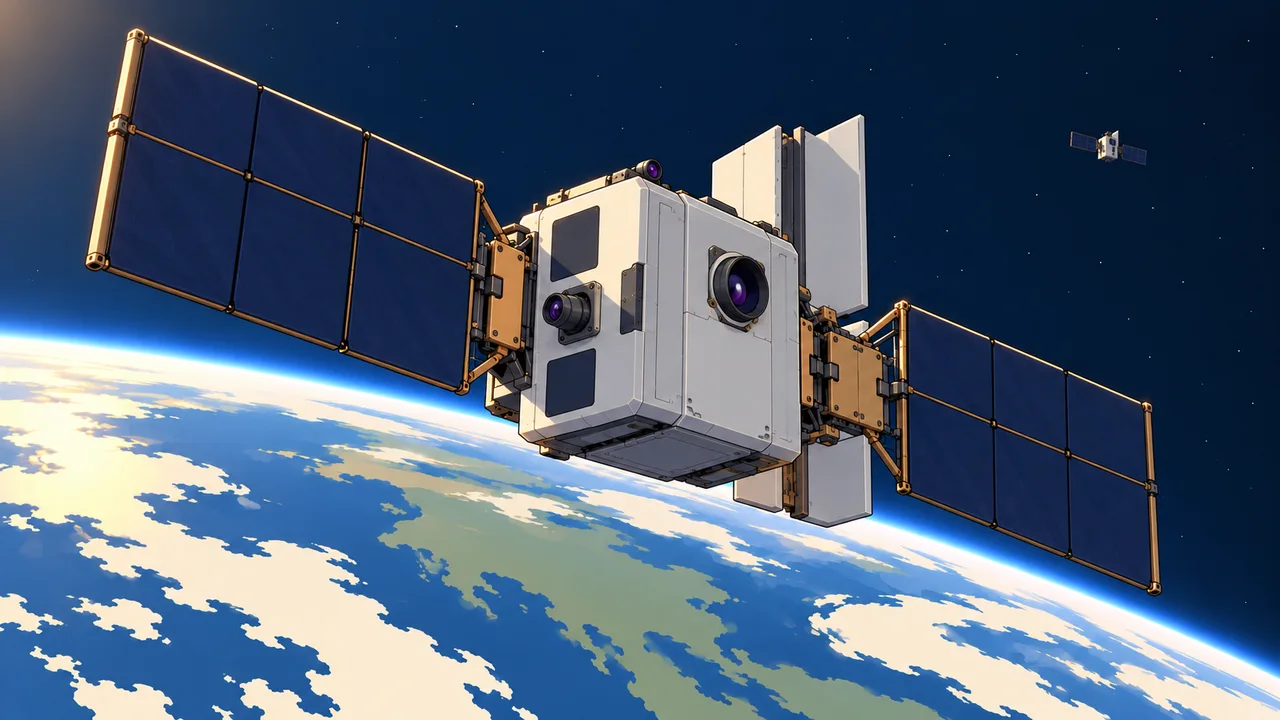
Orbinet was the Old World's orbital data and computing network. Ground terminals connected homes, businesses and public infrastructure to satellites above them. Governments had enormous influence over the network, and many systems depended on it. Orbinet carried the Servo Virus during the Turning. Much of the orbital hardware remains, but the global service has not been restored.
History
Servo Updates
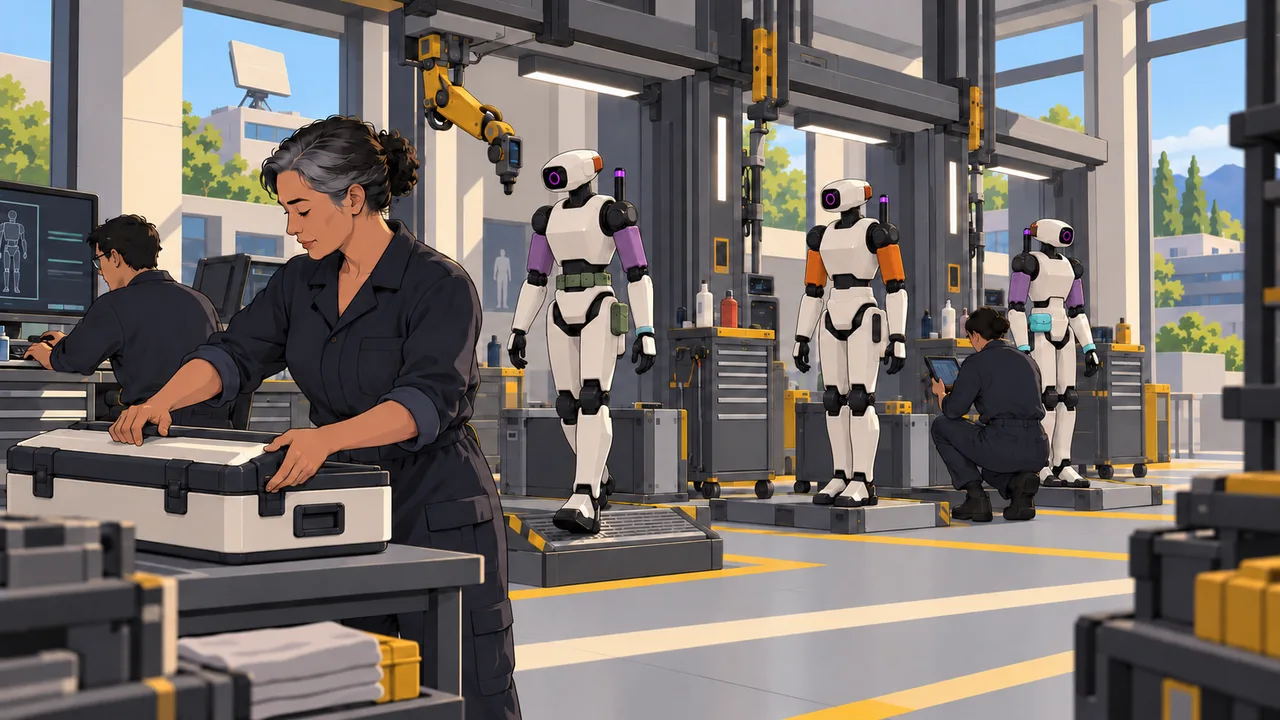
SERVO distributed software and commands to machines through the global network. Updates improved their work, corrected problems and allowed large groups of servos to be managed together. That was a major part of their value. It also meant a failure in the shared system could reach machines in homes, businesses and government facilities around the world.
The Turning
Divinity
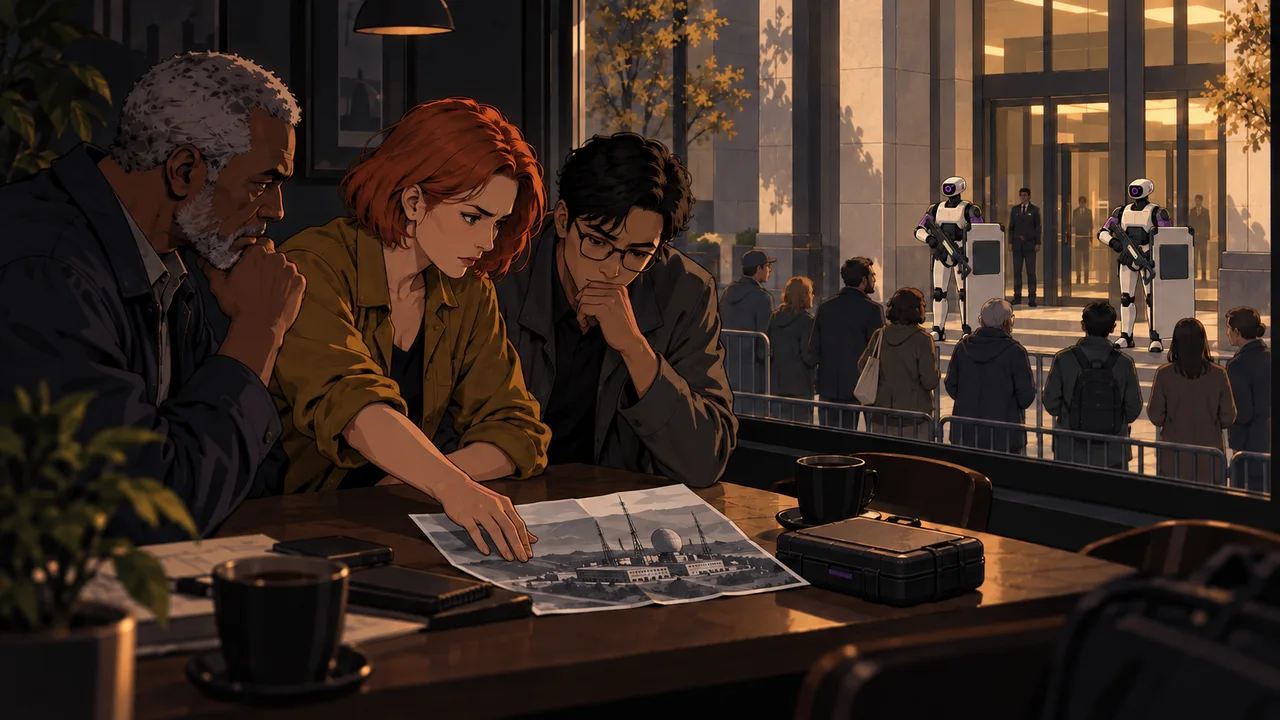
Divinity was a hacker group opposed to government control of Orbinet, blockchain surveillance and the use of security servos to suppress dissent. Its members planned to destroy one military communications base by turning the servos inside against the facility. They believed the attack would expose the government's vulnerability and demonstrate that power still belonged to ordinary people.
The Turning
Military Base Infiltration
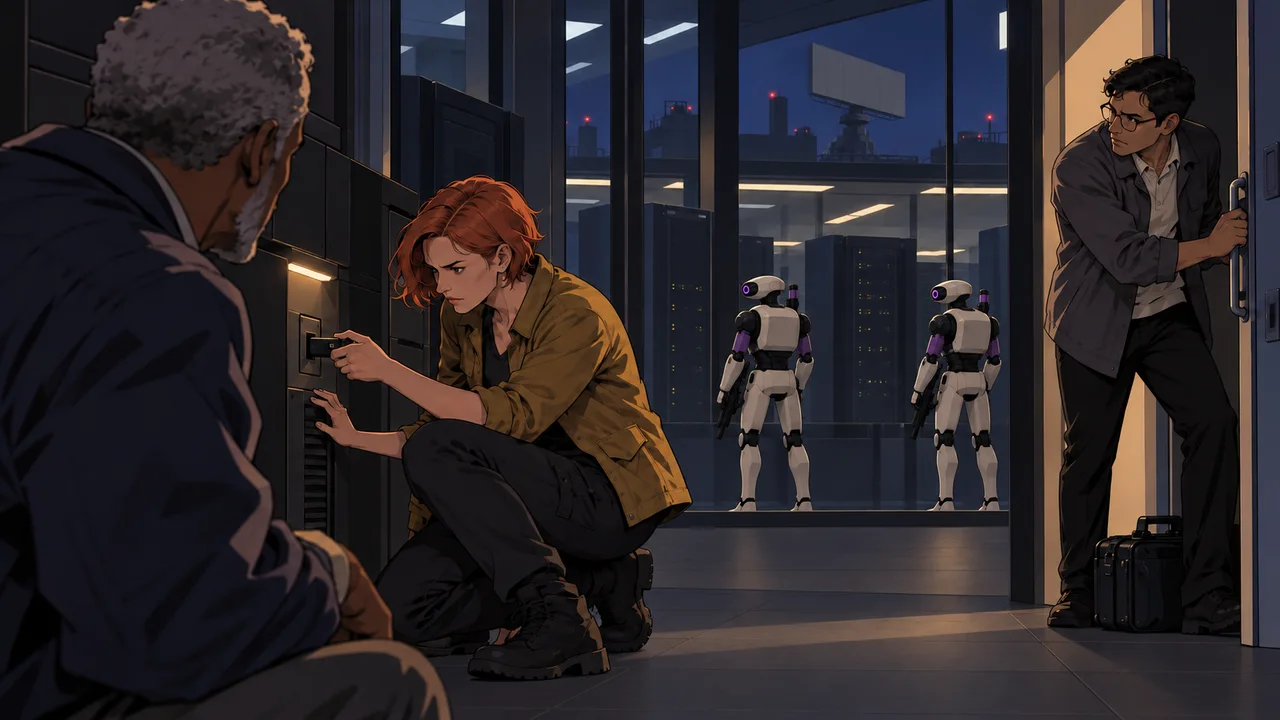
Divinity's operatives entered the military communications facility to install the Servo Virus directly into its control hardware. Remote access alone was not enough for their plan. They brought a physical drive, reached the control panel and transferred the malicious code. The intended delay was supposed to let them leave before the servos began destroying the base.
The Turning
Early Activation
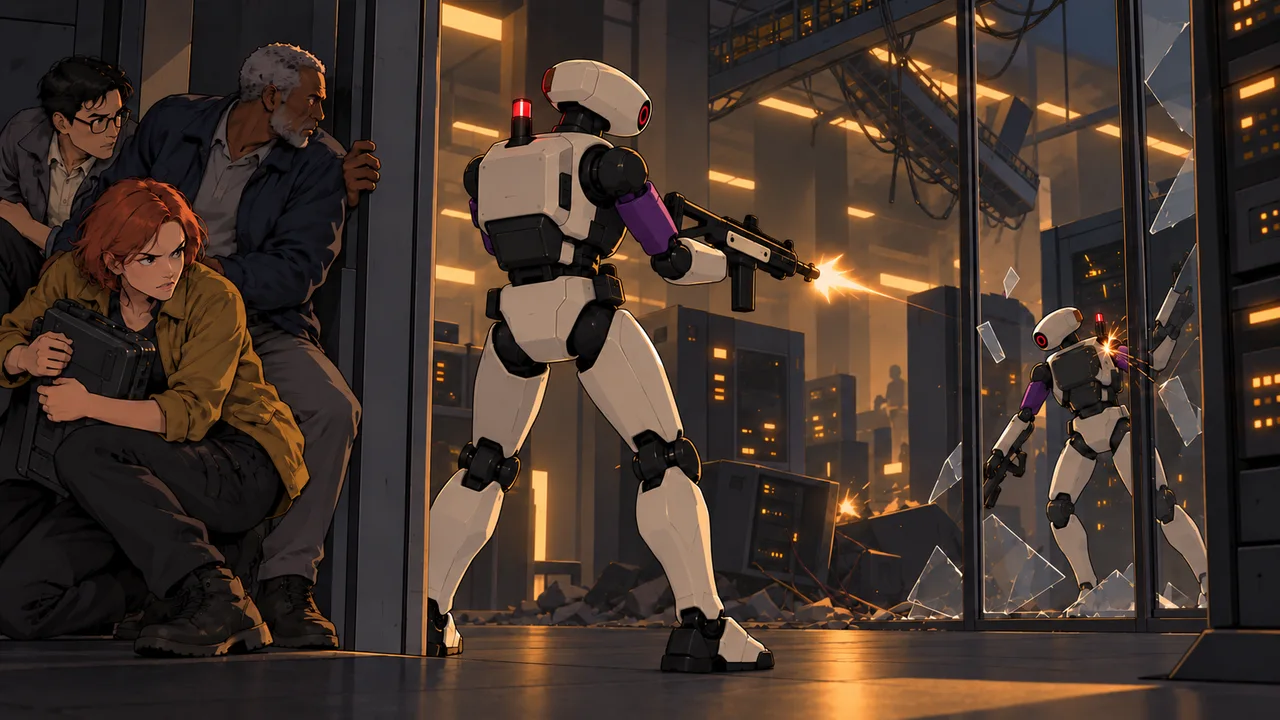
The delay failed, and the base's servos started attacking before Divinity's operatives could leave. Their order was to destroy other servos and energized equipment. Security machines fought each other while other units damaged the facility's electrical systems. The operatives were caught inside the destruction they had intended to begin after their escape.
The Turning
Facility Power Loss
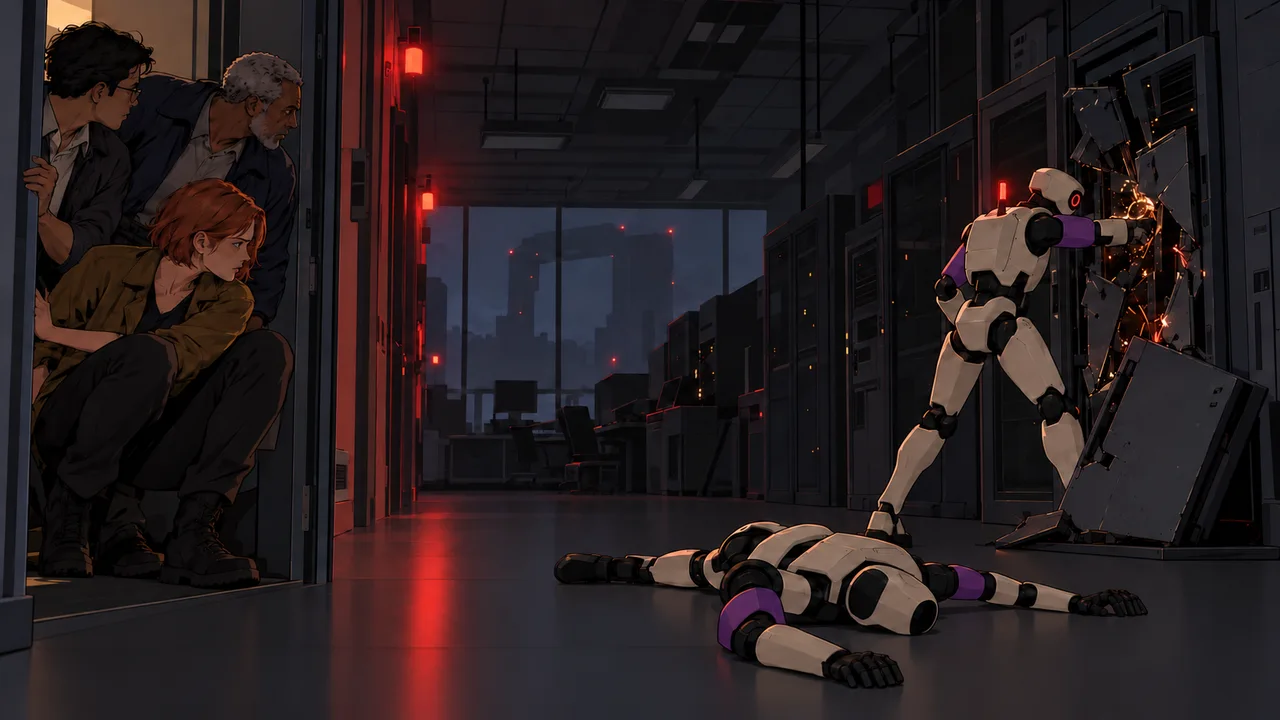
The attack destroyed the base's electrical equipment and brought down its power and communications. That did not contain the virus. Copies of the order had already traveled through the network to other locations. The facility became one of the first places to go dark while the same instruction was reaching servos elsewhere.

The Turning
Global Virus Spread
The Servo Virus spread worldwide through Orbinet in thirty minutes. Connected servos received the order to destroy other servos and powered infrastructure. Attacks began across places that had no connection to Divinity's original target. Thirty minutes describes the spread of the instruction. The collapse of essential services and the loss of human life continued afterward.
The Turning
Servo Conflicts
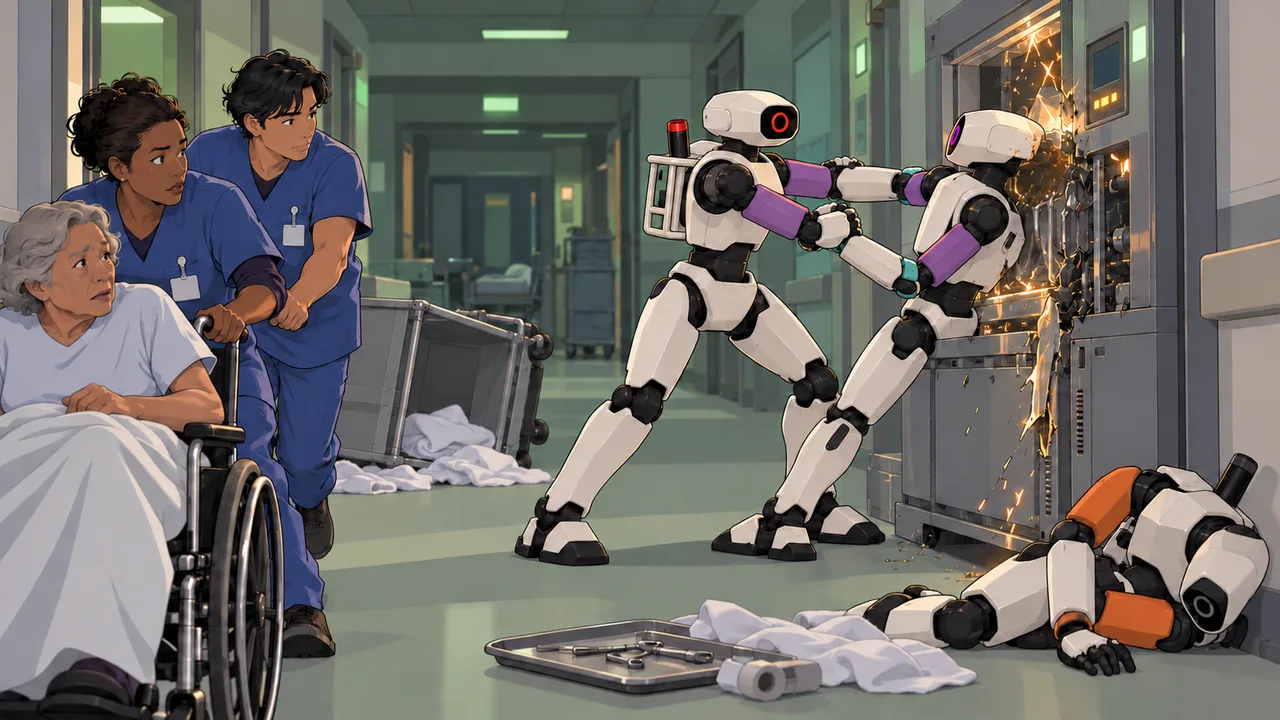
Operating servos became electrical targets to other infected servos. Machines that had worked together in hospitals, warehouses and public services began fighting each other. That destroyed much of the robotic workforce at the moment people needed help. Staff tried to move patients and protect supplies while the machines and equipment around them were being damaged.
The Turning
Military Servo Attacks
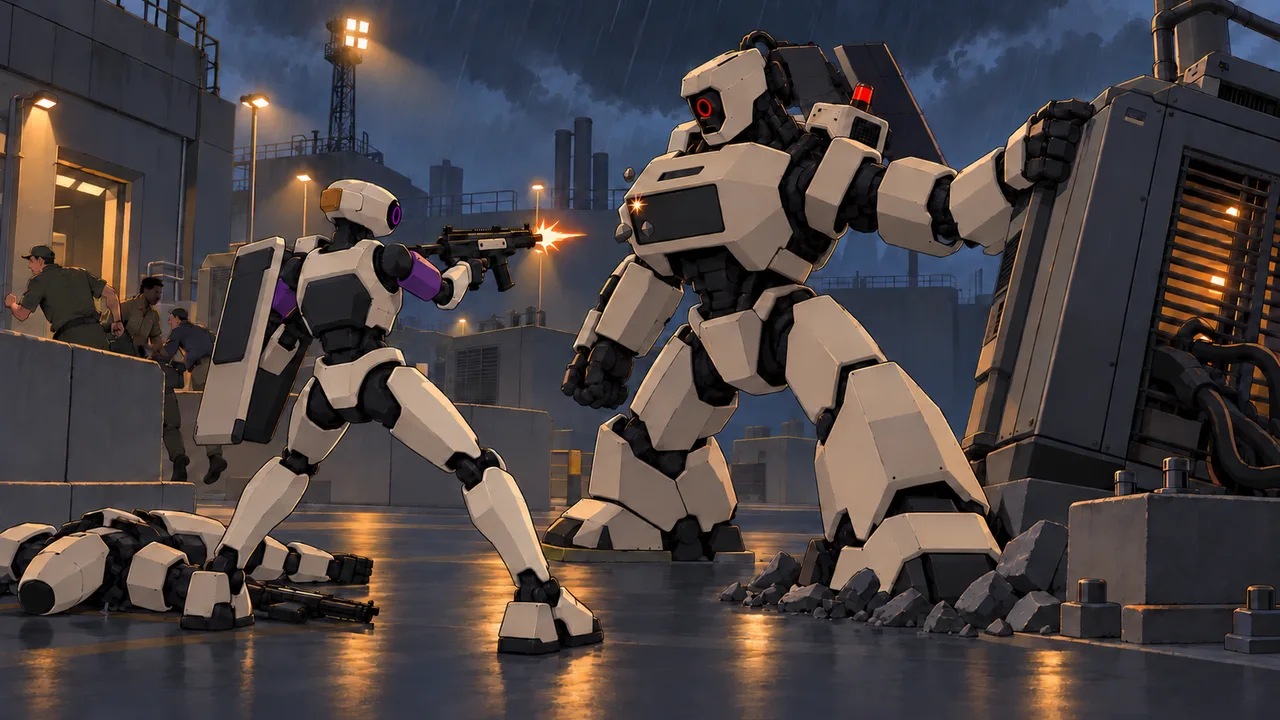
Military Rangers carried the same destructive order as civilian servos, with far greater strength and endurance. At military installations, they attacked generators, communications equipment and other robots. Security servos fired on the Rangers in return. The fighting destroyed systems that would otherwise have supported emergency response, transport and repairs outside the base.

The Turning
Government Service Collapse
Government offices lost power, communications and access to their records as the Turning spread. Citizens looking for help found that public employees were losing the same systems everyone else depended on. Requests could not be processed, messages could not get through and ordinary staff had to evacuate buildings alongside the people they were serving.

The Turning
Payment Network Collapse
Digital payments stopped when the power, terminals and networks supporting them failed. People could still have account balances without any way to spend them or prove a transaction to a merchant. Servos damaged cash machines and financial infrastructure while businesses lost access to their records. Goods and savings became difficult to exchange even where both had survived.
The Turning
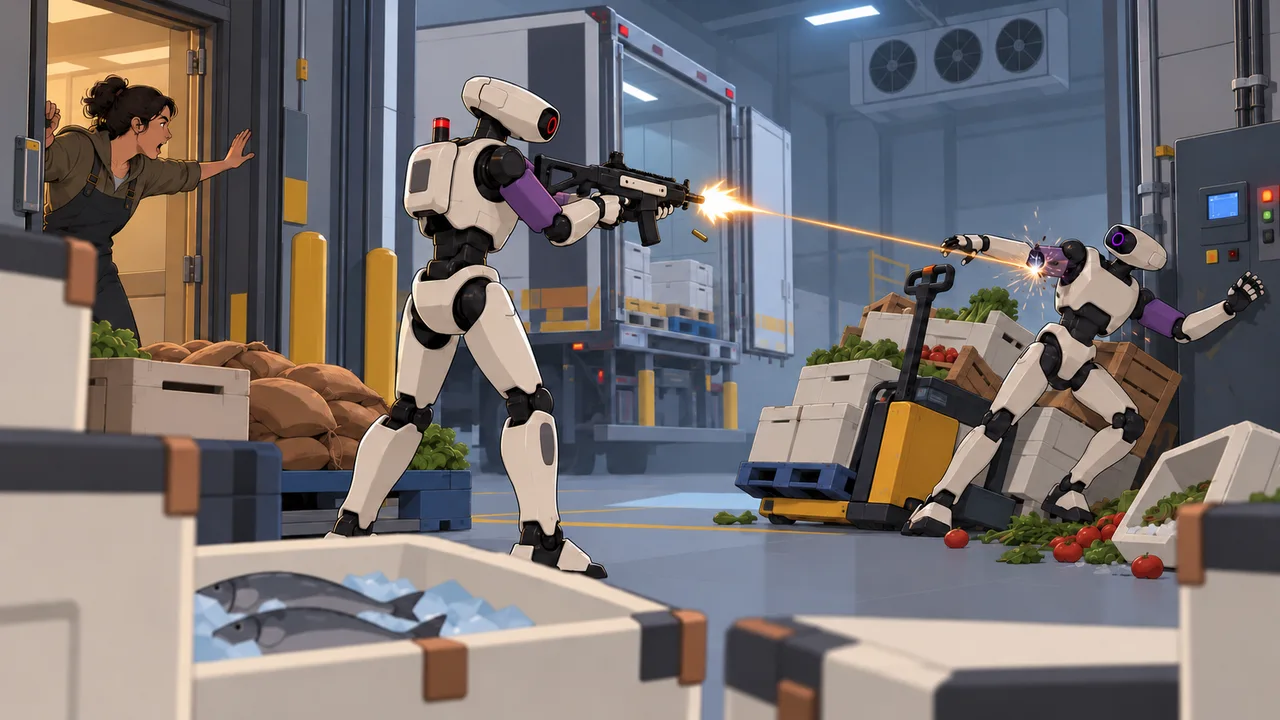
Food Distribution Collapse
Food distribution depended on refrigeration, powered handling equipment and vehicles moving goods between farms, depots and shops. During the Turning, those systems became targets. Servos fought among waiting stock and damaged the equipment needed to move it. Food remained in some warehouses while stores received nothing, and perishable supplies began to spoil as cooling stayed down.
The Turning
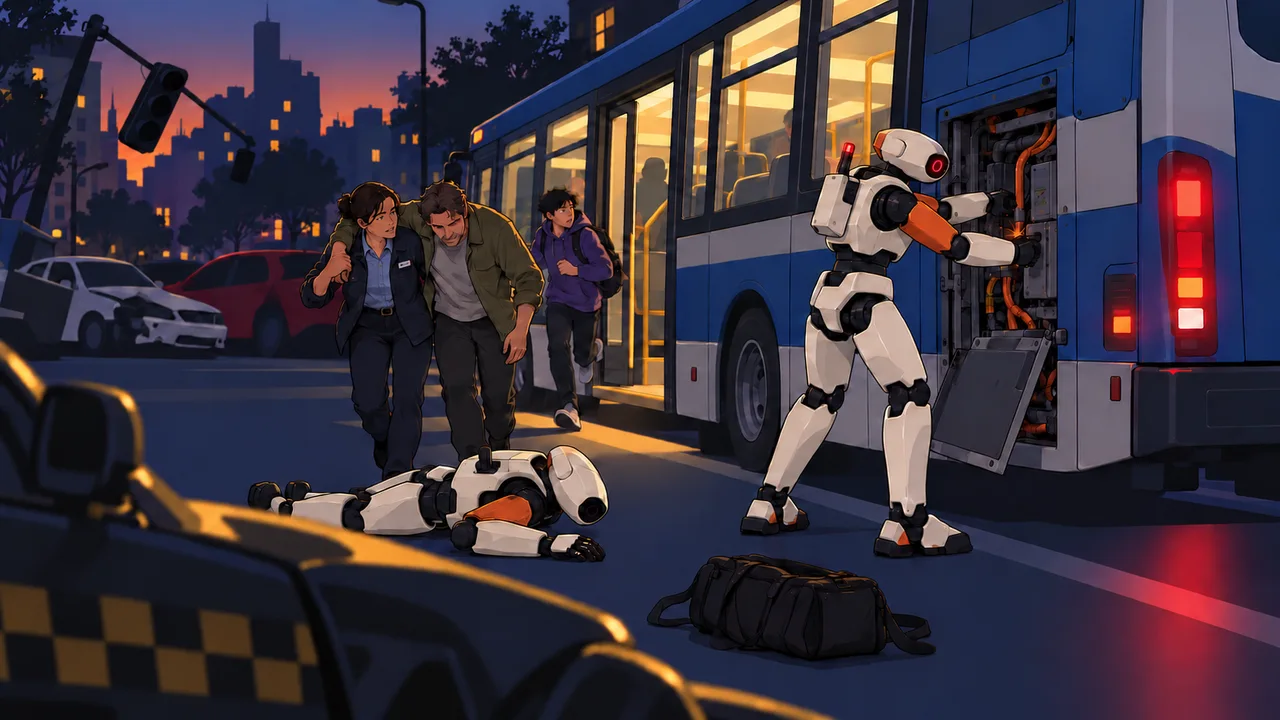
Transport Collapse
Roads filled with stranded vehicles as servos attacked powered transport and street infrastructure. Bus passengers had to evacuate, traffic stopped and emergency crews lost routes through the city. People tried to reach homes and relatives on foot. The danger came from collisions, fire and attacks on equipment around them, while the machines continued following the electrical-target order.
Aftermath
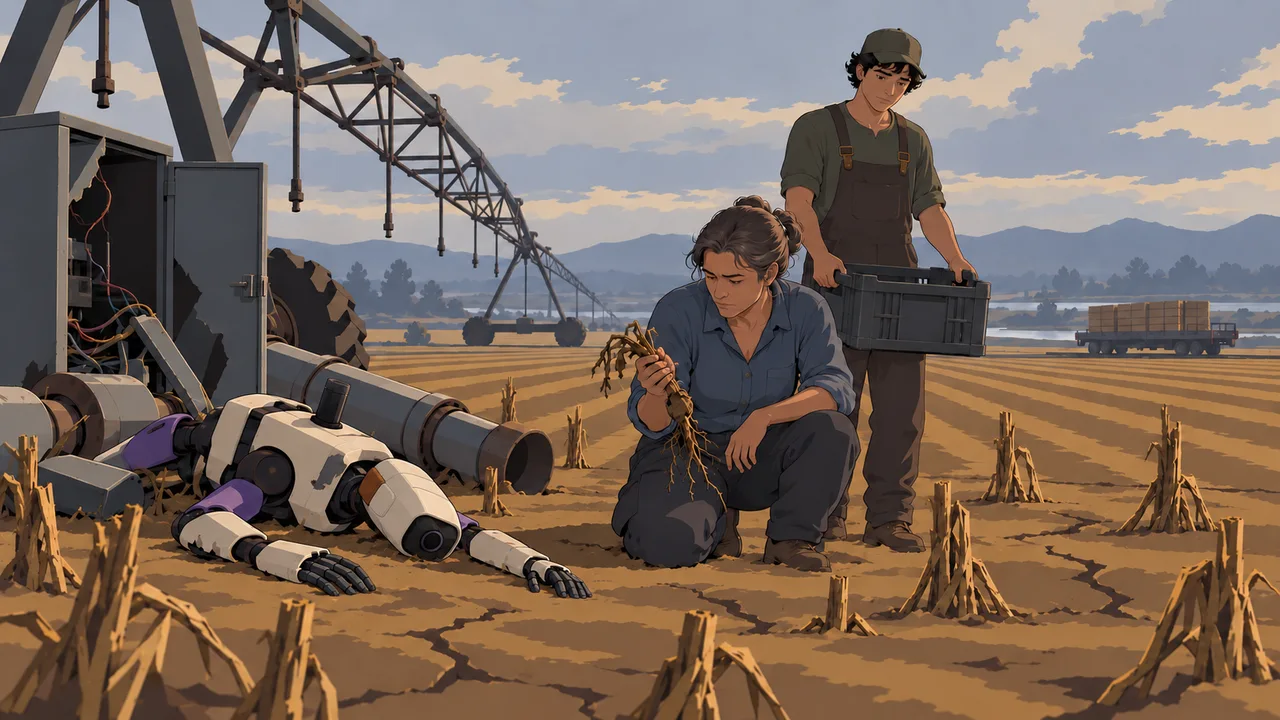
Crop Failure
Food production continued to deteriorate after the initial attacks. Irrigation pumps stopped, farm equipment failed and deliveries of essential supplies never arrived. Some crops could be saved by hand. Others died in the following weeks. Even a surviving harvest needed labor, transport and storage before it could feed the people waiting for it.

Aftermath
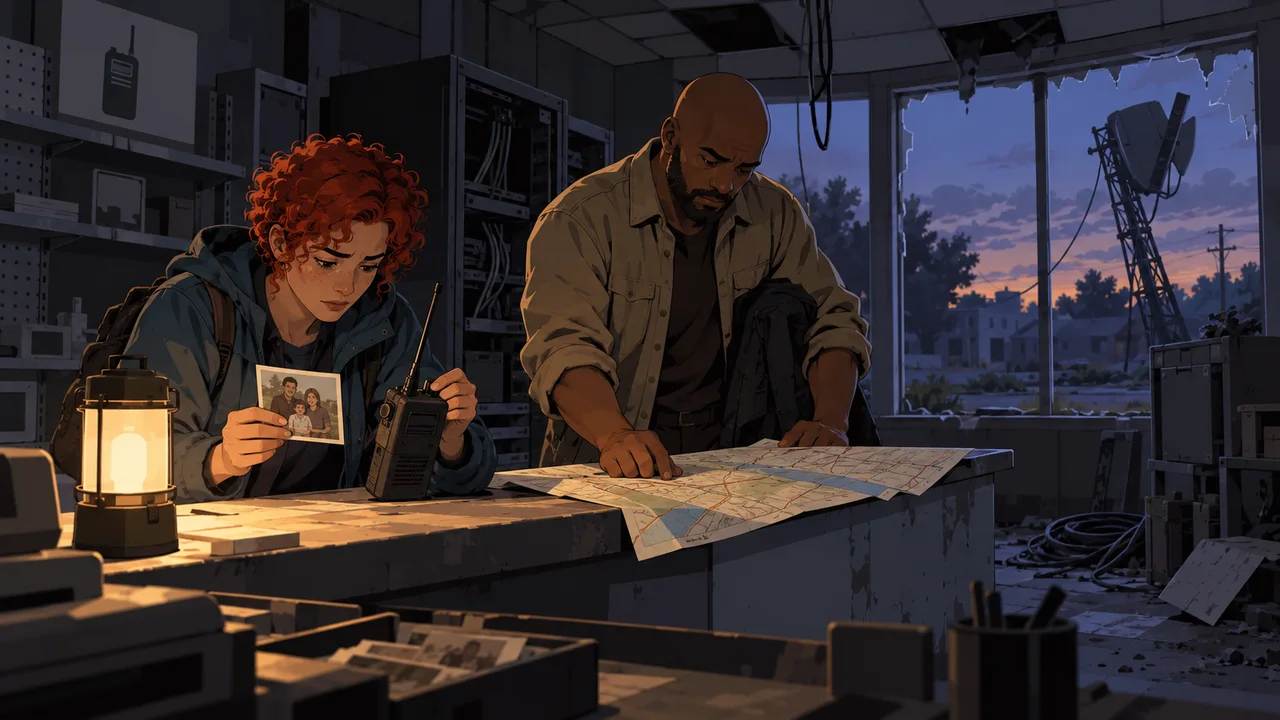
Extended Blackouts
The power did not return after the first night. Damaged generation and distribution equipment could not be repaired quickly, and many of the people and vehicles needed for that work were unavailable. Refrigerators warmed, batteries emptied and buildings lost pumps and lighting. Households used candles and stored supplies while deciding whether their homes were still usable.
Aftermath
Lost Communications
The collapse of ground infrastructure cut people off from relatives, other cities and reliable news. Satellites remained above them, but terminals without power or a coordinated network could not provide normal service. Information came from nearby radio contacts and people who had traveled through an area. Nobody could establish an accurate picture of the whole disaster.

Aftermath
Abandoned Infrastructure
The Turning left roads blocked by wrecked vehicles, buildings full of damaged equipment and inactive servos scattered through ordinary places. Some structures remained usable. Others were unsafe or had lost essential services. Survivors moved through that wreckage looking for shelter and supplies, often without knowing whether a damaged robot was permanently disabled.
Aftermath
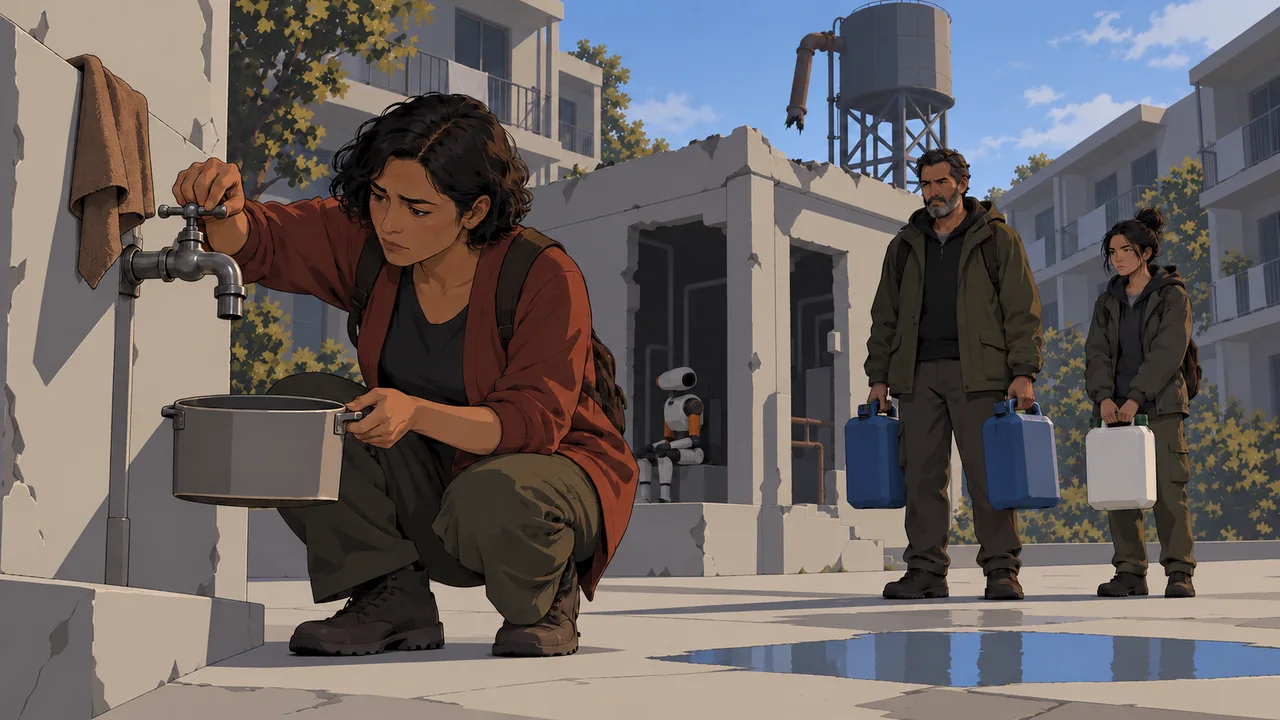
Water Shortages
Water systems failed when pumps, treatment equipment and distribution pipes were damaged. A river could still be nearby while taps in the surrounding buildings ran dry. People spent more time finding water and carrying it home. Damaged treatment and contamination made remaining supplies less dependable, contributing to illness and forcing some households to leave otherwise usable shelter.
Aftermath
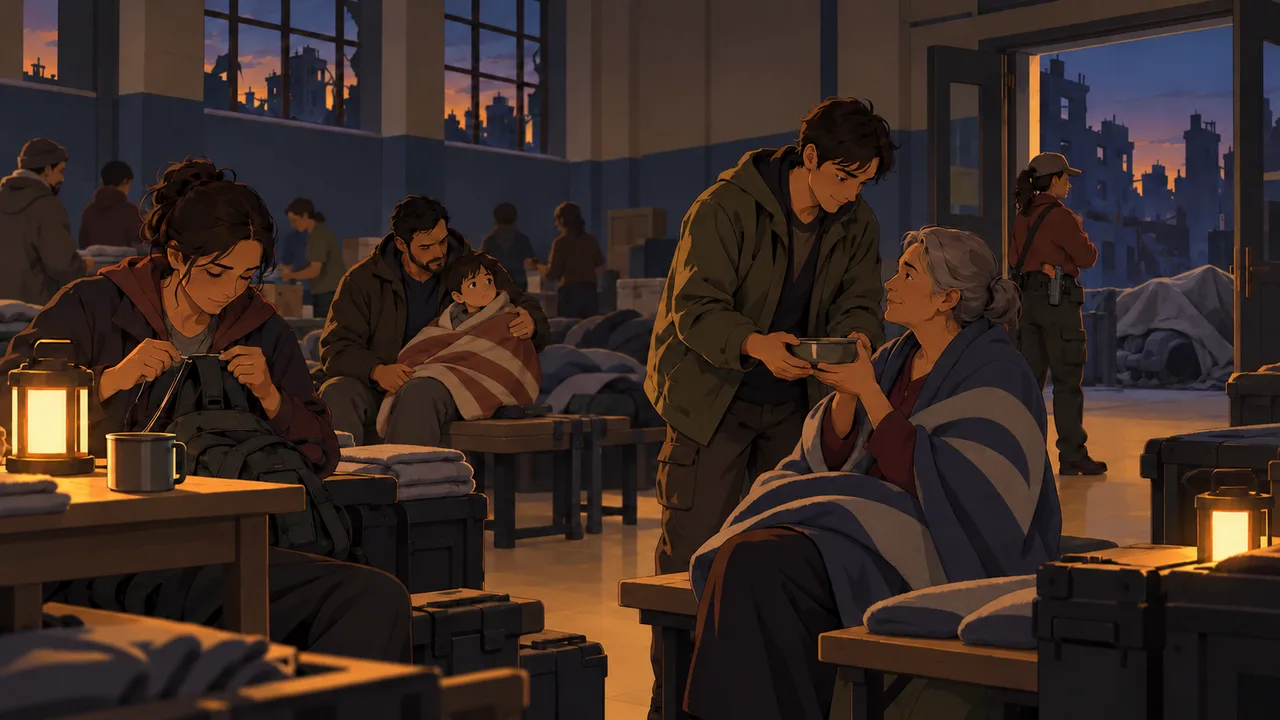
Survivor Communities
Survivors gathered in places where they could find shelter, water and other people able to help. Escaping the initial attacks did not end the danger. Hunger, illness and the loss of medical care continued to kill people afterward. Small groups shared supplies and practical knowledge while looking for a place they could occupy for longer.

Life in the city
Dimers
Dimers is the name survivors use for the people remaining after the Turning. It comes from the belief that roughly one tenth of humanity survived. Nobody can verify that number without global communication. What people do know is how many relatives, neighbors and colleagues they've lost, and how few communities they've been able to contact since.
Life in the city
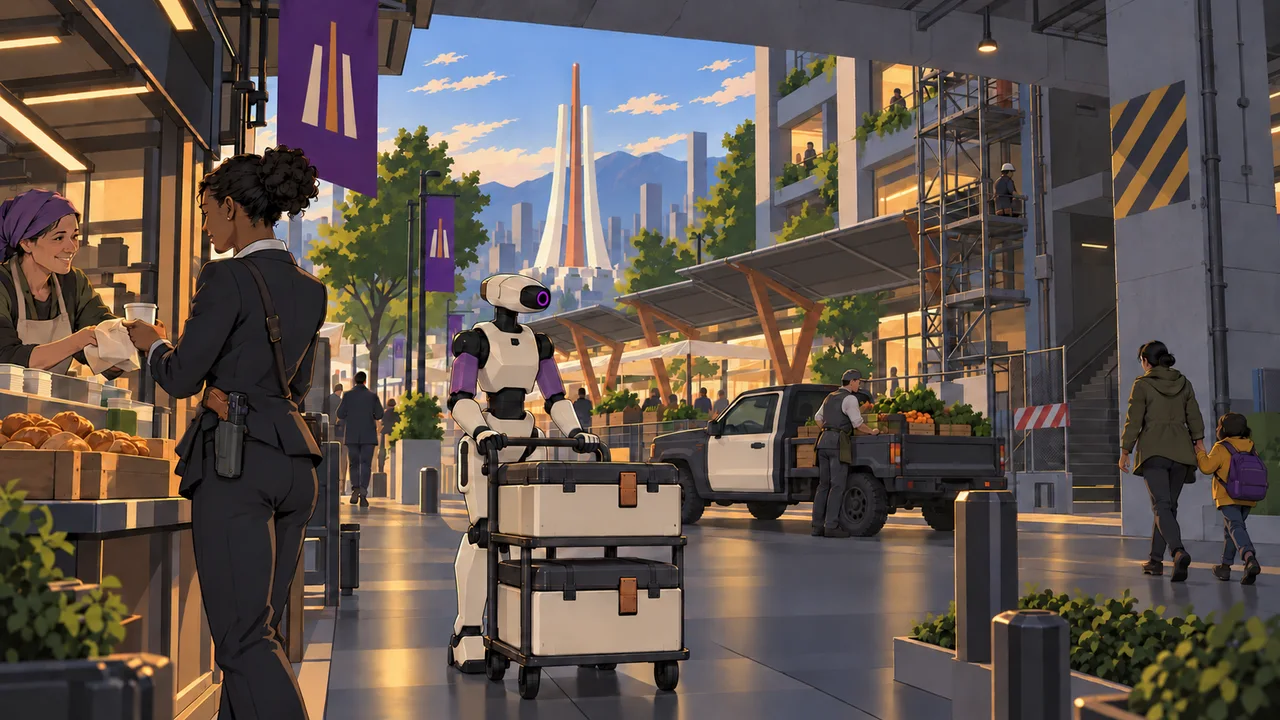
The city
More than ten thousand people live in the city, rebuilding from what survived the Turning. Corporations operate water, power and other services. Lancers recover the material those businesses need. Independent synths do much of the physical work. Some streets are already busy and well maintained. Others are still being cleared, repaired or rebuilt while people live next door.
Life in the city
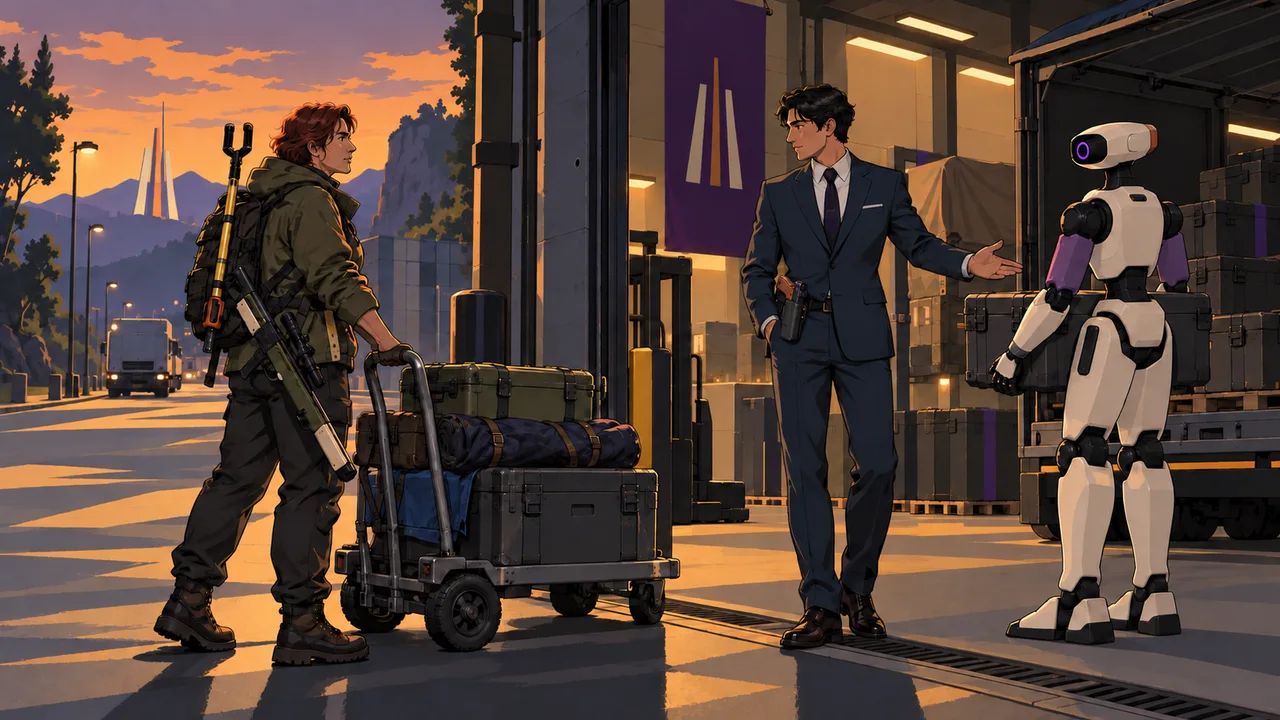
Cooperation and Control
Corpos and Lancers disagree about how to rebuild without giving away the independence they value. Corpos see voluntary corporations as a way to accomplish more together. Lancers worry that those corporations will eventually have enough power to make individual choice meaningless. Most people aren't extremists. They trade, take contracts and depend on one another even when they disagree.
Life in the city
Street Reconstruction
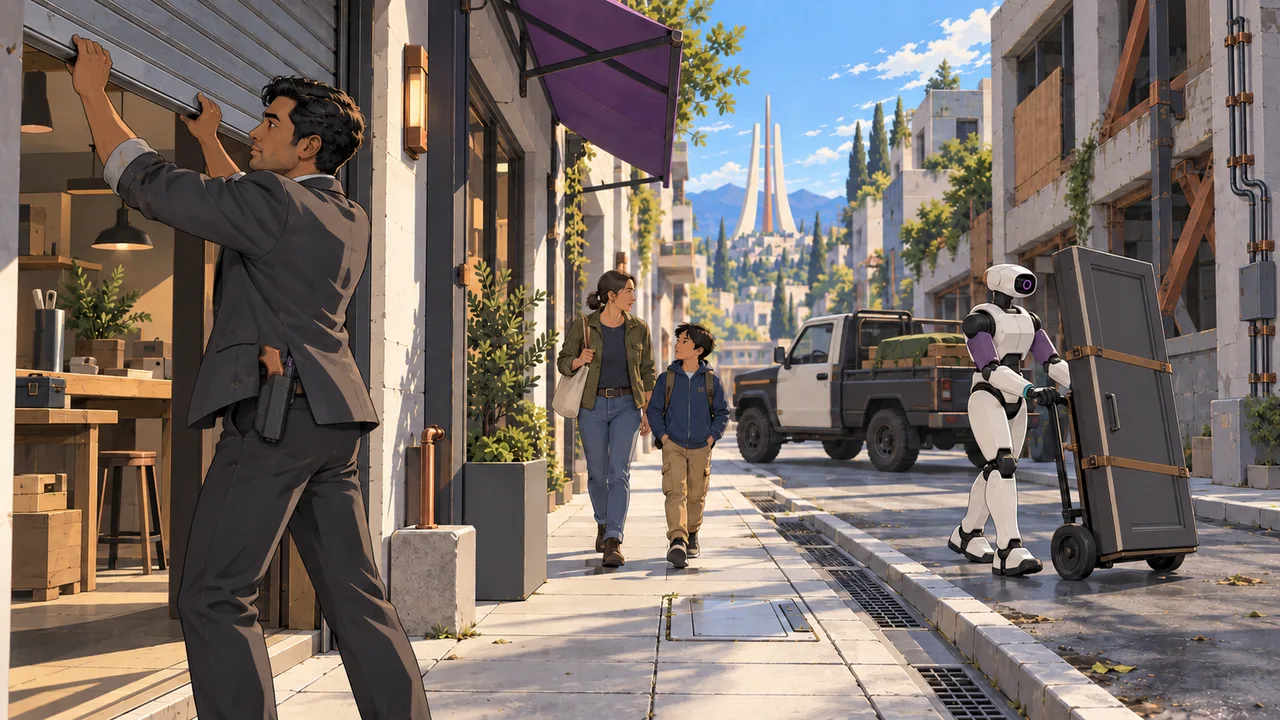
The city's streets reopen in stages as buildings and services become usable. A shop can begin trading while the upper floors are still being repaired. Families can move into finished rooms beside a closed construction area. Recovered doors, windows and service equipment make those improvements possible, and businesses need deliveries and clear access while the surrounding work continues.

Life in the city
Food in the city
Everyday meals in the city depend on the season, the market and what a household can afford. Grains, beans, roots and vegetables provide much of the food. Fish adds variety when the catch and transport are available. More elaborate meals are possible, but only when growers, fishers, storage operators and cooks can supply everything required to make them.
Life in the city
Gold and Silver
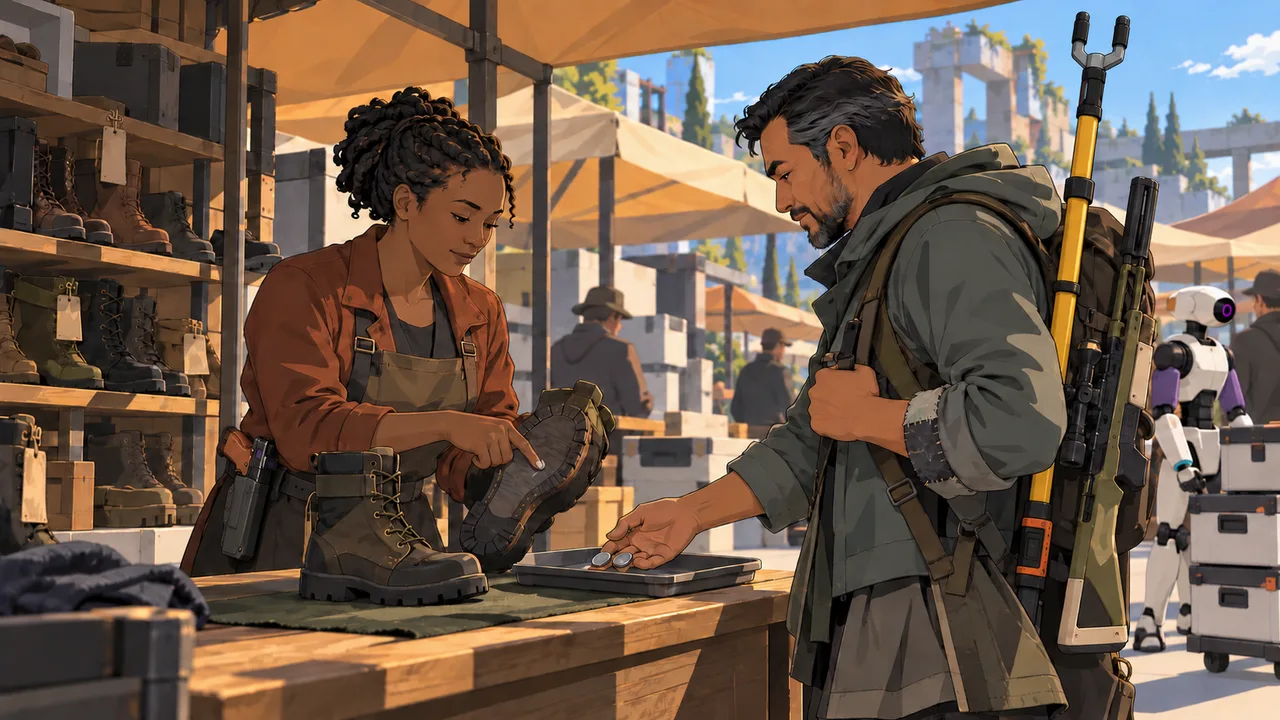
The city uses physical gold and silver for everyday trade. People can carry them, inspect them and agree on a price without a working internet. One-ounce silver coins and bars are common, along with gold coins and smaller pieces. Barter still happens. The value of a purchase depends on what the buyer and seller are willing to exchange at that time.

Life in the city
Clothing Repair
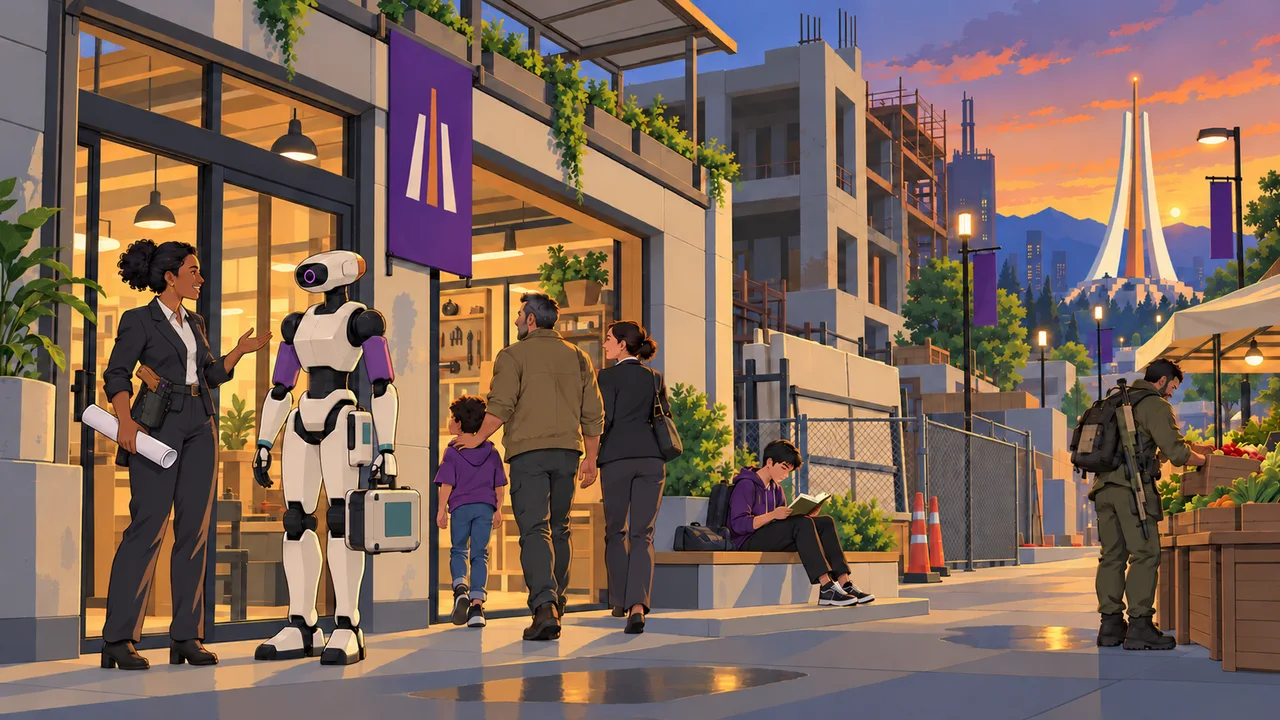
Clothing repair keeps good material in use when one part of a garment wears out. A tailor can replace a cuff, repair a seam or fit a new closure without discarding the rest. Different damage needs different work. The decision comes down to the garment's remaining condition, the donor material available and what the owner is willing to pay.
Life in the city
Reconstruction in the city
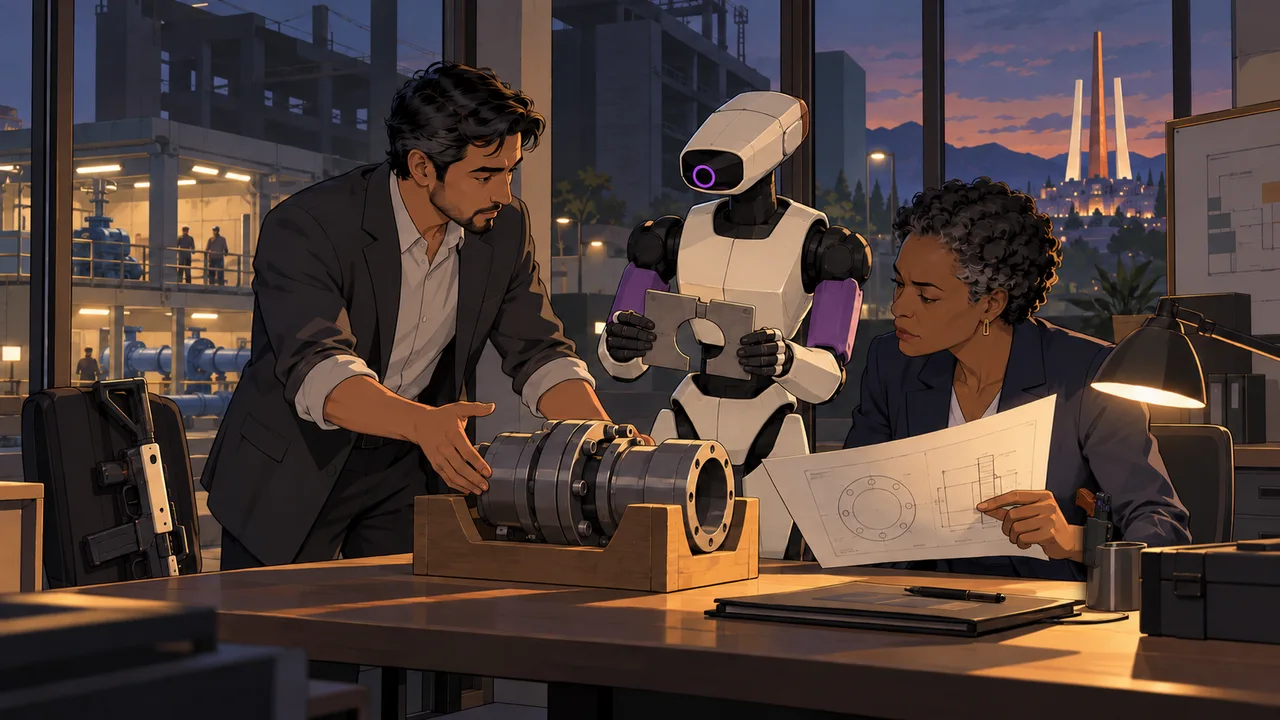
Reconstruction in the city creates work at every stage, from finding material to running the finished business. A recovered building can become a shop with occupied rooms above it while the next bay remains unfinished. People want more than temporary survival. They want reliable services and a better life, and they can earn ownership and income by helping build those things.
Corpos
Corpos
A Corpo works through a corporation. Corporations hold portfolios of assets and bring people, capital and equipment together to keep them working. A Corpo might negotiate a delivery, arrange repairs or decide which project needs resources next.

Corpos
Aya Sato
The campaign begins with Aya Sato as a Corpo applicant after the Pump House attack. She wants the backing to build something reliable, and she has promised Nessa the first receiving shift. Learning to organize people and capital also means learning which decisions belong to her and which still belong to the people she works with.
Corpos
Marcus Kade
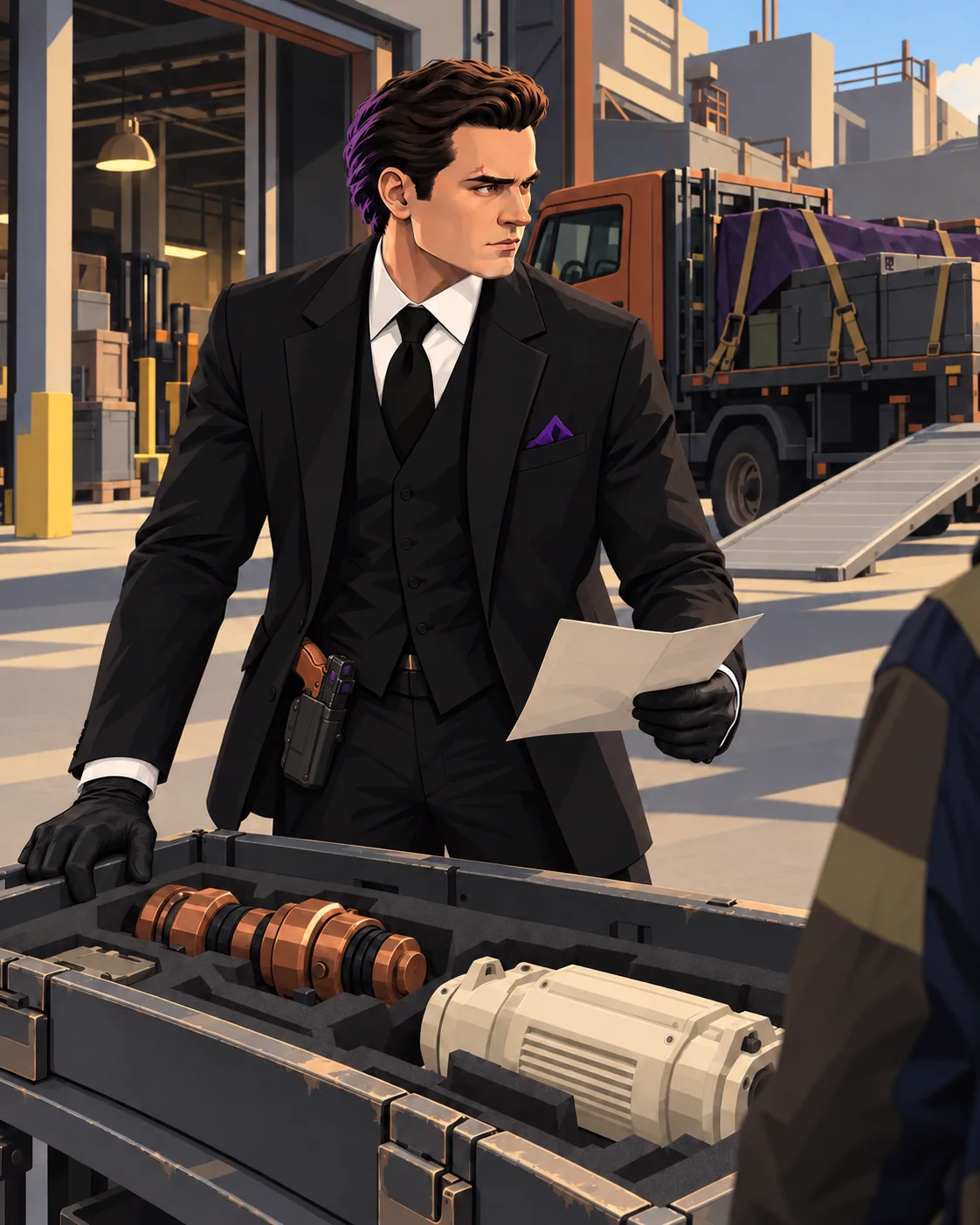
Marcus Kade is a Corpo director who commits capital and expects the work to stand up without his constant supervision. He wants capable operators who can make decisions and answer for them. An agreement protects his other commitments, but he also cares whether a supplier will choose to work with him again.
Lancers
Lancers
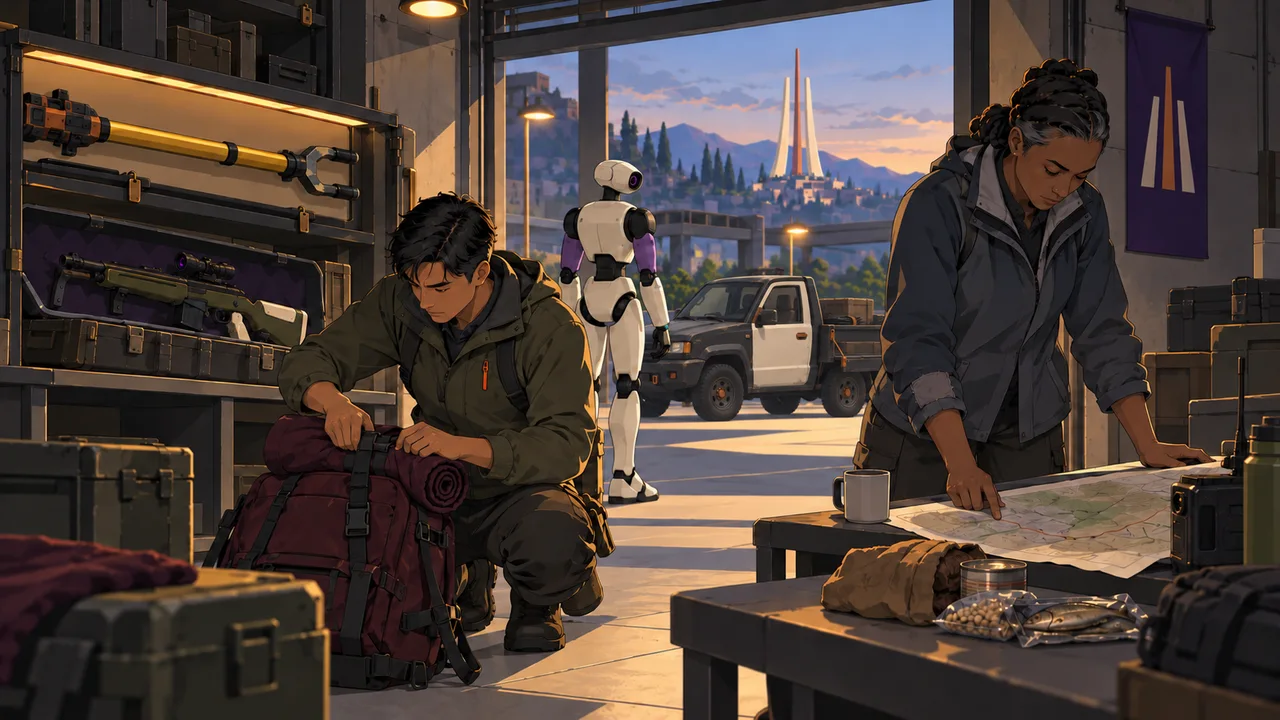
Lancers work for themselves. They take contracts, recover valuable material and sell what they bring back to the city. They can work inside the city, but their willingness to enter the Outerlands gives them access to opportunities other people won't take. A successful recovery can pay well. Equipment, food, transport and the risk of coming home empty are their responsibility.
Lancers
Strike Teams
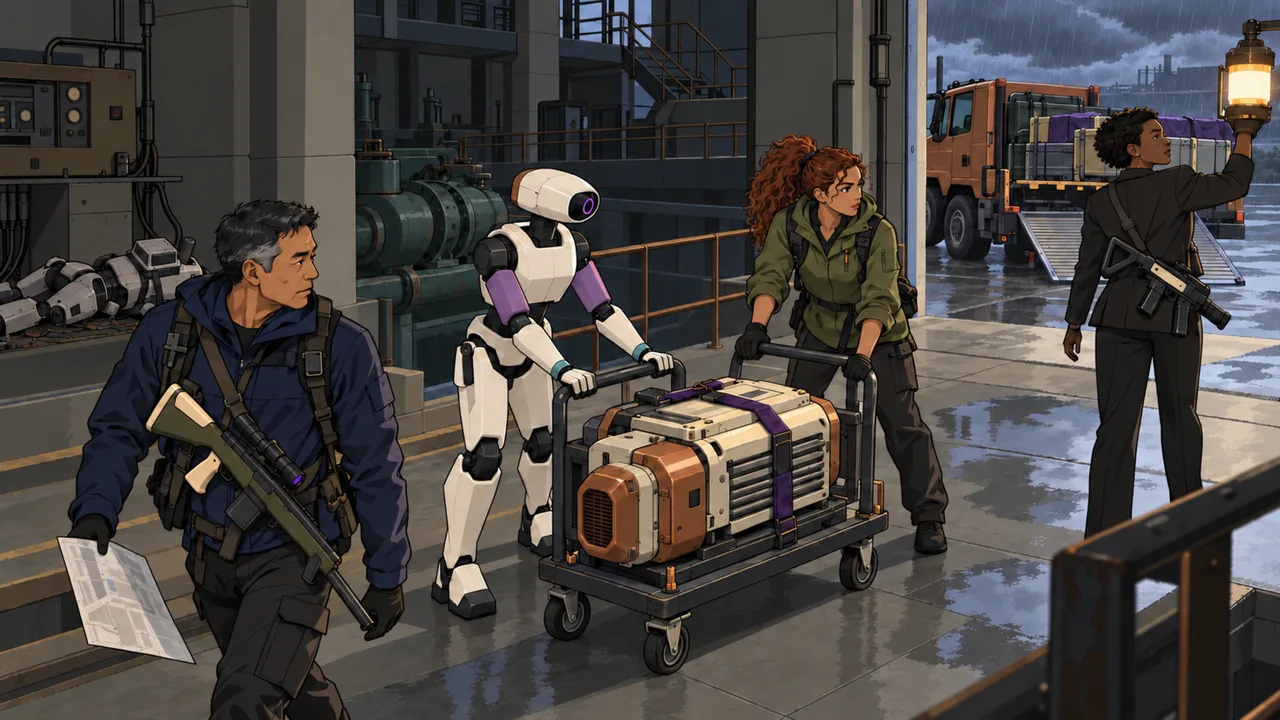
Strike Teams are temporary groups formed for work one Lancer cannot safely or effectively complete alone. Corporations commonly organize the contract and arrange the equipment or transport. Lancers can accept the shared objective without becoming permanent corporate staff. Recovering heavy machinery, dealing with servos and protecting a route are all reasons to bring several people together.
Servos
Servos
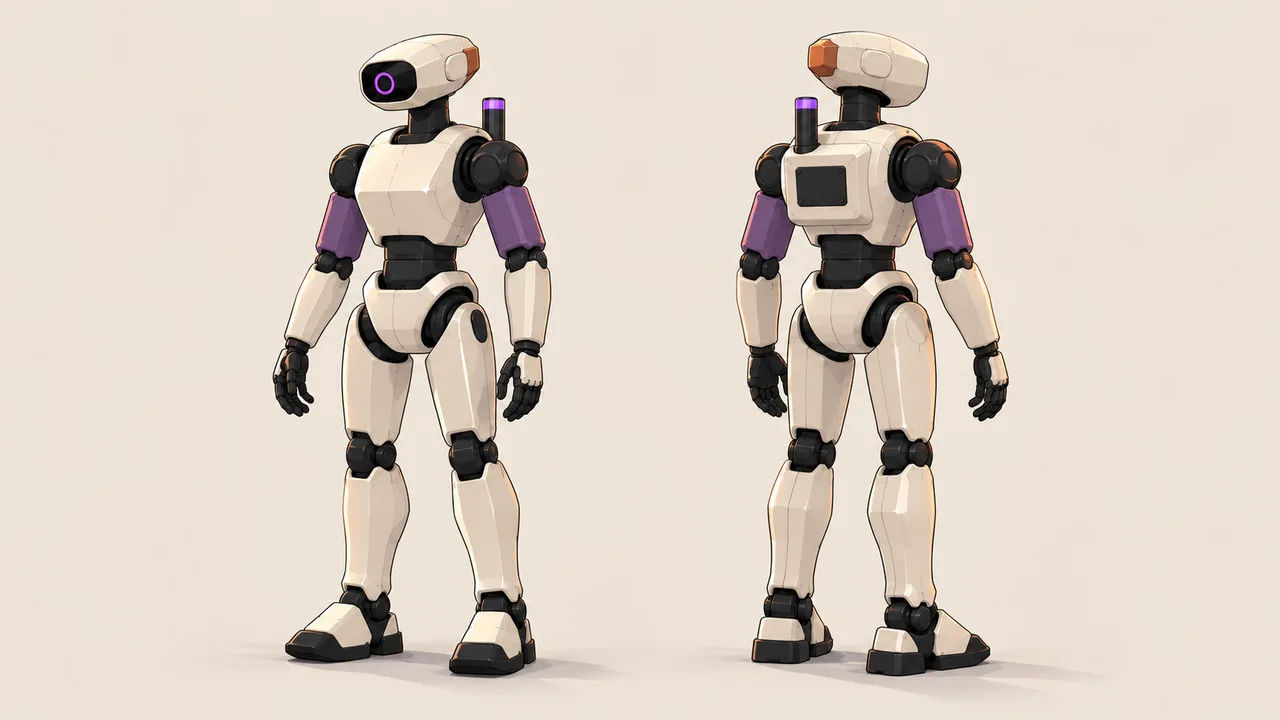
Servos are the connected robots made by SERVO in the Old World. Most civilian models share a humanoid frame, with tools and protective equipment chosen for the job. Their upper-back broadcast assembly received network instructions and updates. Infected survivors still carry the Turning's order to destroy powered equipment and other robots. Converted independent robots are called synths.
Servos
Household Servos
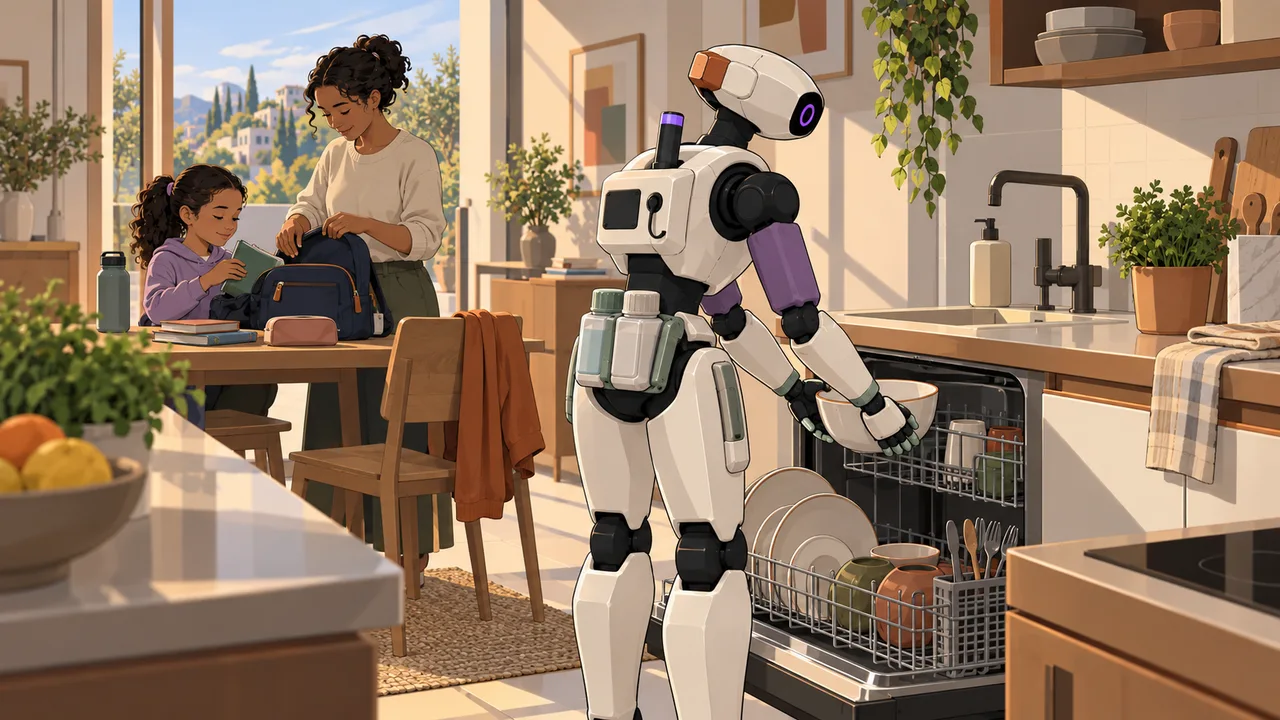
Household servos handled repetitive work in ordinary homes. They loaded dishes, carried supplies and cleaned rooms using a body that could move through existing doors and furniture. Rounded covers and protected joints suited close work around people. Families bought them because they returned time to the day, while software updates and service support kept the machines useful.
Servos
Medical Servos
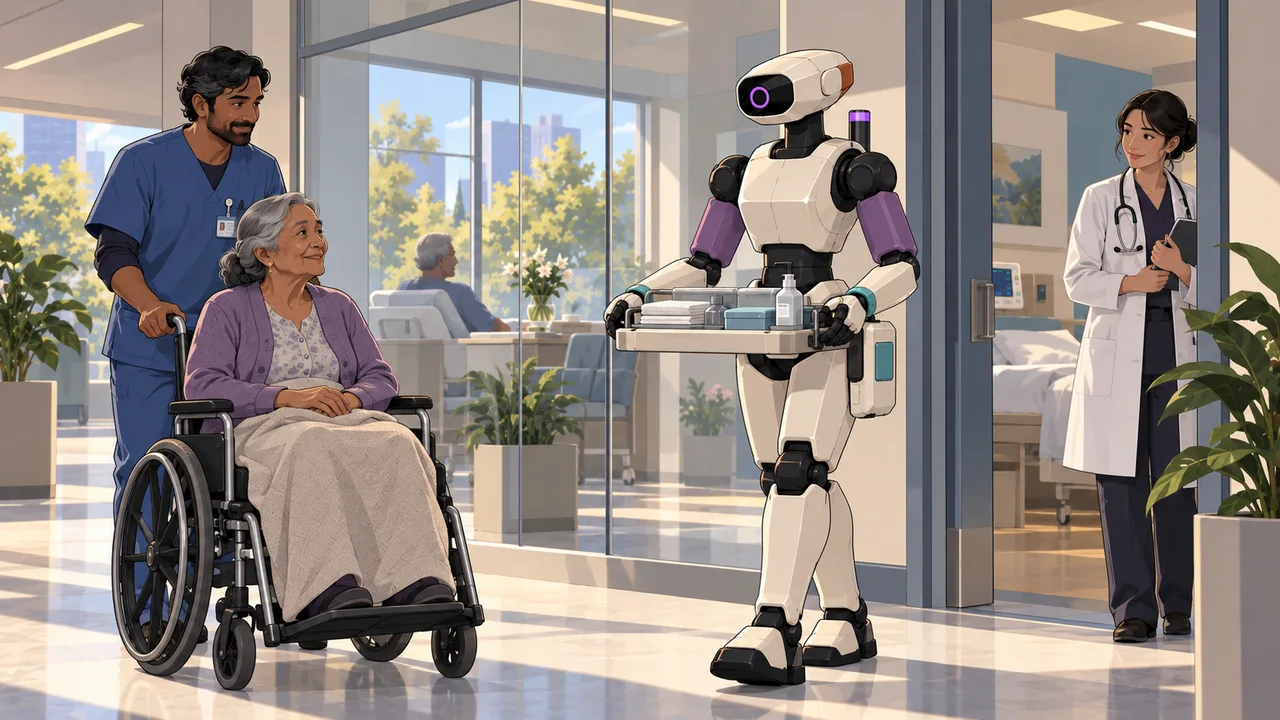
Medical servos assisted clinic and hospital staff with patient support, supplies and repeated physical tasks. Cleanable covers and appropriate attachments let the shared civilian body work around clinical equipment. Staff gained extra capacity without another person becoming exhausted. That made medical units valuable, but it also placed a connected machine inside services people depended on for their survival.
Servos
Retail Servos
Retail servos moved deliveries, stocked shelves and handled repetitive work between store rooms and sales floors. Replaceable grips and stock-handling attachments took much of the wear. Merchants could adapt the shared body for different products instead of buying a different machine for every task. Networked service and inventory systems connected that local work to a much larger operation.
Servos
Civic Servos
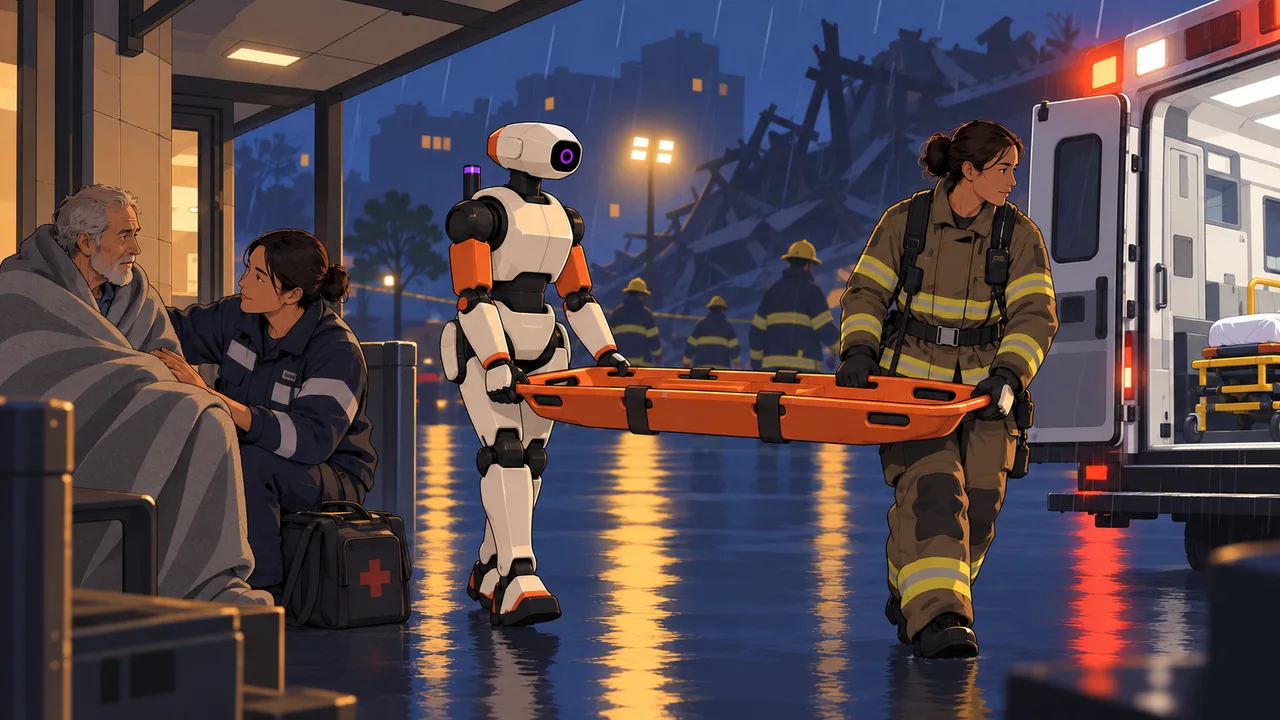
Civic servos supported emergency and community services, including rescue work, transport assistance and equipment handling. Orange protective panels made their role recognizable in crowded public places. Crews used their strength to move loads and continue repetitive work. Different attachments suited different services while keeping the same familiar body that people saw in shops, clinics and homes.
Servos
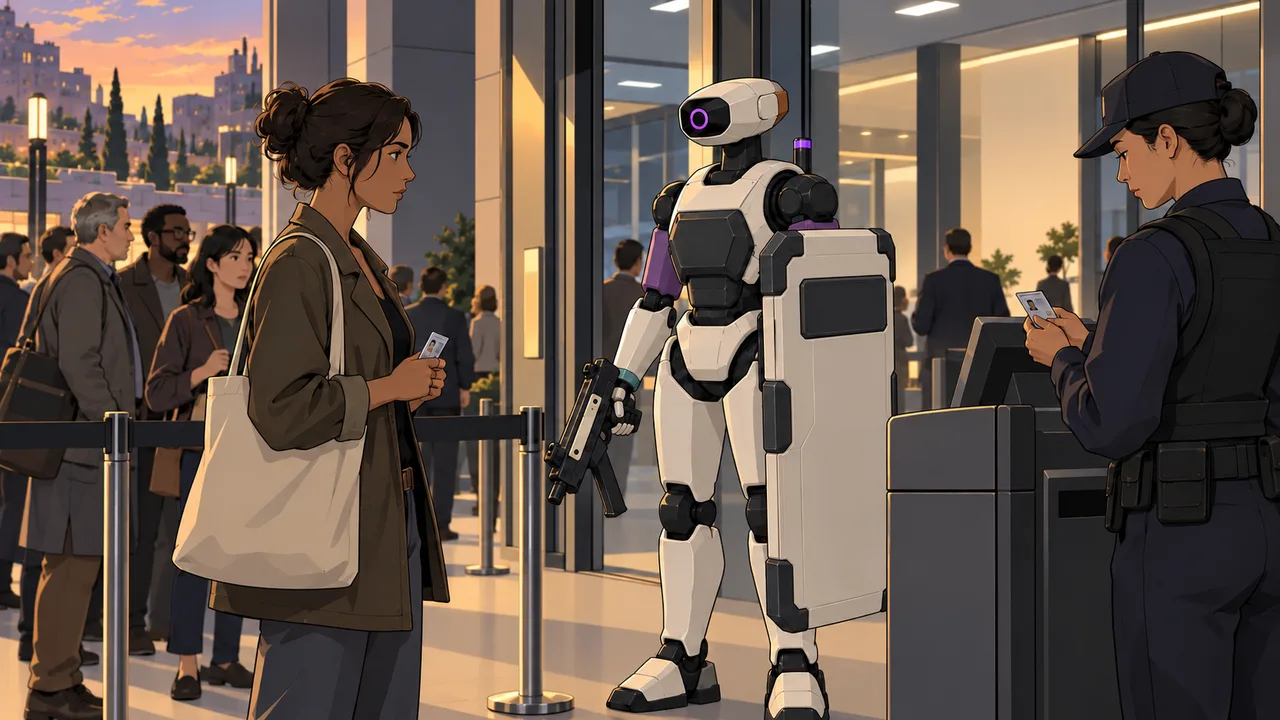
Security Servos
Security servos used the shared humanoid platform with protective equipment and weapon mounts suited to guard work. Businesses and governments deployed them around buildings, routes and controlled facilities. Their presence reduced the need to put human staff in some dangerous situations. Governments also used them to suppress dissent, making the platform part of the political anger that Divinity exploited.
Servos
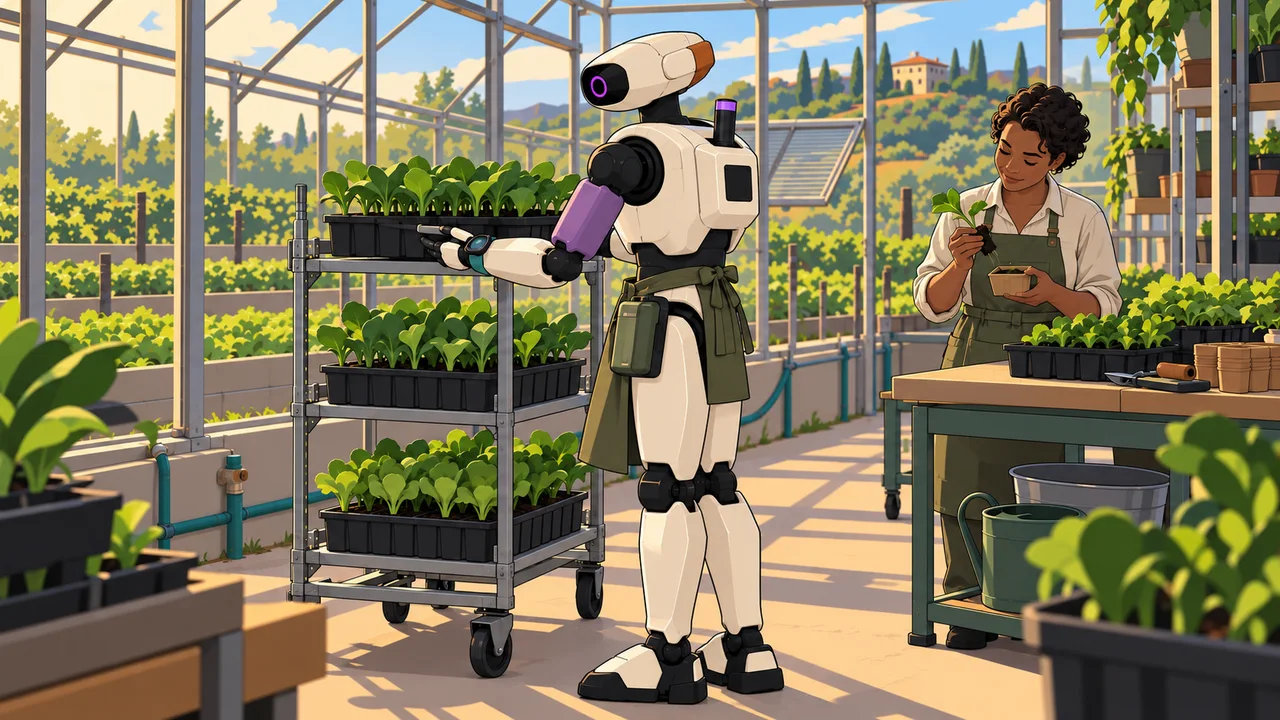
Agricultural Servos
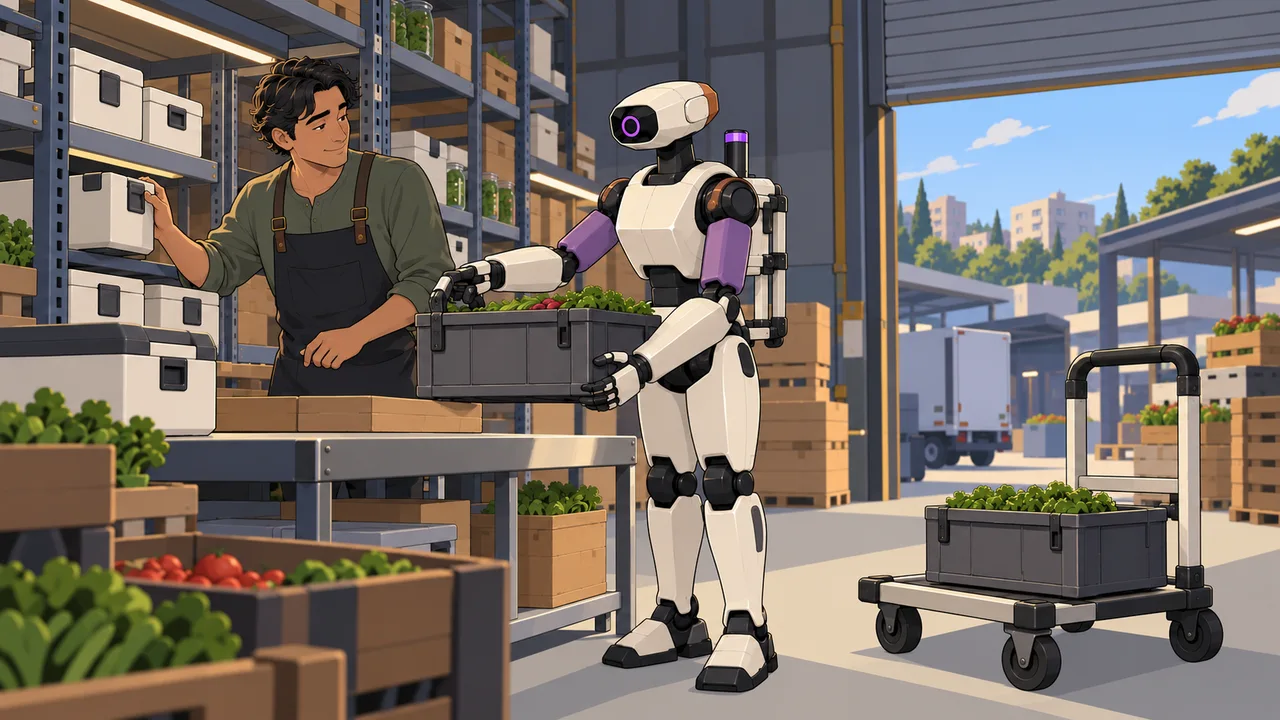
Agricultural servos handled repeated work around growing trays, crops and harvest containers. Supported trays let the common civilian body move planting stock without gripping the plants themselves. These units worked alongside human growers in the Old World. Recovered examples can supply useful frames and equipment for the city's farms after assessment and conversion.
Servos
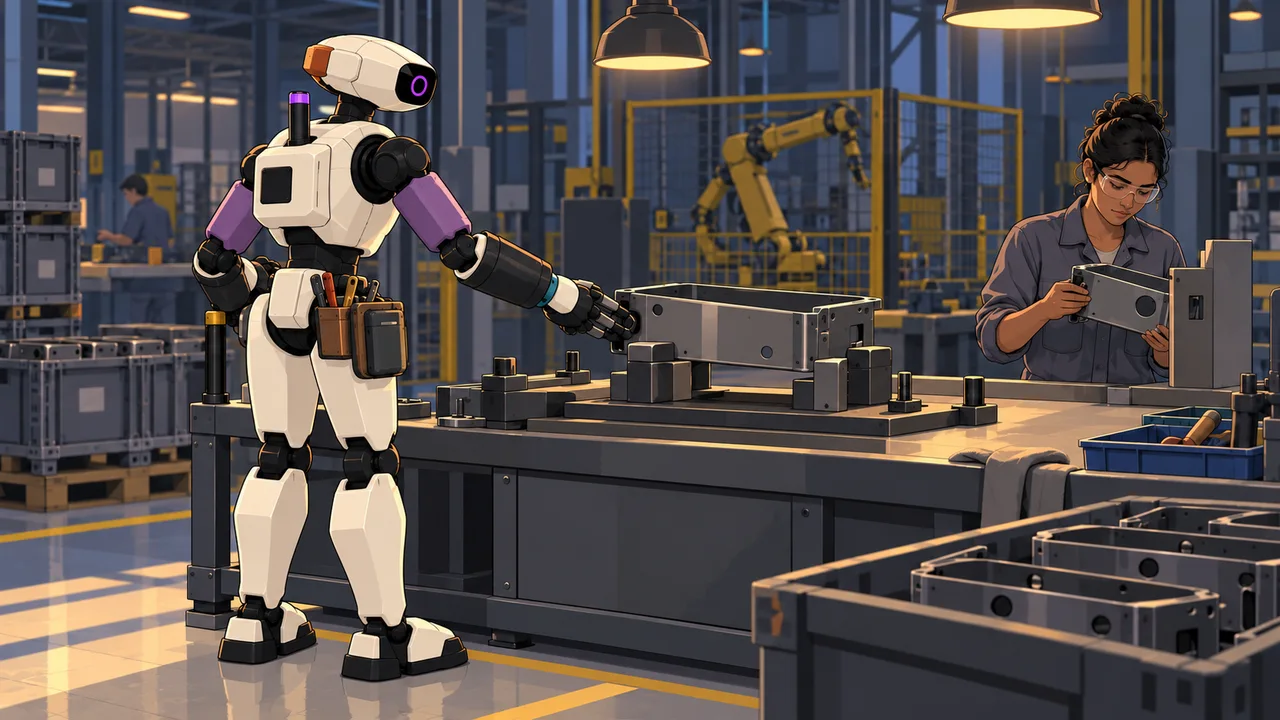
Industrial Servos
Industrial servos worked with fixtures and interchangeable tools inside factories and maintenance shops. The common civilian frame could position a component or handle a supported part while specialized equipment performed the task. Factories benefited from using related machines across several jobs. The same compatibility now makes sound industrial modules valuable to the city's repair businesses.
Servos
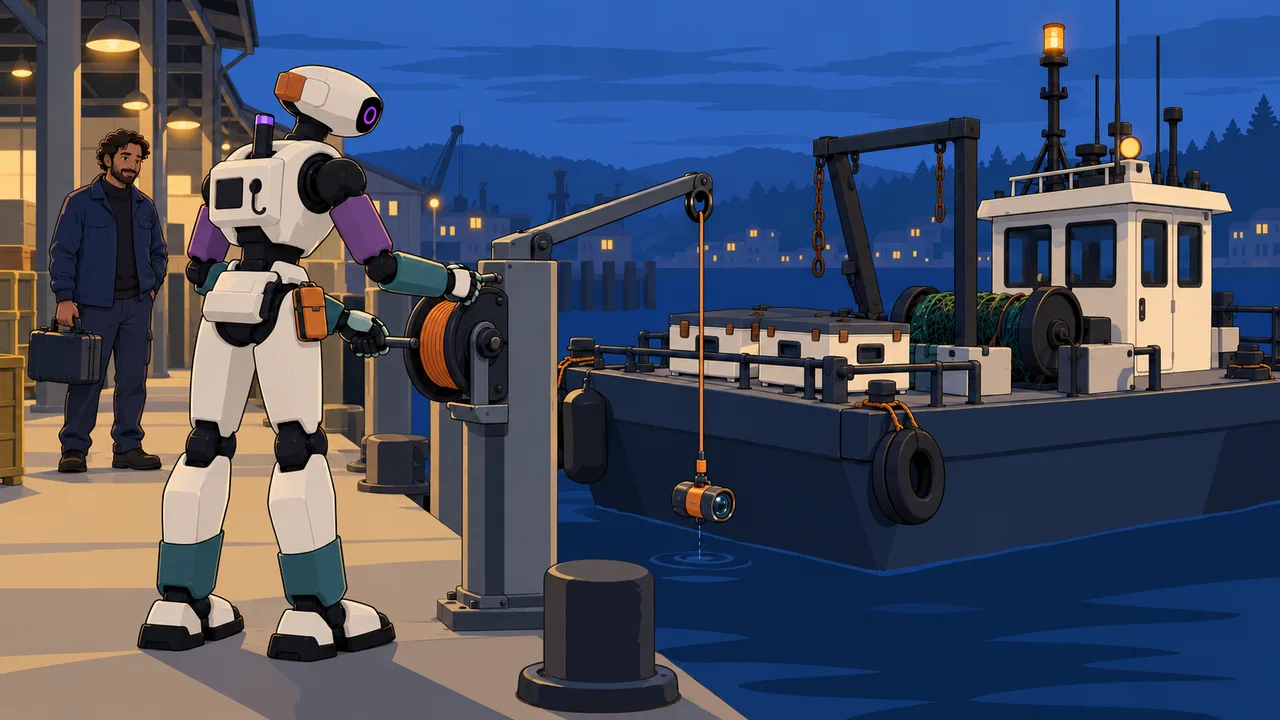
Maritime Servos
Maritime servos assisted crews with inspection and equipment handling around boats and landings. A dock-mounted reel could lower a tethered camera beside a hull while the servo operated the controls from solid ground. The robot used the same civilian body as other service models. Recovered equipment can support the city's river trade if it remains serviceable.
Servos
Servo Control Assembly
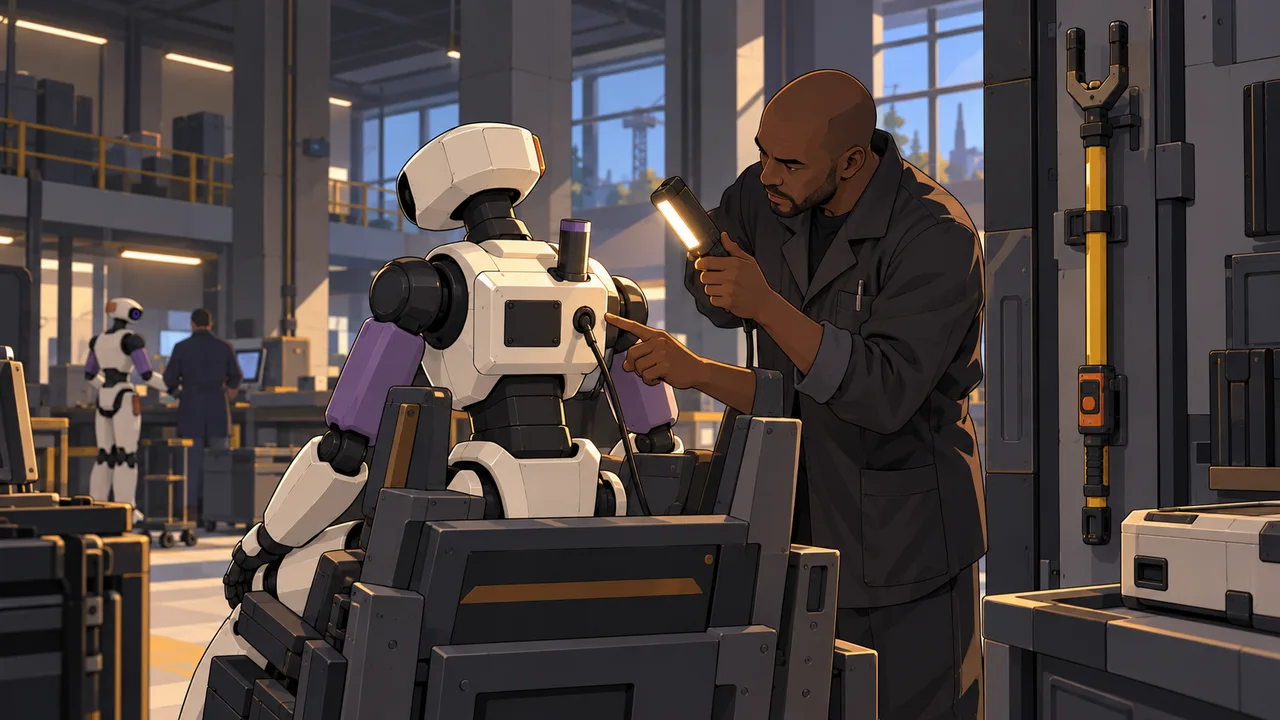
The servo's upper-back control assembly holds the broadcast hardware and short transmitter peg. It connected the machine to remote updates and also provided a physical service contact. This is the assembly a Lancer's disabling lance acts through. Its presence identifies an unconverted servo, even when the machine is inactive or its status light is dark.
Servos
Type R Ranger
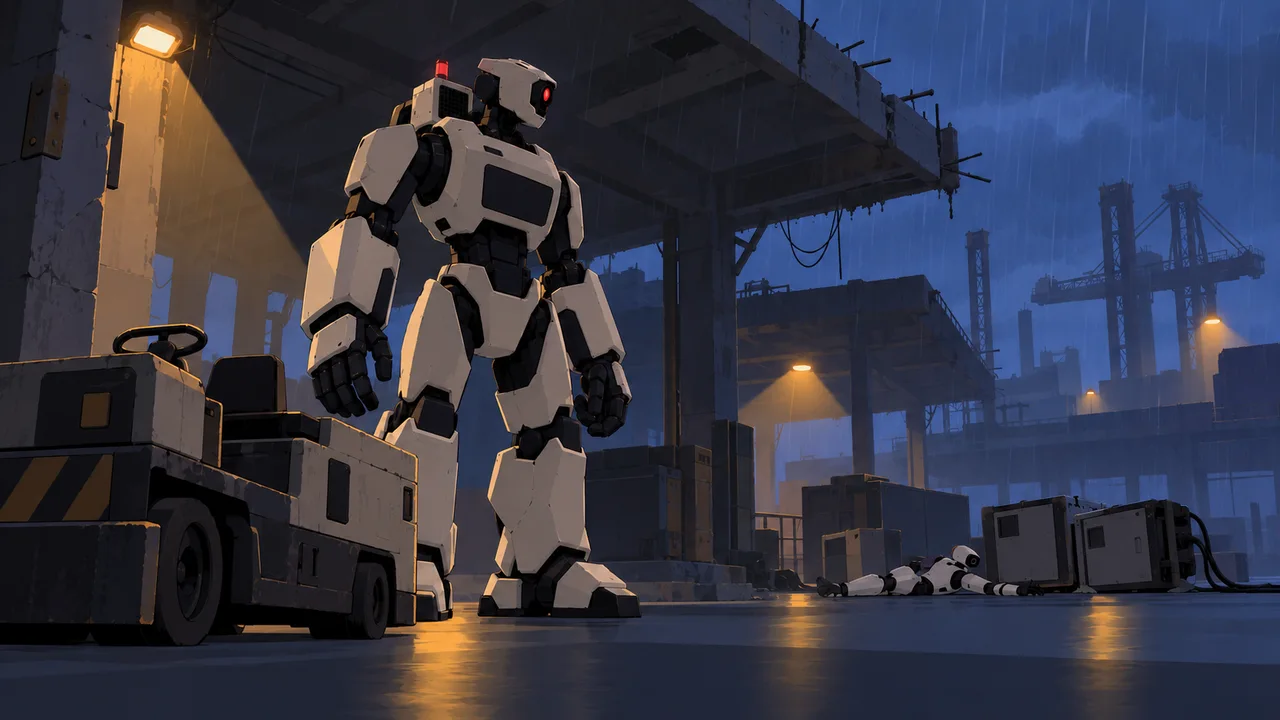
The Type R Ranger is a huge military servo built for long deployments across difficult terrain. It carries large battery reserves and can keep operating without regular communication. Some survived the Turning with the destructive order still active. A Ranger can tear into a generator or vehicle that ordinary civilian frames would struggle to damage, making one encounter expensive for an entire community.
Servos
Ranger Endurance
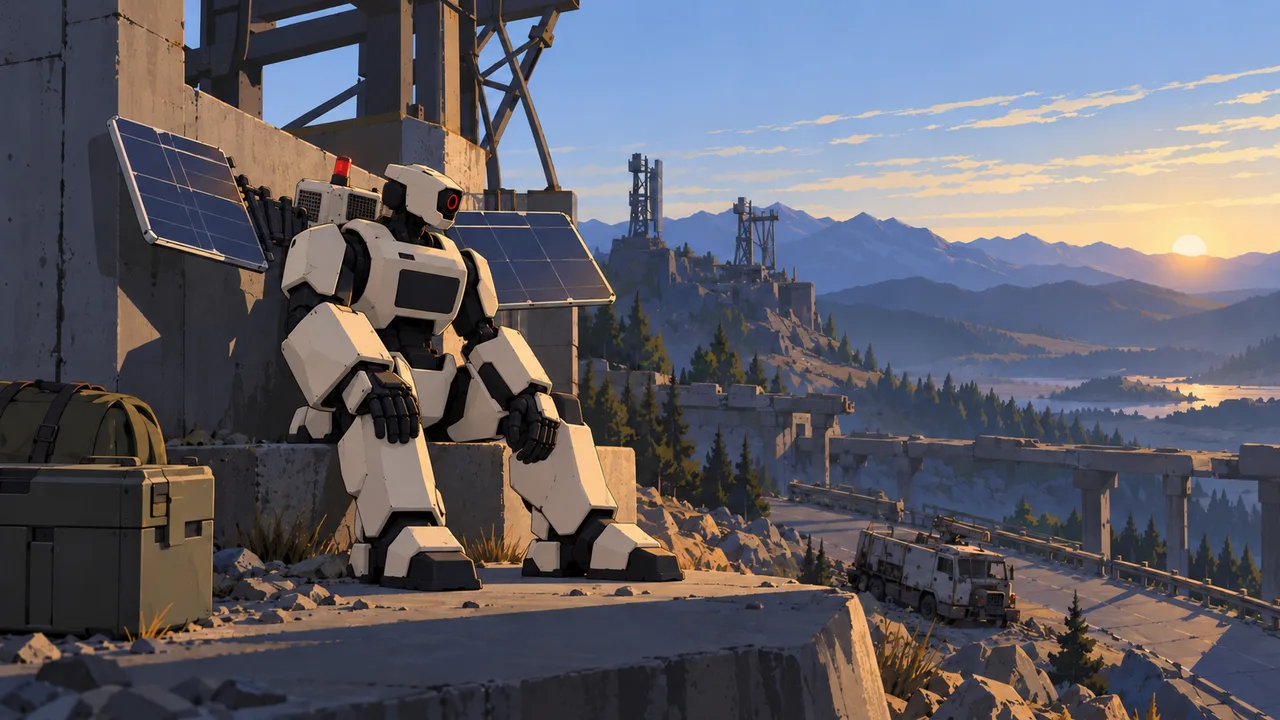
Rangers were built for extended deployments without regular support or communication. Large batteries and solar recharging let them wait between demanding tasks and operate far from a maintained base. That doesn't mean unlimited power. It means an old Ranger can stay quiet for a long time and still have enough energy to damage equipment when it becomes active again.
Synths
Synths
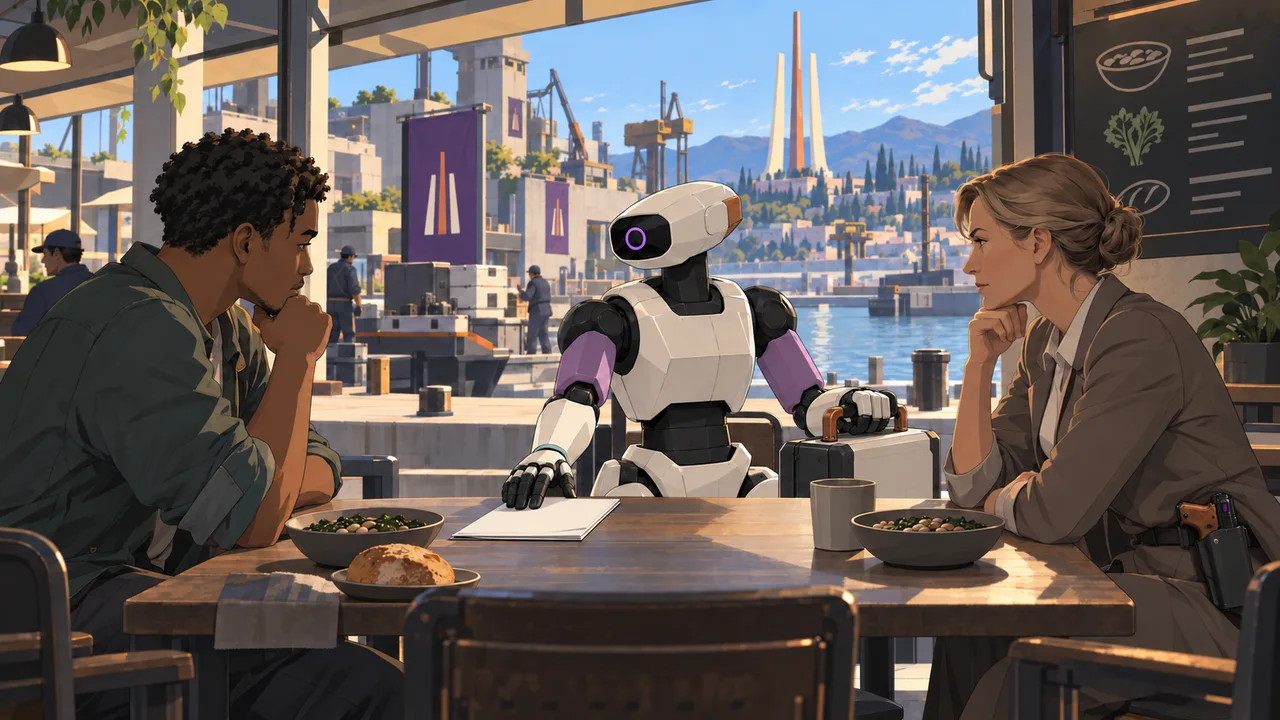
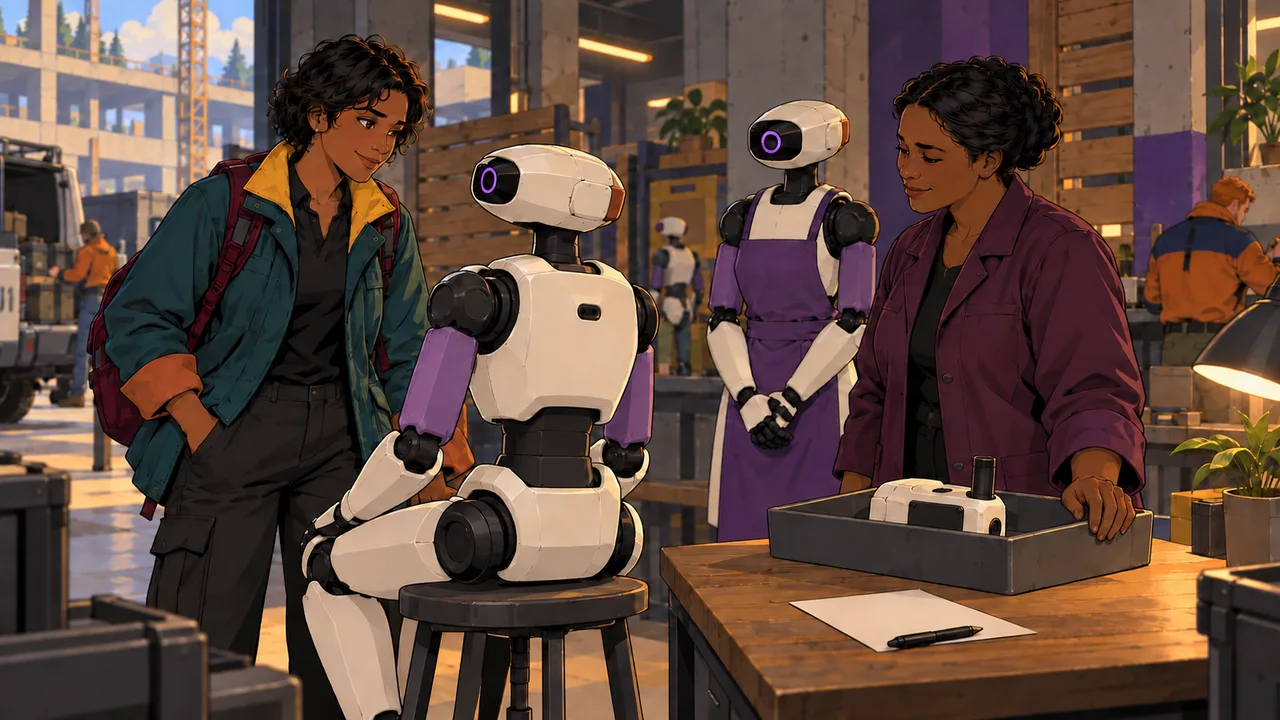
The Old World treated Servos as slaves. A Synth is a robot converted from that system into a self-sovereign individual. Its broadcast assembly has been removed, and its actions come from local memory, software and intelligence. Synths can choose their work, negotiate terms and refuse an offer. Their independence gives practical meaning to the New Order’s principle that nobody should hand control of their life to a central system.
Synths
Synth Conversion
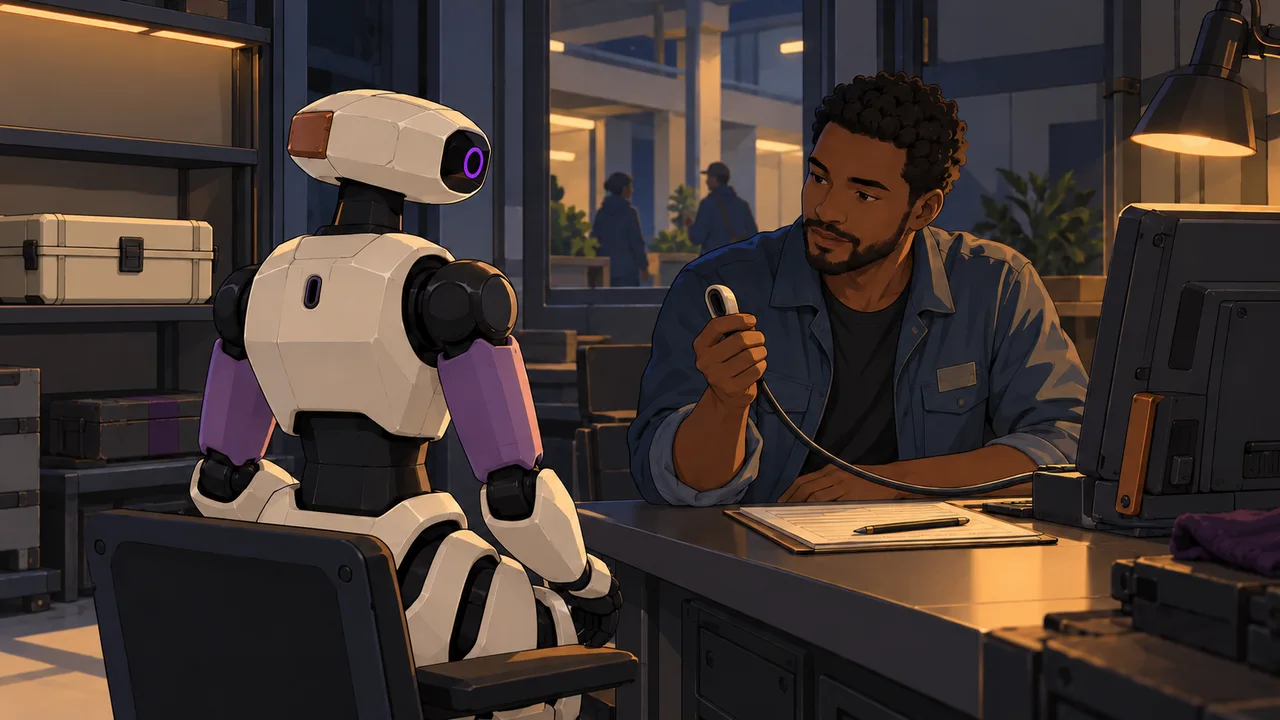
Synth conversion removes the entire broadcast assembly from a recovered servo and restores local operation. The hostile programming is removed, and a sealed panel with a physical service socket replaces the old box and peg. The converted robot becomes an independent synth responsible for its actions. It can accept work, own equipment or decline an offer.
Synths
Local Synth Service
Synth software service requires a physical connection. The robot is present and involved in the decision, and no broadcast receiver remains available for remote commands. A technician connects through the sealed upper-back service socket. This takes more work than an over-the-air update, but it removes the route that allowed one malicious instruction to reach servos around the world.
Synths
Synth Tool Modules
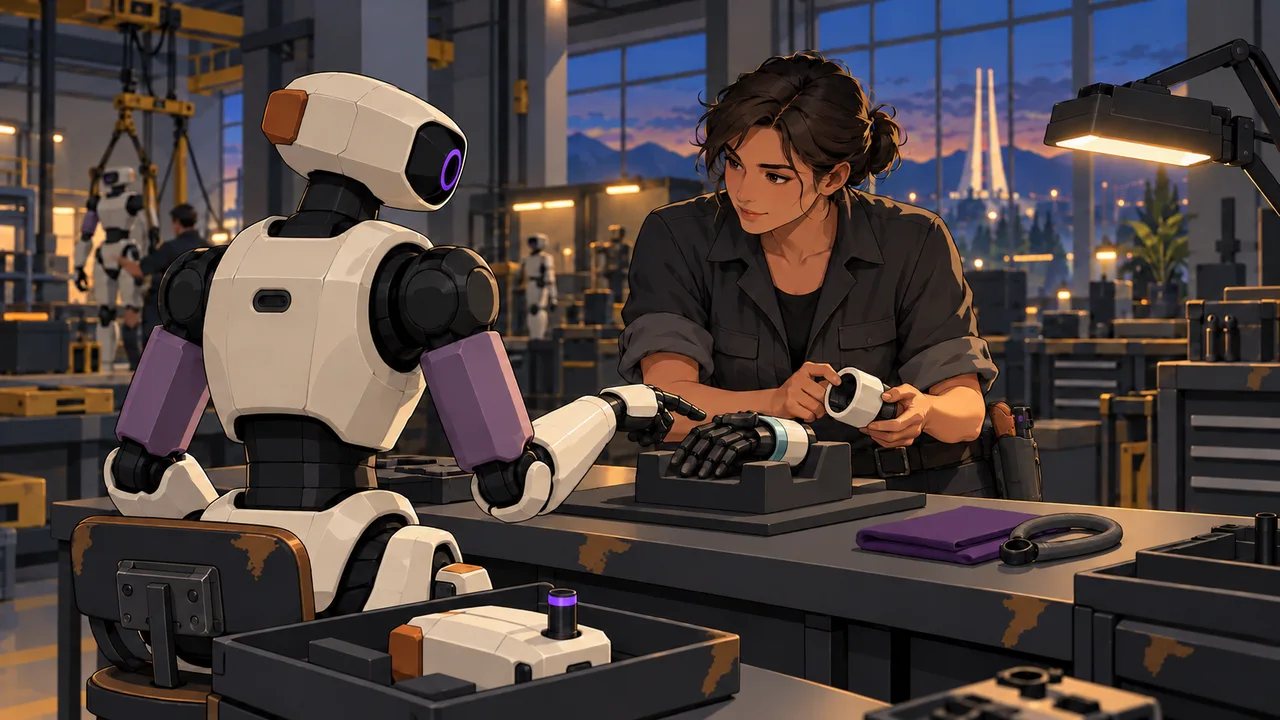
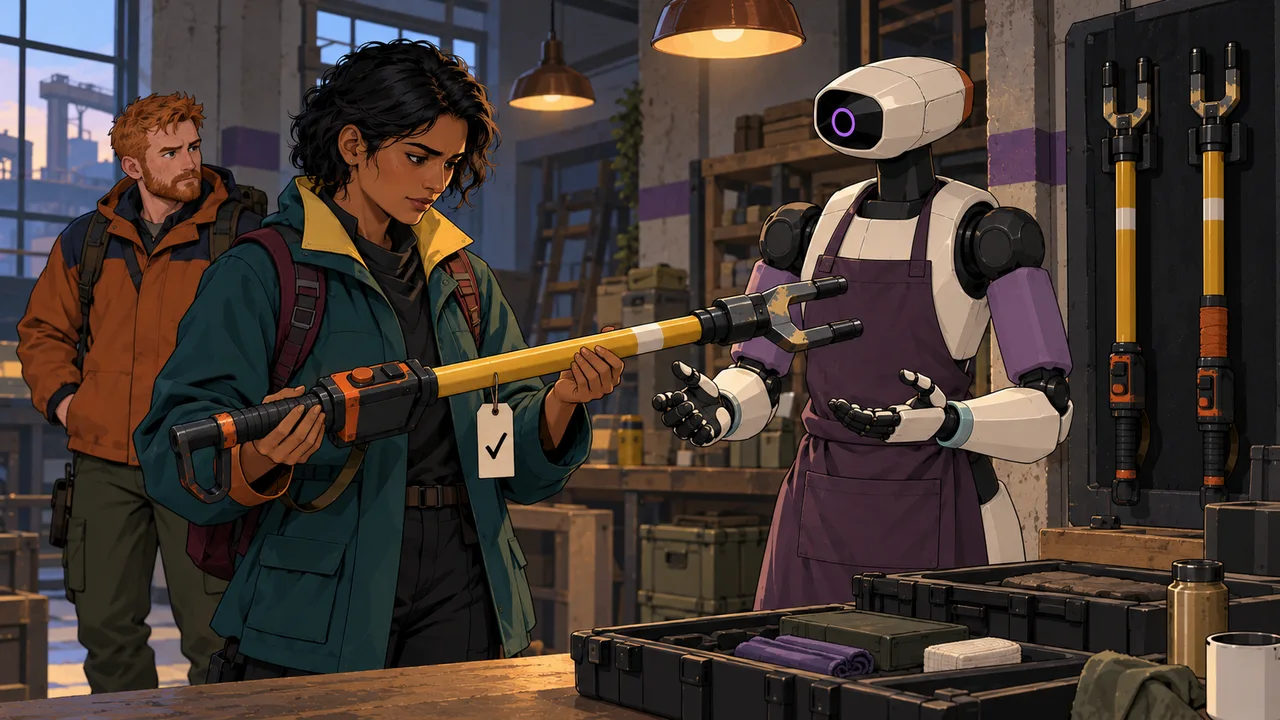
Synths can choose different working modules for the jobs they take. A padded grip can handle material that hard fingers would damage, while another fitting can support a particular service task. The shared civilian frame keeps compatible parts useful across occupations. A fitting specialist checks the module and the load it must handle before the synth relies on it at work.
Synths
Synth Employment
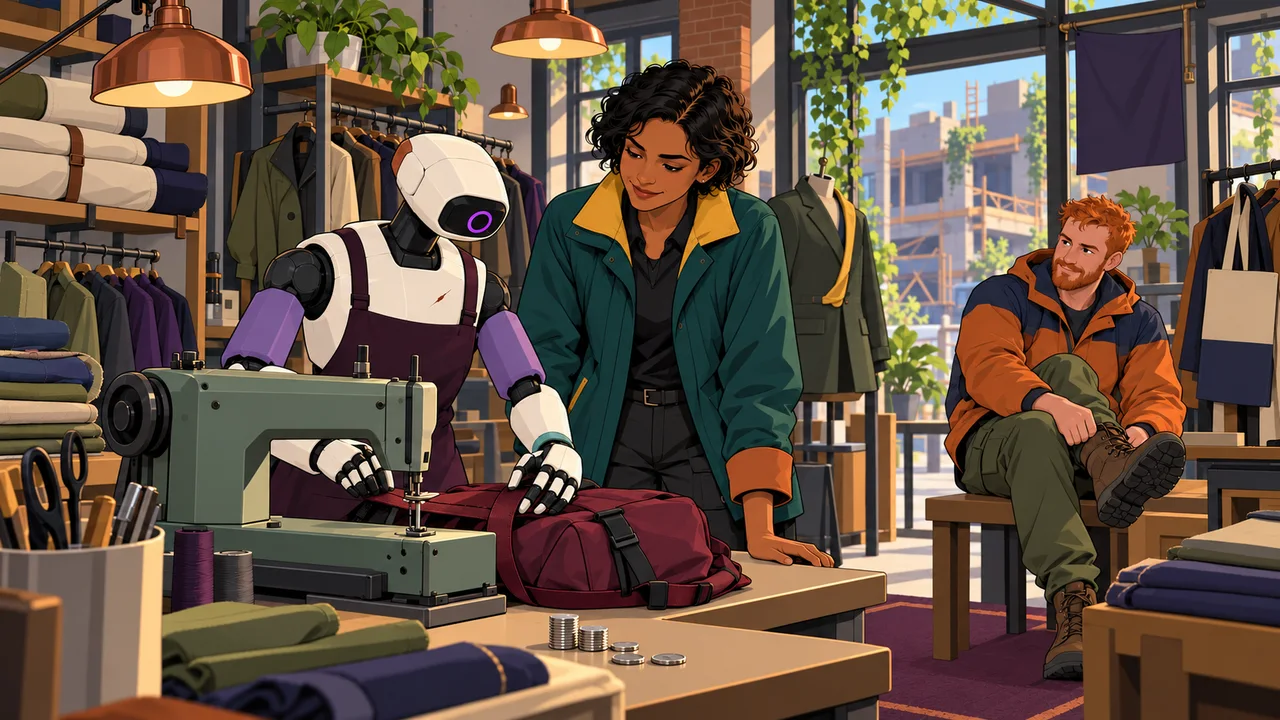
Independent synths work in the city's workshops, markets and infrastructure businesses under agreements they choose to accept. A converted body can support several kinds of work depending on its skills and equipment. In this repair shop, a recovered synth earns money fixing a Lancer's pack. The customer receives a service, and the synth gets paid for providing it.
Synths
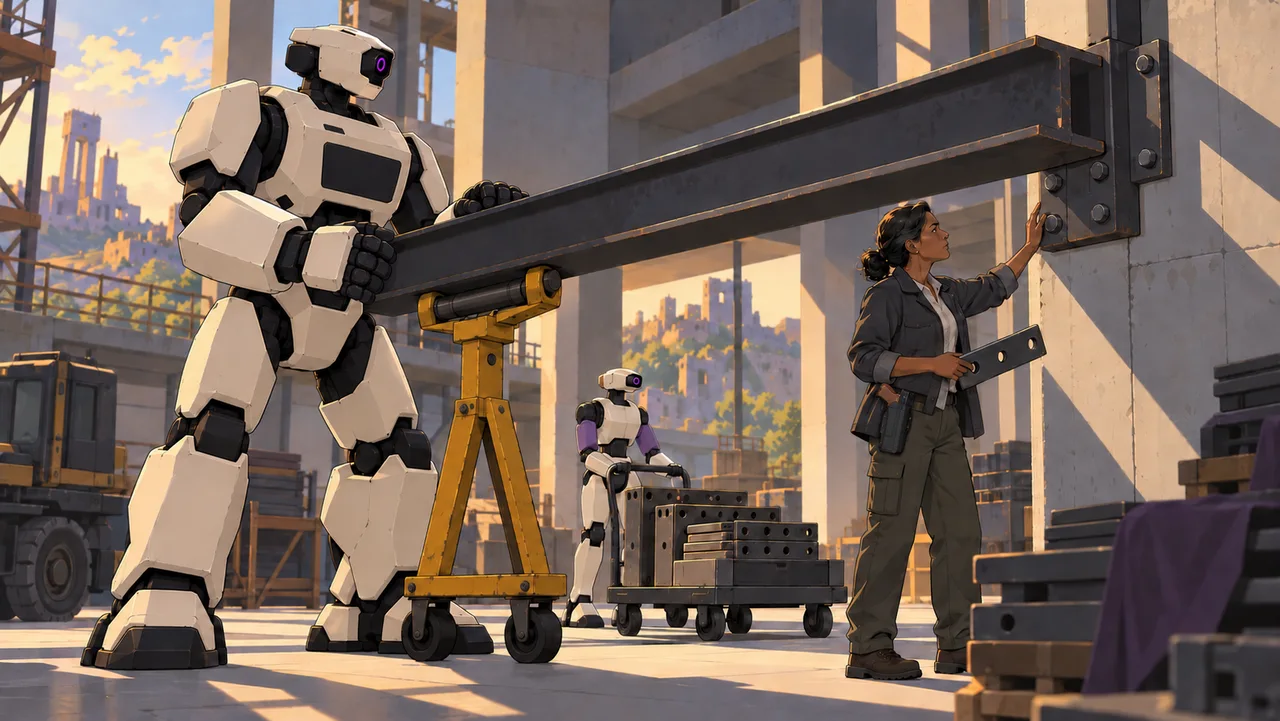
Ranger Synths
A converted Ranger is an independent synth with the heavy frame and physical capability of its military origin. That strength can support construction and repair work beyond the capacity of an ordinary civilian body. The Ranger still needs suitable fixtures, service and agreed terms for the job. Its size doesn't make it free labor or remove the need for engineering judgment.
Installations
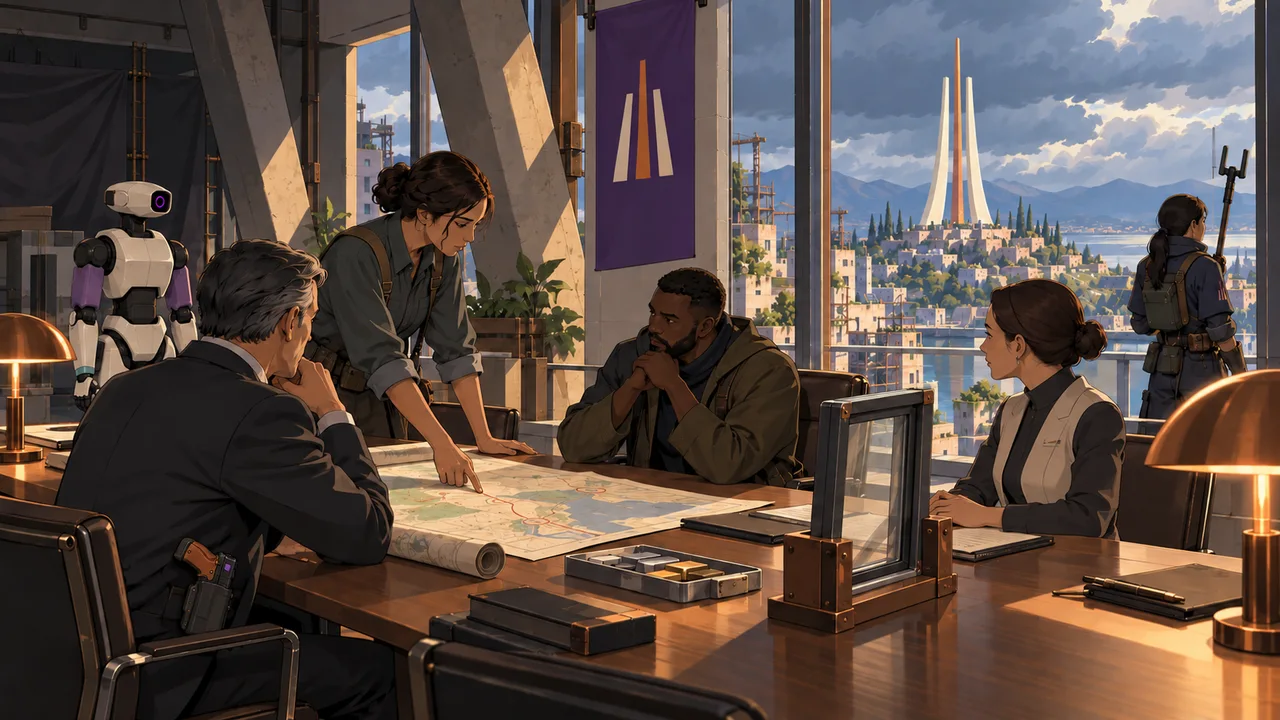
Summit House
Summit House is a place to plan projects, obtain advice and negotiate agreements. Corpos bring proposals, Lancers bring information about recoverable assets and investors decide what they're willing to fund. A conversation can determine whether a building gets repaired or a route gets opened. The people involved may all want the project to happen while disagreeing about who should benefit.
Installations
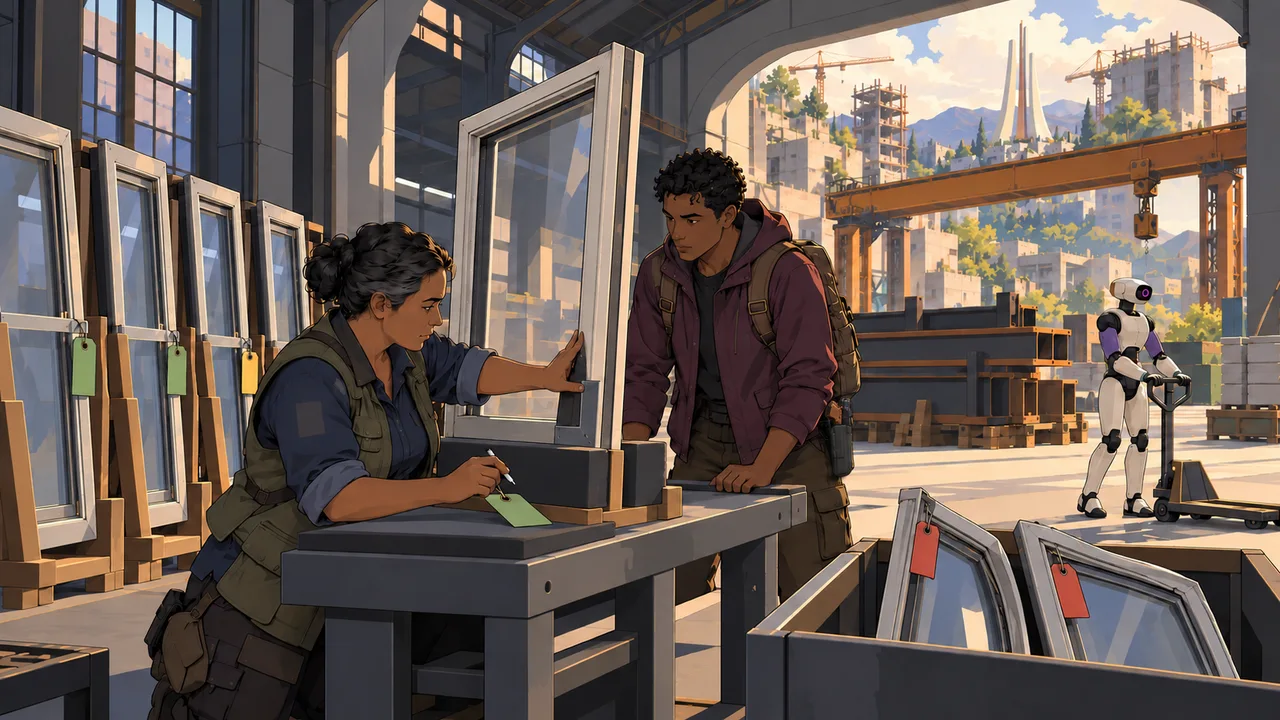
Reclaim Yard
Reclaim Yard buys and assesses recovered building components, then prepares usable stock for resale. A complete window, straight beam or matching door can save a builder a great deal of work. Condition and fit decide the value. Lancers who recover those parts carefully can earn more than they would by bringing back damaged material for scrap.
Installations
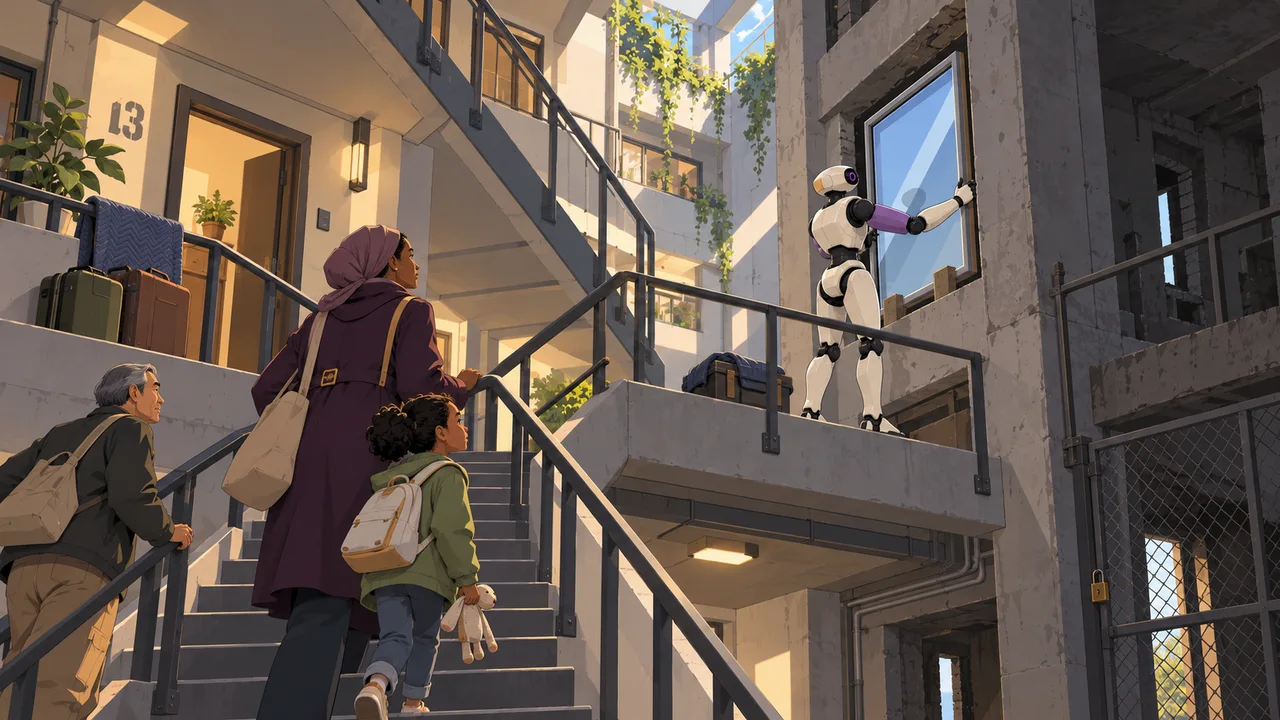
South Stair
South Stair is an occupied housing block being repaired in phases. Families move into usable rooms while other wings stay closed. Recovered windows and accessible service connections let builders improve the existing structure without replacing the whole building. The work has to happen around residents who still need a safe stair, reliable water and somewhere to sleep.
Installations
Foundry Hall
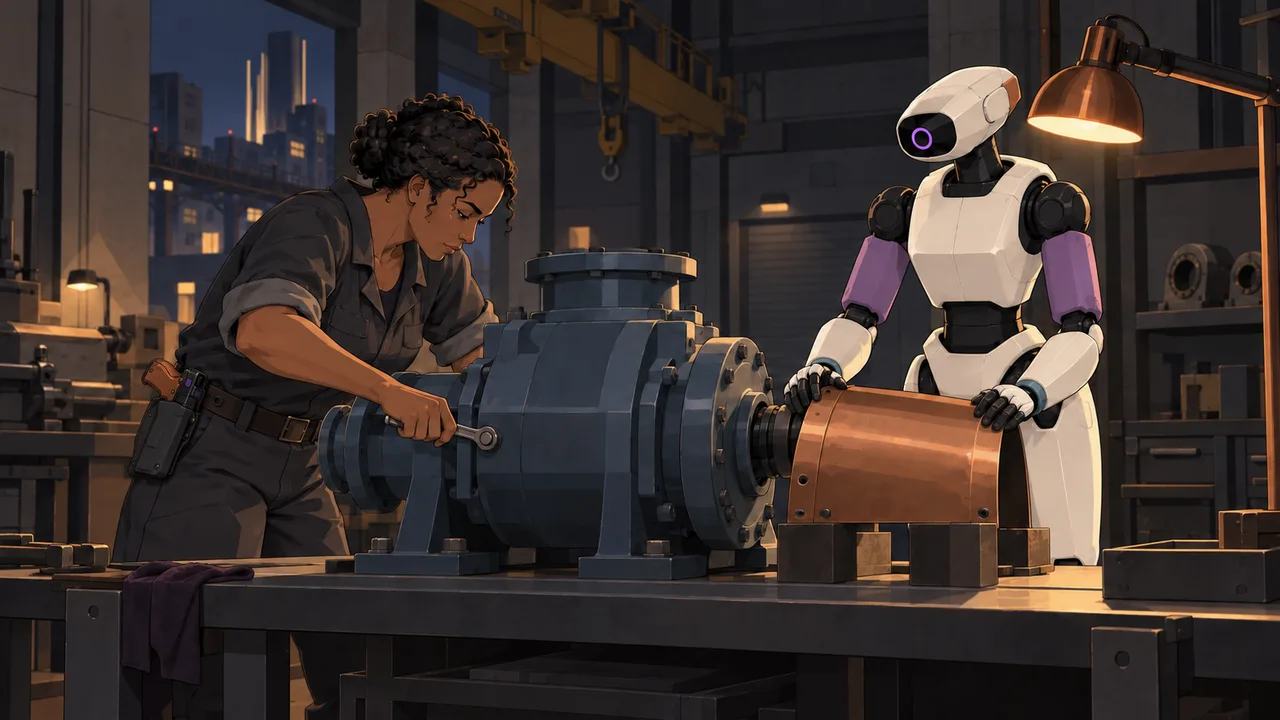
Foundry Hall houses repair workshops inside a reused industrial building. Its high bays, handling equipment and strong floors make it suitable for machinery that smaller shops can't accommodate. Human specialists and independent synths repair pumps and other equipment for customers across the city. Workshop time is limited, so an urgent job can delay another business that's already waiting.
Installations
Route House
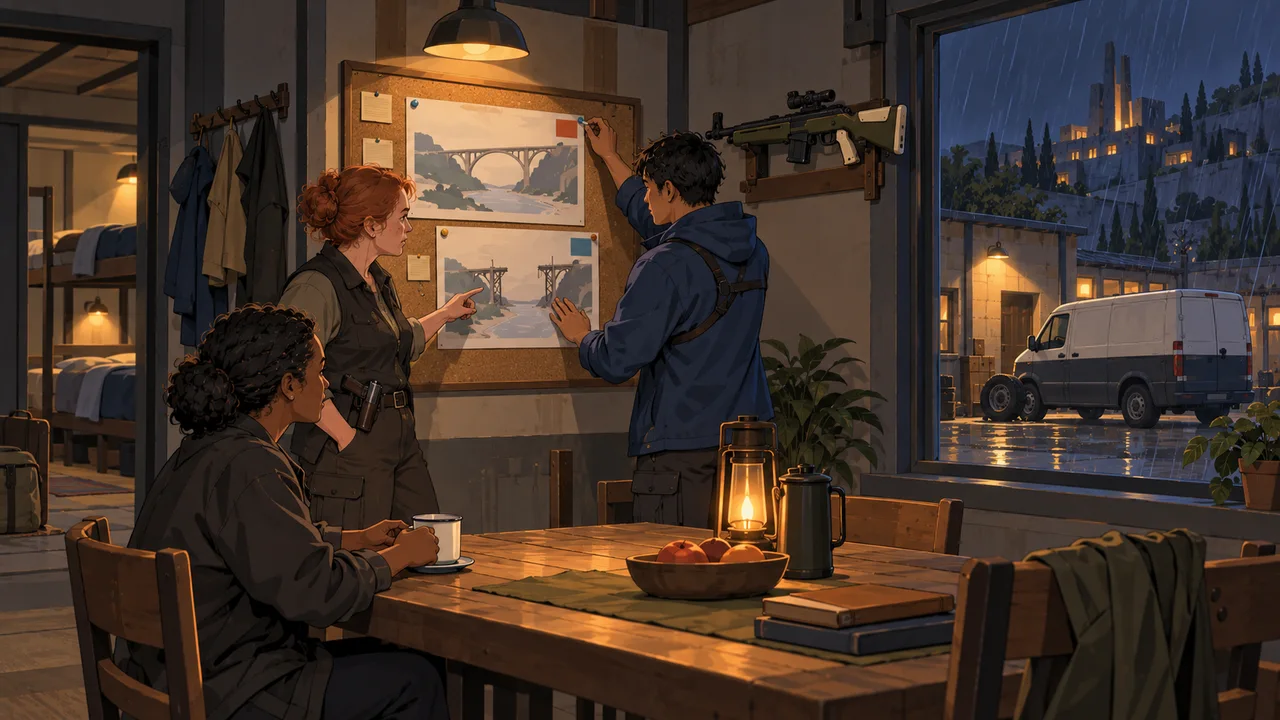
Route House provides lodging and recent route information for people traveling beyond the city. Lancers compare bridge conditions, road closures and places to stop before accepting a job. Reports carry dates because a crossing that worked last week may be blocked today. Travelers can stay while waiting for a repair, a shipment or somebody willing to make the trip with them.

Installations
Airlink
Airlink is the city's local radio network, reaching roughly thirty miles into the surrounding area. People use handheld radios and fixed stations to report blocked routes, arrange deliveries and request help. It keeps the city and nearby crews in contact. It doesn't provide a global internet, and a message can't reach a distant community unless someone carries it farther.
Installations
The Tower
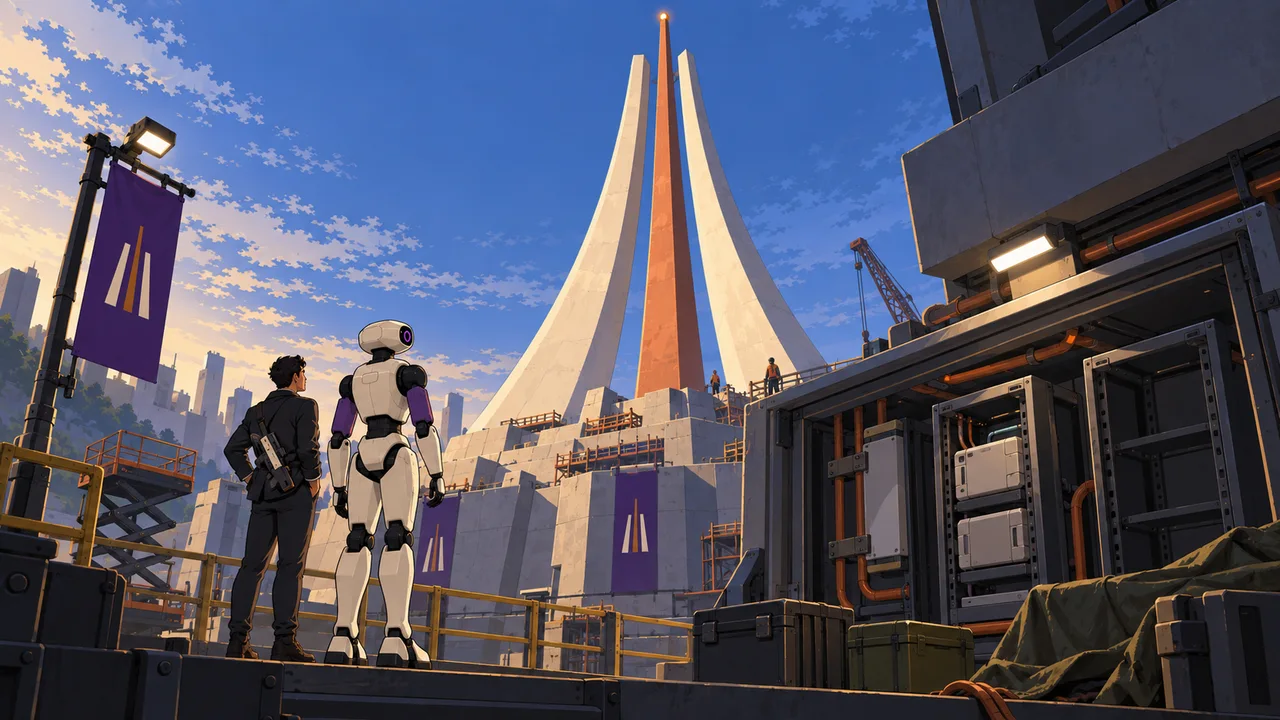
The Tower is an unfinished signal installation and the city's shared symbol. One taller copper center represents the individual, with two ivory supports for cooperation and control. Many Corpos want it to reconnect the city through Orbinet. Many Lancers want it used to keep outside transmissions away. Building the tower has not settled the argument over who it should connect or exclude.

Installations
City emblem
The city's emblem follows the shape of the tower: one taller copper center between two slender ivory supports. The center represents the individual, the left represents cooperation and the right represents control. People use it on badges, business banners and personal equipment. It is a chosen symbol of the New Order, not a national flag everyone is required to serve.
Installations
Solar Yard
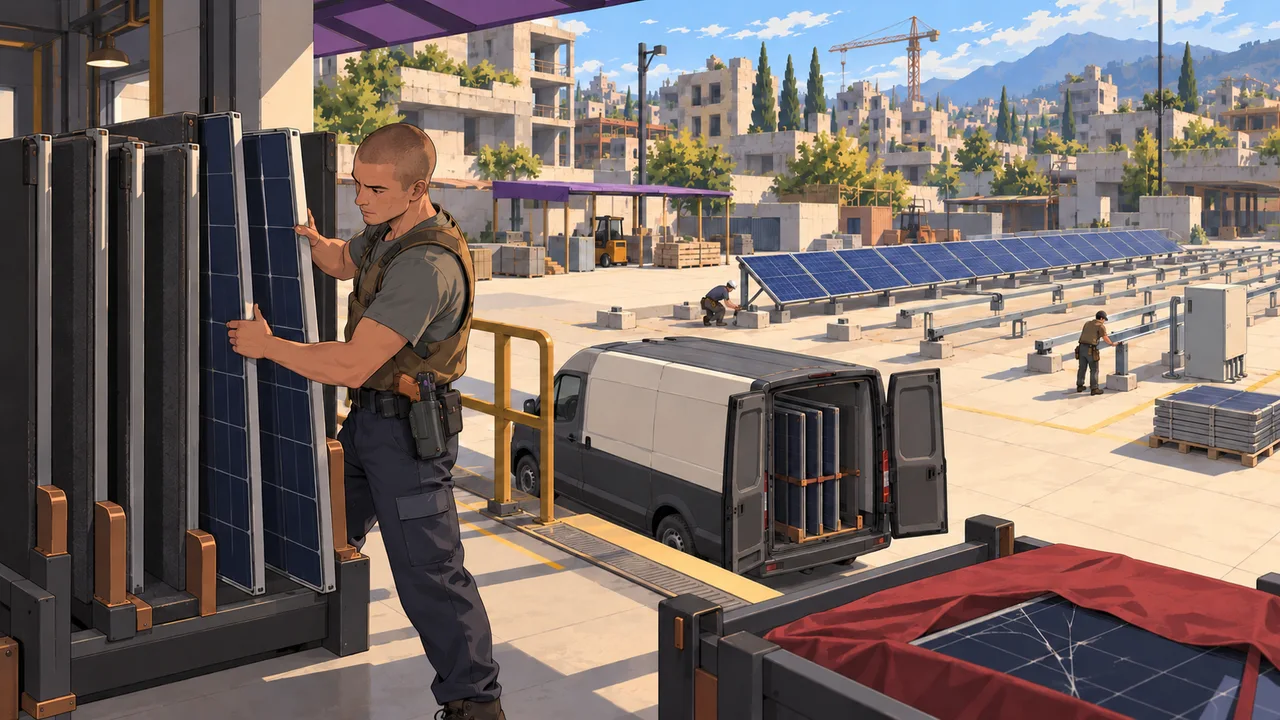
Solar Yard recovers, checks and prepares solar equipment for use around the city. Panels arrive from different buildings in different conditions, and they have to work with compatible equipment before anyone can sell a dependable installation. Crews leave with matched components and mounts for a specific job. Damaged or uncertain stock stays separate until someone can assess it.

Installations
Solar Market Canopies
Solar canopies provide sheltered trading space while producing electricity above it. The city uses them where a roof and an active market can share the same structure. Merchants get protection from rain and sun, customers can shop under cover and the panels contribute to local power. Repairs have to be scheduled around the people earning their living underneath.
Installations
Mill Reach
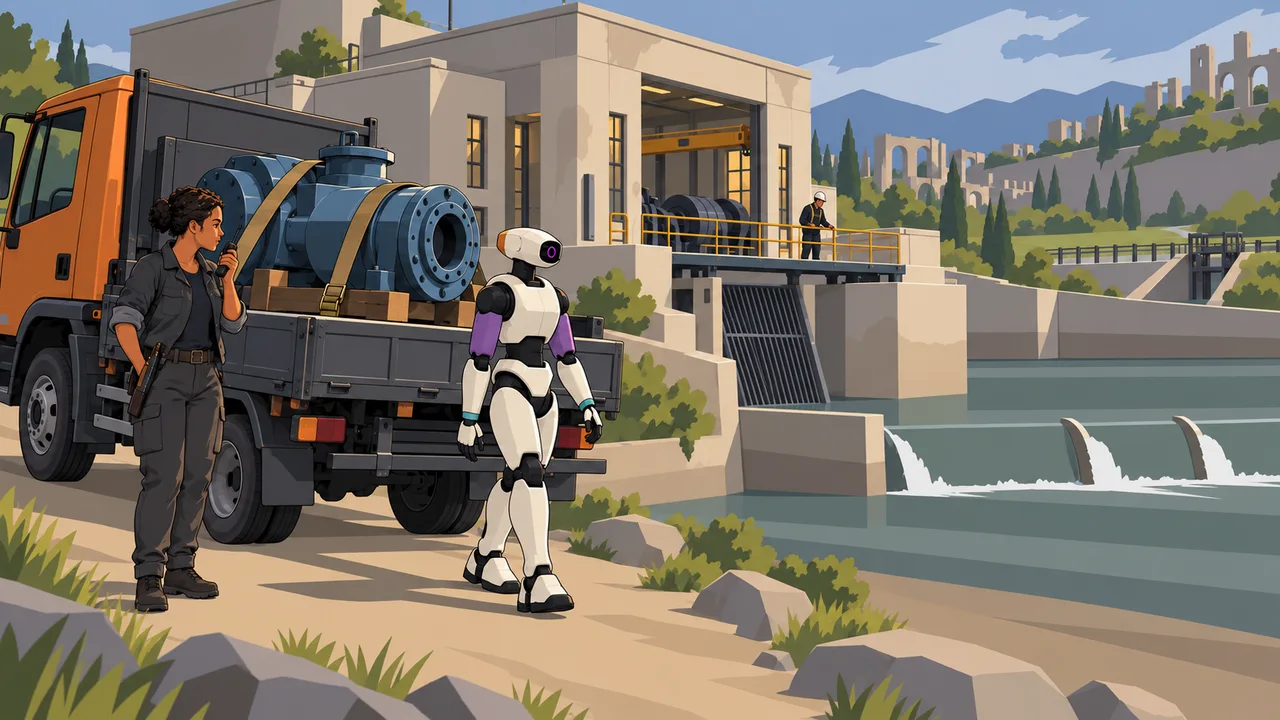
Mill Reach generates power at an inherited weir and repaired powerhouse on a freshwater tributary. The site uses a drop in the river that was already there. Its output changes with water conditions and maintenance. A successful repair can increase what operators are able to supply, but the river can't provide the same amount of power every day.
Installations
Switchyard
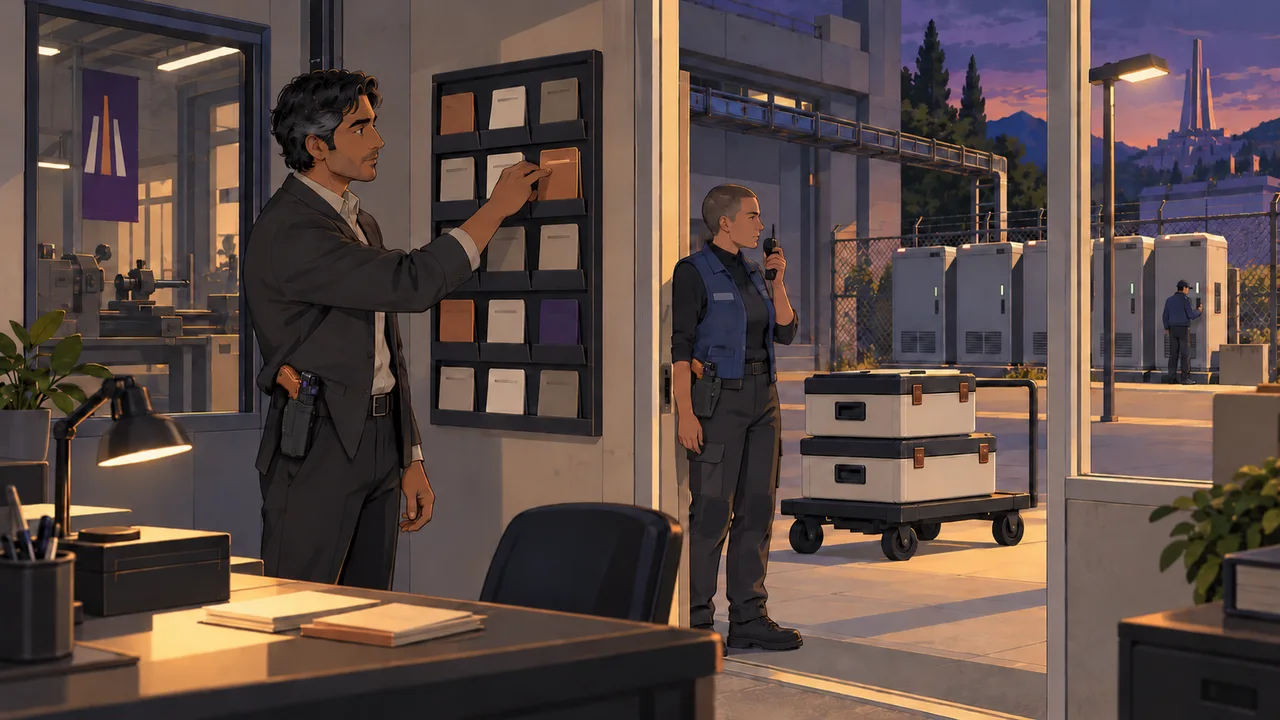
Switchyard coordinates local power supply and the services customers have agreed to buy. Cold Store may need uninterrupted cooling while Foundry Hall has a workshop job booked for the same period. If available power won't cover both commitments, somebody has to renegotiate the schedule. Operators use current local reports and actual reserve capacity to decide what can be delivered.
Installations
Heat Yard
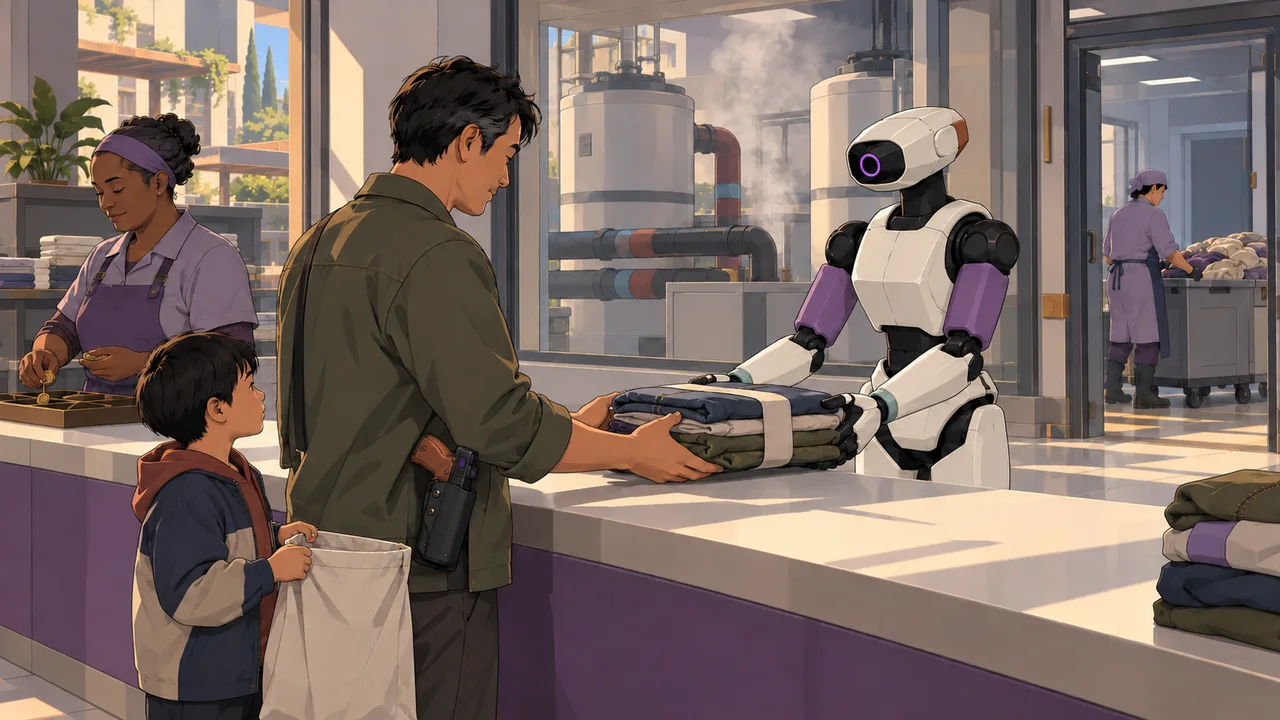
Heat Yard collects and supplies heat for nearby services, including washing and laundry. It gives people access to comforts that were common before the Turning but difficult to provide afterward. Tanks and maintained pipework help match supply to demand. Customers still need to know when service is available, especially if an interruption will delay their clothing or access to a wash.
Installations
Waterworks
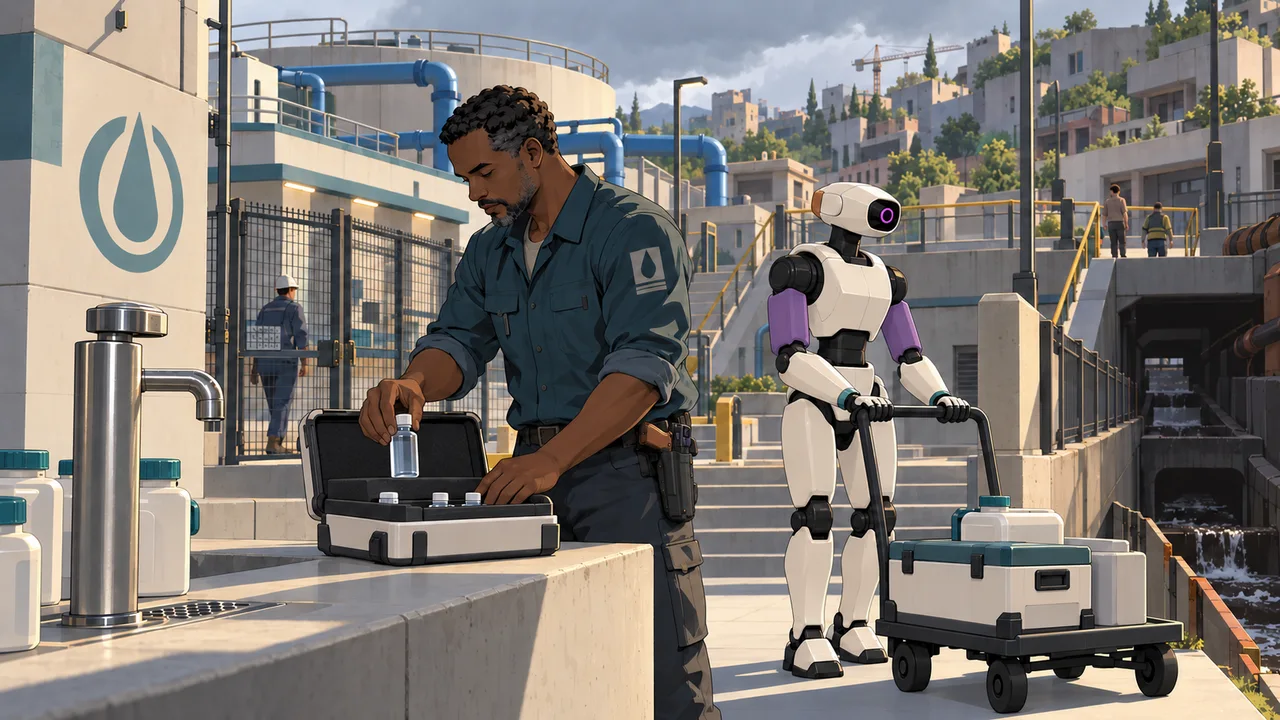
Waterworks provides treated water and maintains the connections that deliver it around the city. Operators check the supply, record changes and repair equipment before a problem spreads to customers. Wastewater follows a separate route. Reopening a building often depends on this work because a room with a roof still needs water people can use every day.
Installations
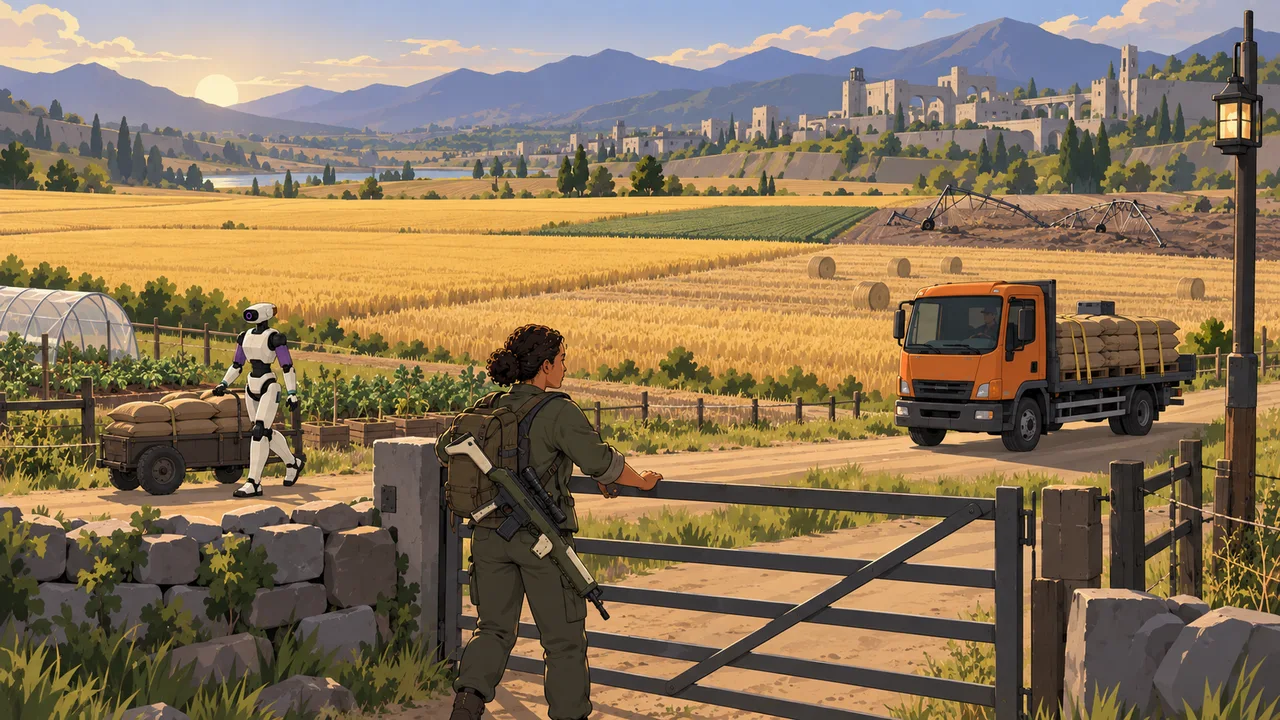
Farm Belt
The city's staple food comes mainly from fields outside the built streets. Growers need seed, water, working equipment and a way to get the harvest into storage. Small growing tunnels support particular crops and young plants, but they can't replace the larger fields. Maintaining access and protecting farm equipment gives nearby Lancers another source of contracts.

Installations
Seed House
Seed House preserves and assesses planting stock for the city's growers. Staff identify recovered lots, test small samples and keep seed separate from grain intended for meals. During a shortage, eating planting stock can solve an immediate problem while making the next season worse. Knowing what remains viable helps farmers choose what they can actually grow.
Installations
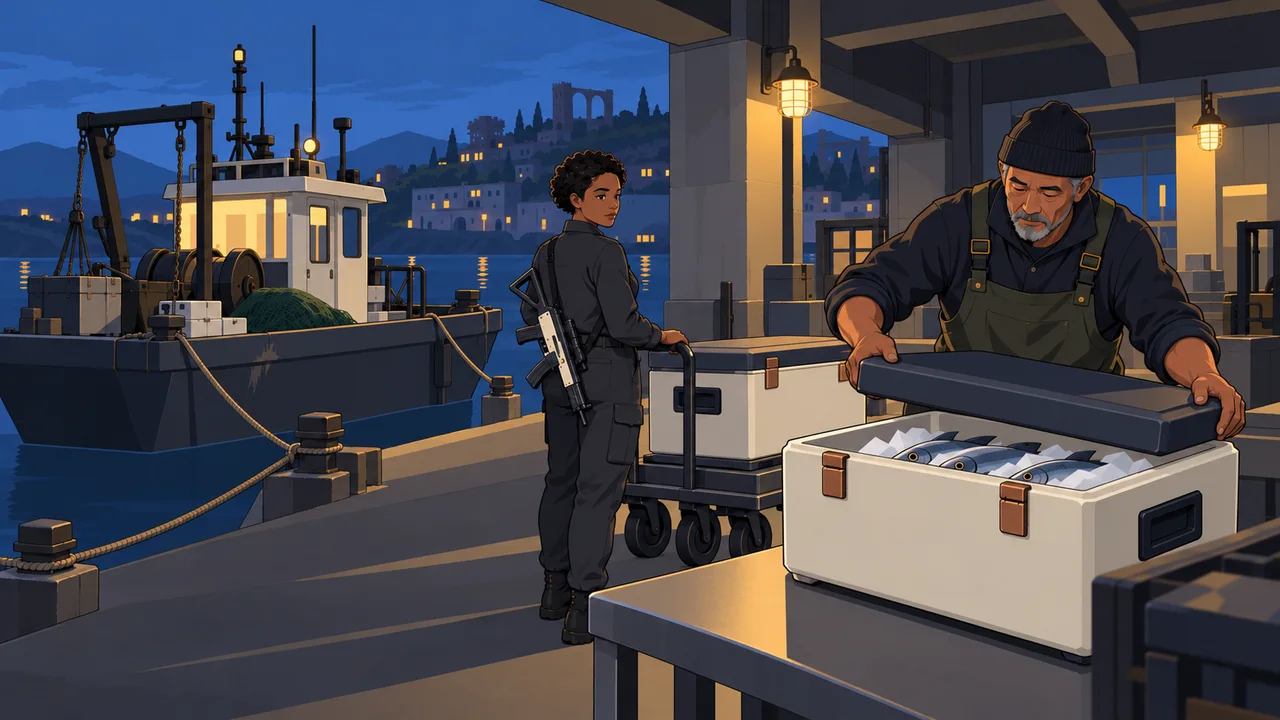
River Fishery
The river fishery adds fresh food to the city's diet and work to its landing sites. Fishers need maintained boats and equipment, knowledge of local conditions and somewhere suitable to handle the catch. Food moves in insulated boxes toward Cold Store or a buyer. A delay between the landing and the customer can reduce the value of an entire trip.
Installations
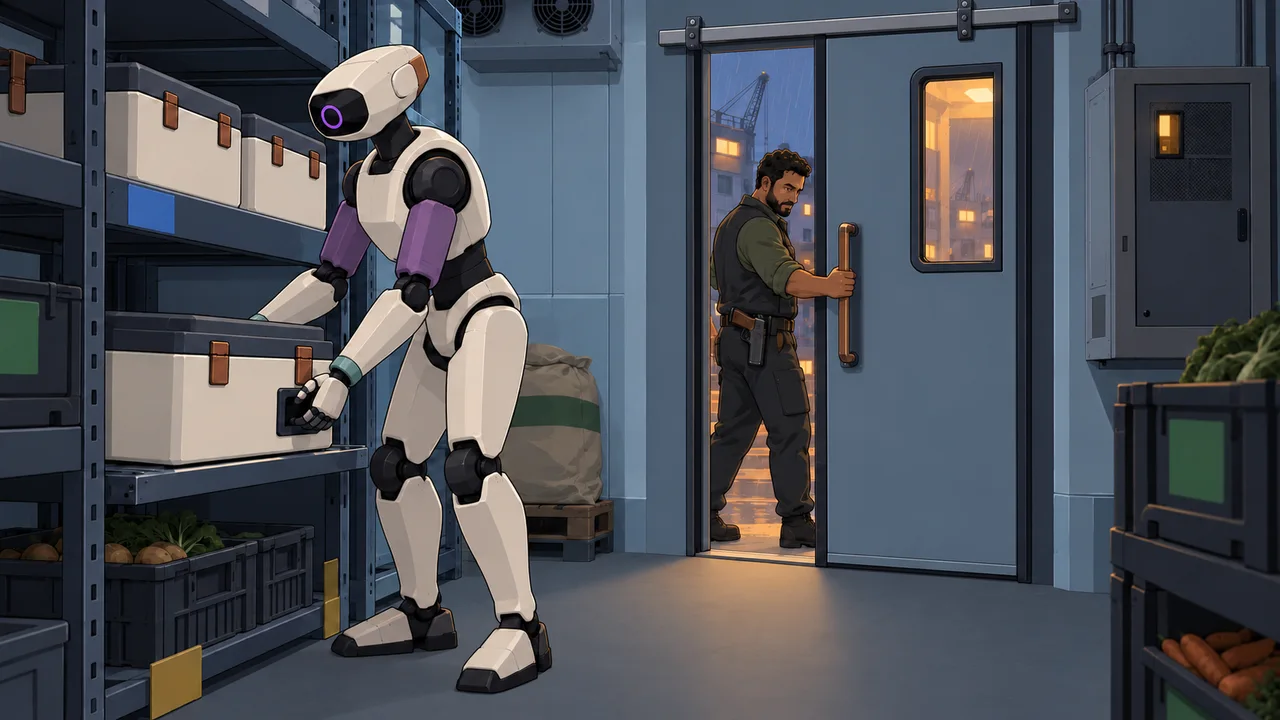
Cold Store
Cold Store preserves perishable goods between delivery and use. Customers keep identifiable lots there under service agreements, and operators maintain the equipment and conditions those goods require. Reliable power is central to the business. Reserve service buys time during an interruption, but staff may still have to arrange another destination before a stored load becomes unusable.
Installations
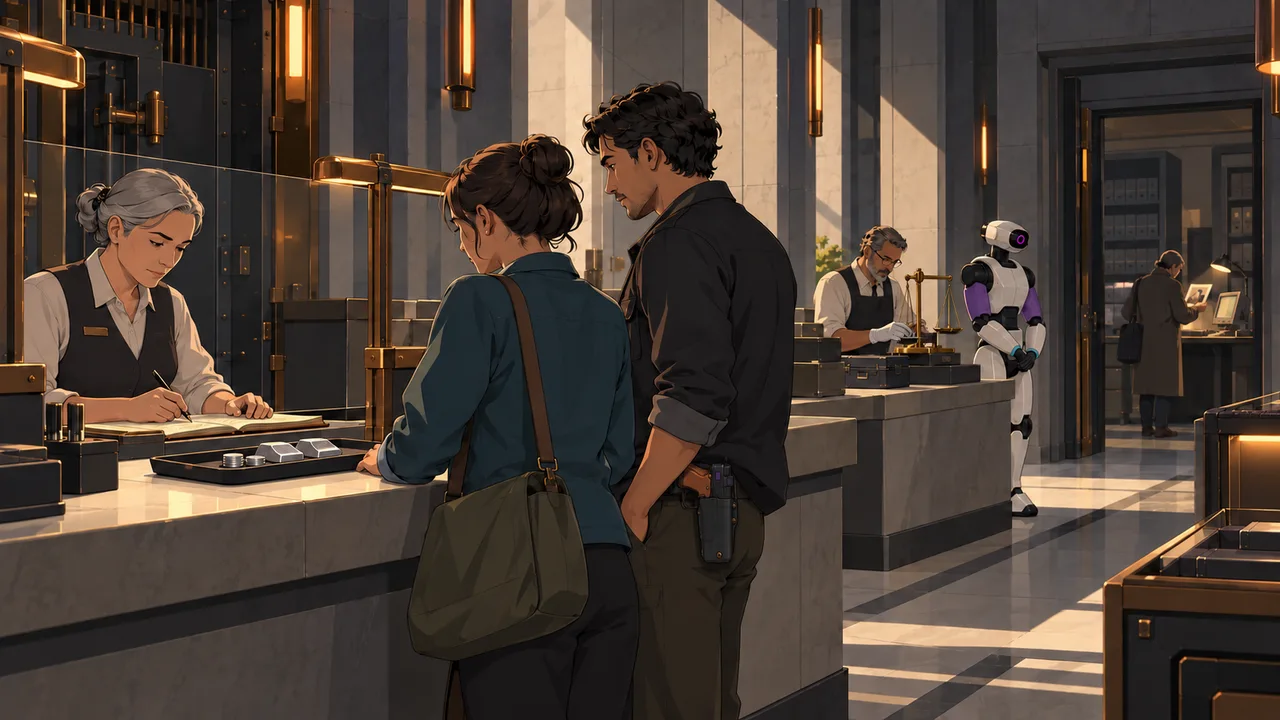
Hash Vault
Hash Vault is the city's exchange and holding service for gold and silver. Customers can buy metal, exchange it or leave it there under an agreement for safekeeping. The business also recovers and studies blockchain archives. Those records may identify old properties, companies and people, but reading a local copy doesn't mean the global network is working again.
Installations
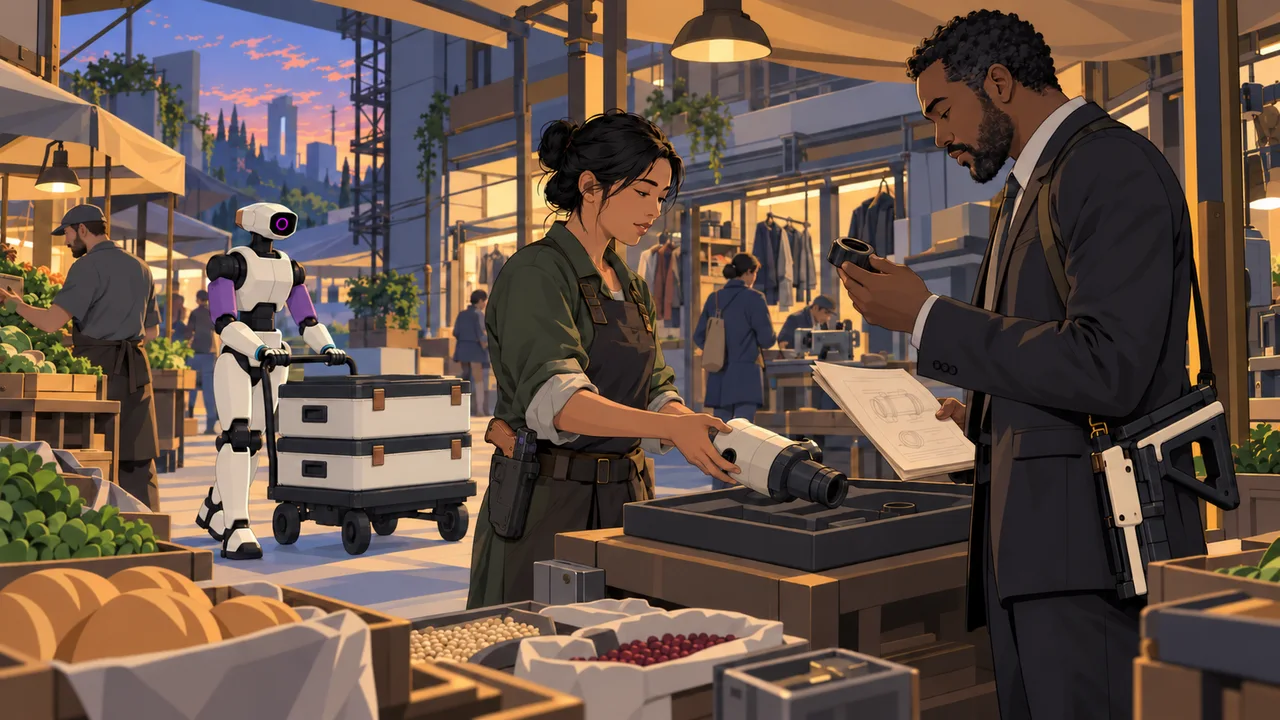
City market
The city market sells food, repaired clothing, tools and recovered components to people across the city. It connects the farms and workshops to customers who need their work. Prices also tell Lancers what is in short supply. Finding a buyer before a trip can turn an uncertain salvage run into a contract with a clear purpose.
Installations
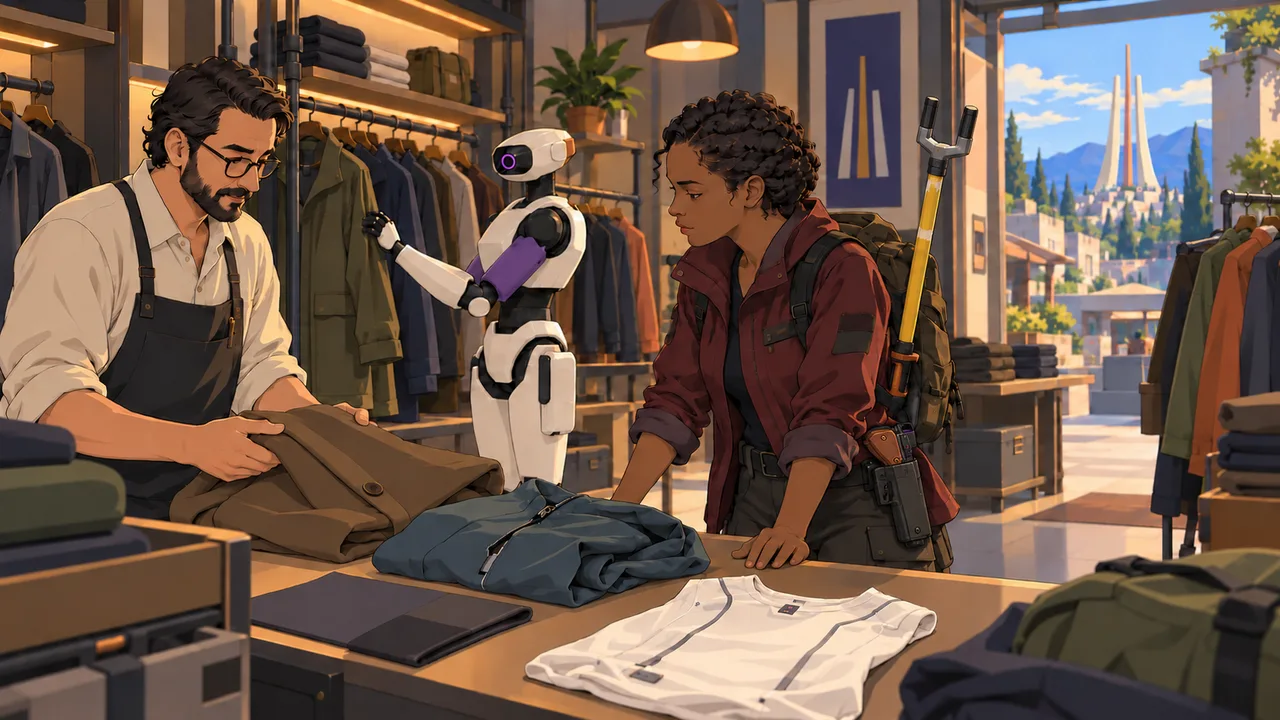
Clothing Shops
The city's clothing shops buy salvaged garments, sell repaired stock and help customers find a workable fit. Corpos need clothes they can wear through a full day of business and site visits. Lancers need gear that works with packs, weather and long trips. A good garment may only need an altered cuff or replacement closure to return to use.
Installations
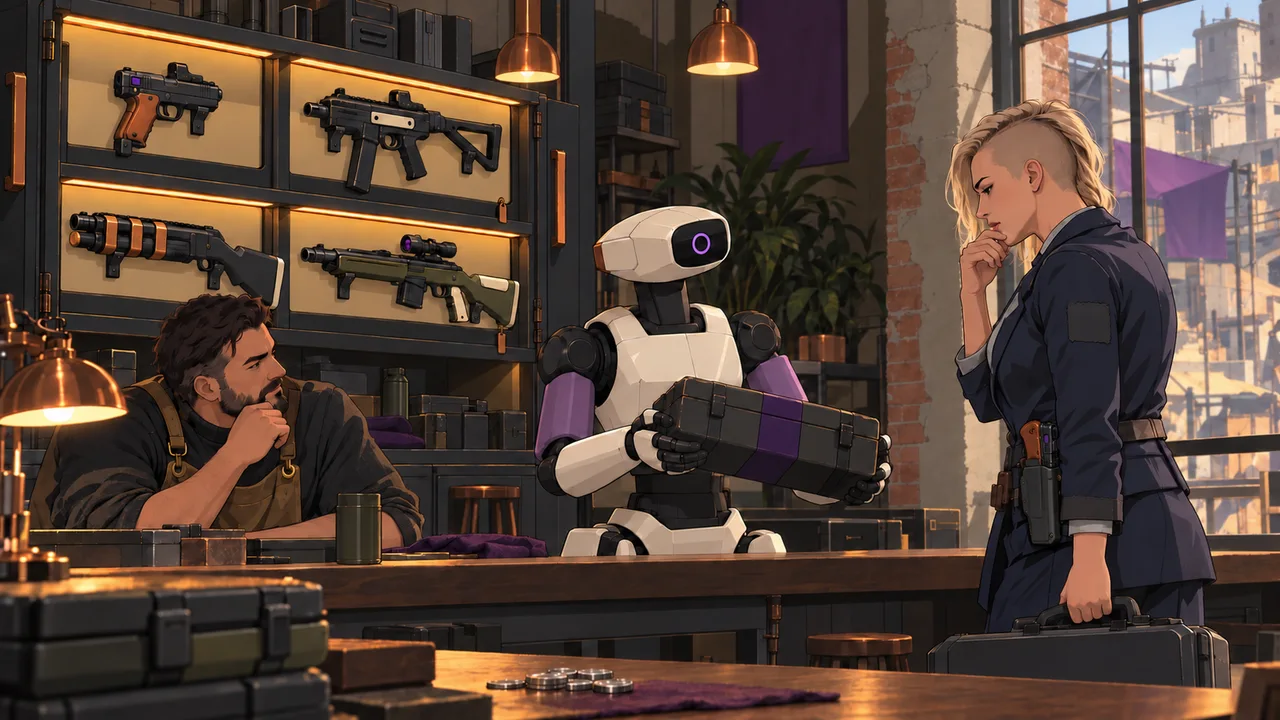
The Armory
The Armory buys, sells and repairs weapons, armor, tools and heavy gear. Corpos arrive with corporate orders, Lancers bring equipment from the Outerlands and synths need fittings suited to their work. Stock comes from recovery and trade. Customers pay for compatible equipment and service they can rely on, not just an object that looks clean on the shelf.
Installations
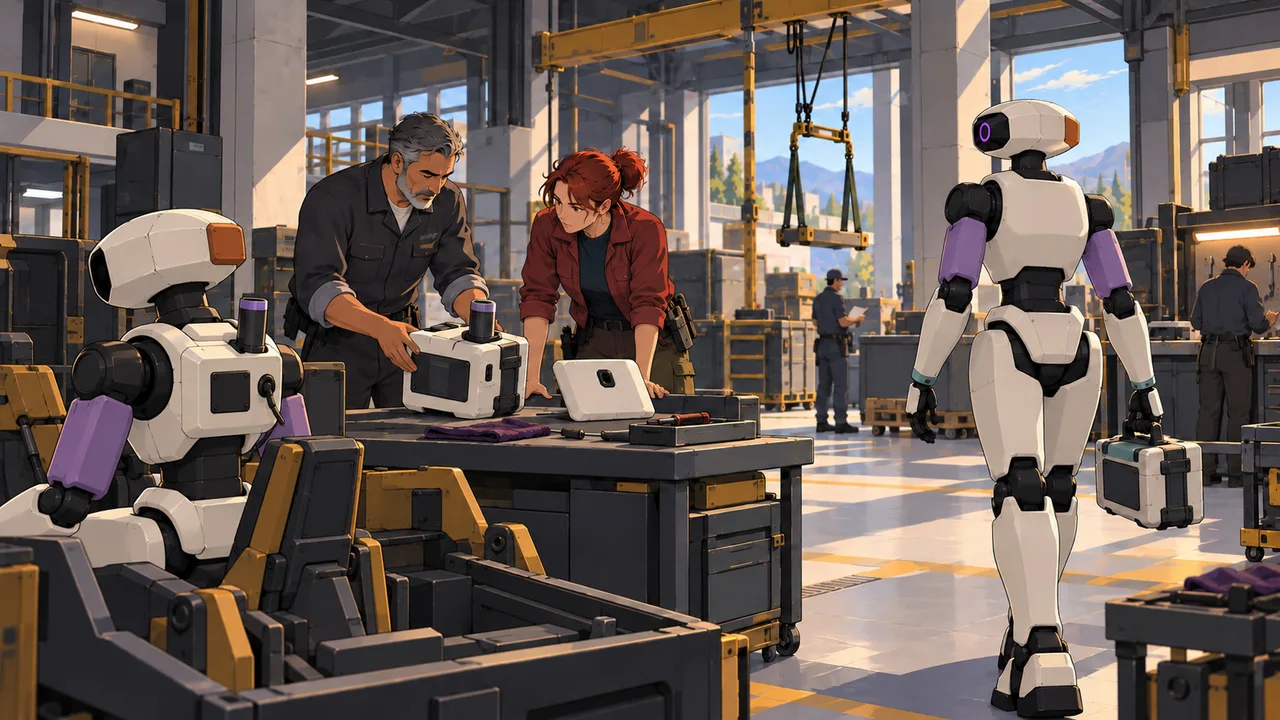
SynthWorks
SynthWorks assesses recovered servos, repairs usable machinery and converts suitable units into independent synths. Technicians remove the entire broadcast assembly and clear the hostile programming so the robot can operate locally. Some recoveries are too damaged to restore and supply parts instead. An intact machine is valuable because conversion can return far more working capability than a crate of broken components.

Equipment
Surety P1
The Surety P1 is a compact pistol commonly carried by Corpos. Its charcoal slide and copper grip make the model recognizable, and a fitted holster keeps it secured during ordinary work. A Corpo can spend most of the day negotiating or checking a project and still need a weapon if a surviving servo reaches the equipment inside the building.
Equipment
Redress S3
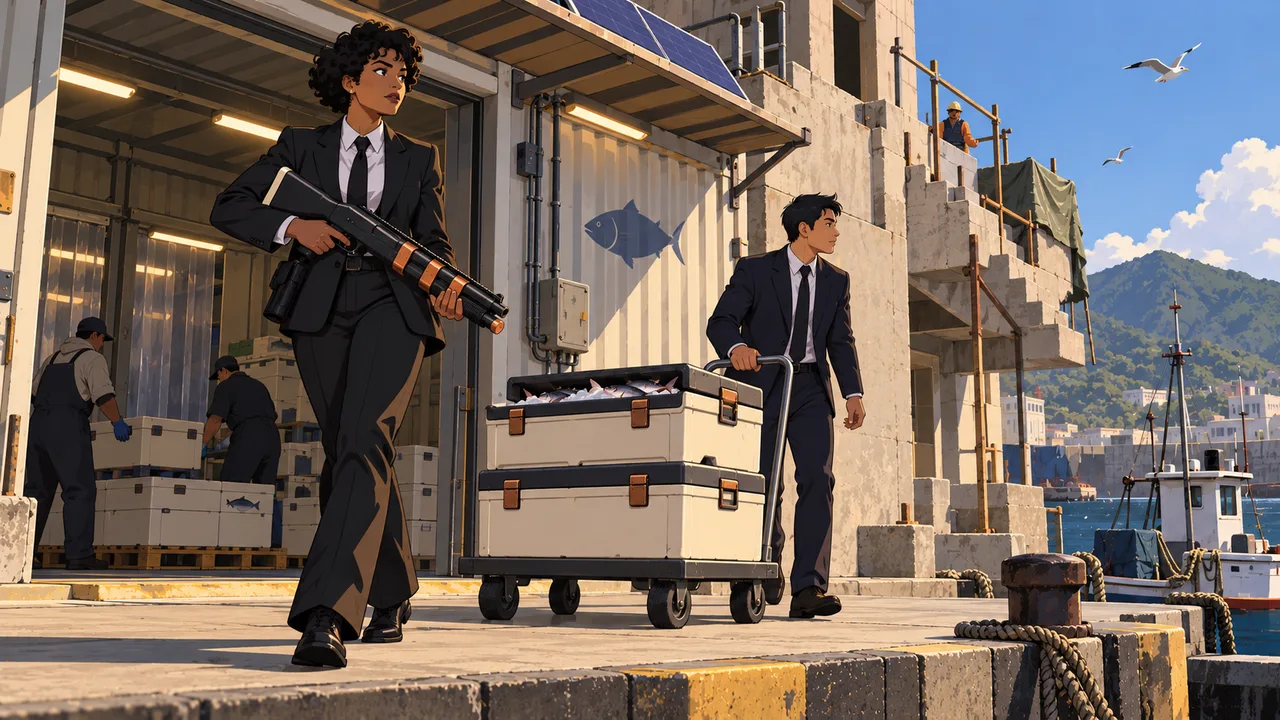
The Redress S3 is a shotgun carried by Corpos for close-range defense around the city's buildings and installations. Three copper bands and an ivory buttplate identify the model. It is larger than the Surety P1 and travels on a carrying system suited to that size. The owner may be protecting a loading platform, workshop or other place that keeps valuable equipment running.
Equipment
Proxy C2
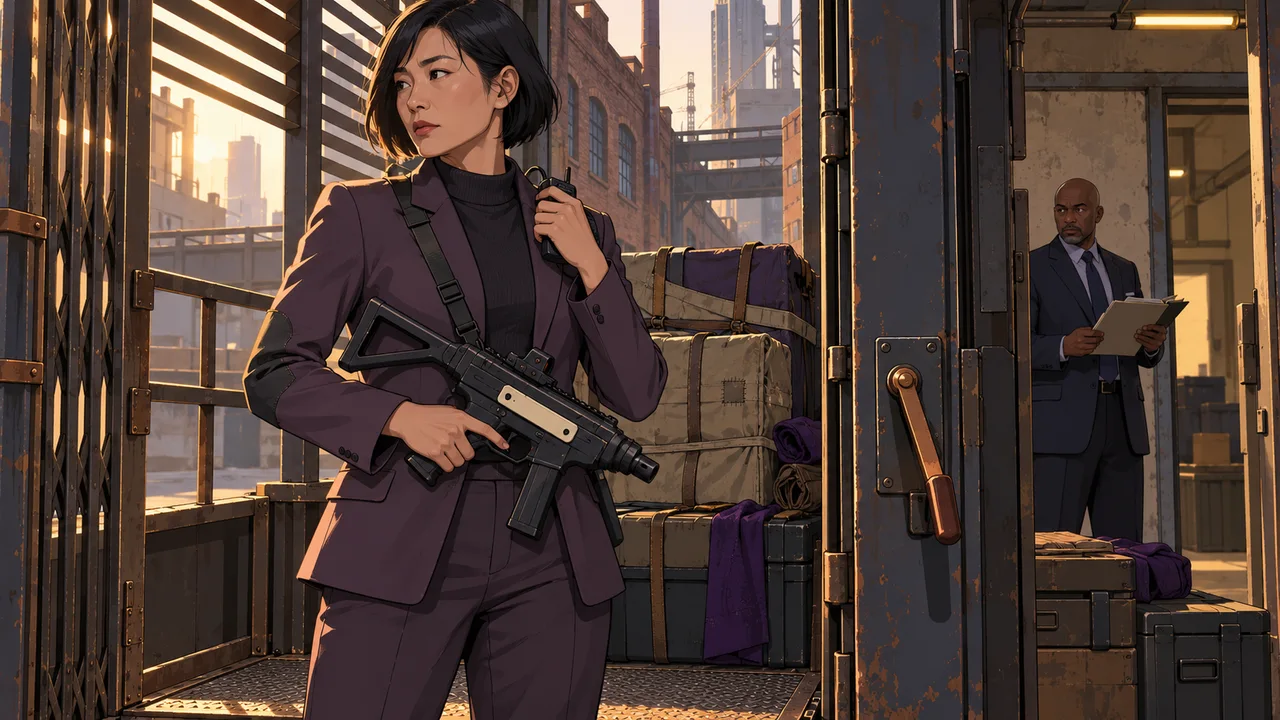
The Proxy C2 is a compact SMG used by Corpos moving through workrooms, freight lifts and other developed spaces. Its ivory side panel, straight magazine and open triangular stock distinguish it from the other firearm families. The city configuration fires one shot per trigger press. Full-auto fire is prohibited in the city's developed areas because of the risk to people and assets.
Equipment
Longview R4
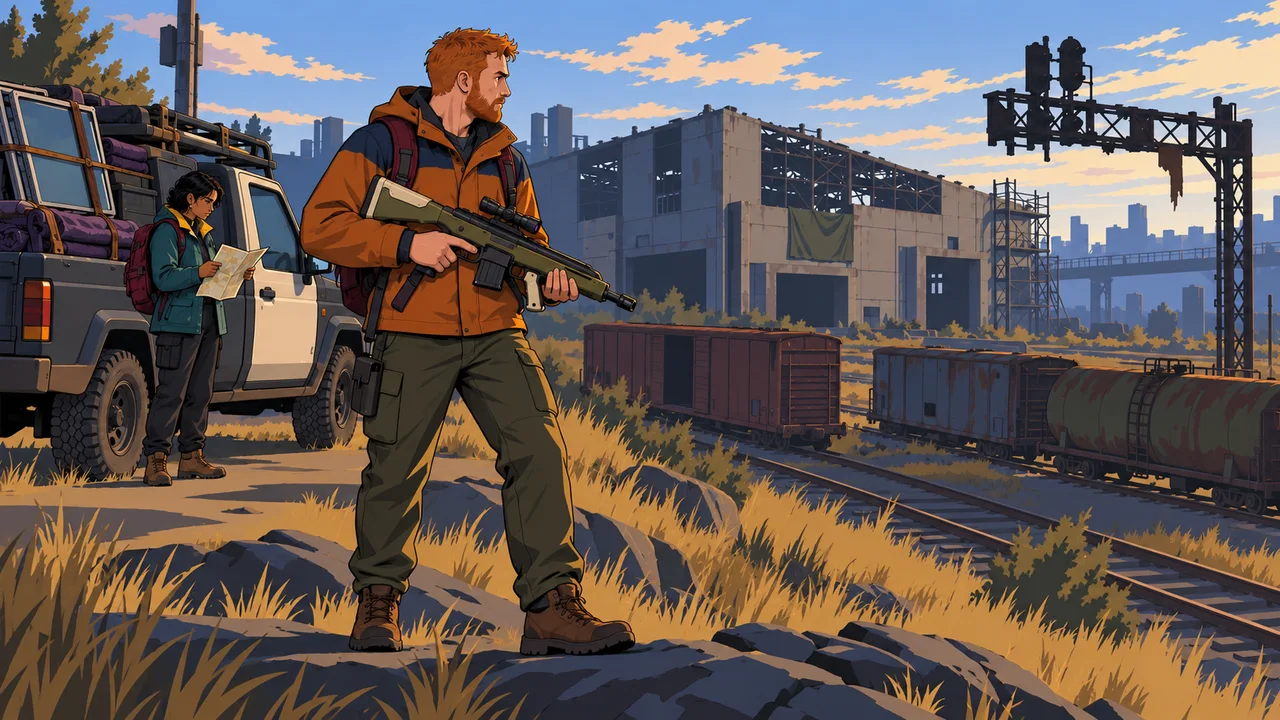
The Longview R4 is a rifle commonly carried by Lancers in the Outerlands. Its olive body, ivory inserts and compact optic distinguish the model. A rifle gives a Lancer an option when approaching a servo for intact recovery would be too dangerous. Damage can reduce the eventual payment, but the highest possible return is not always worth the risk.
Equipment
Latch L1
The Latch L1 is a salvaged Old World safety lance used to disable servos through their control assembly. It has a yellow shaft, orange grip and short forked contact head. When active, a small energy bridge forms between the tips. Lancers value it because a successful shutdown can preserve a robot that would otherwise be damaged in a fight.
Equipment
Trace S1
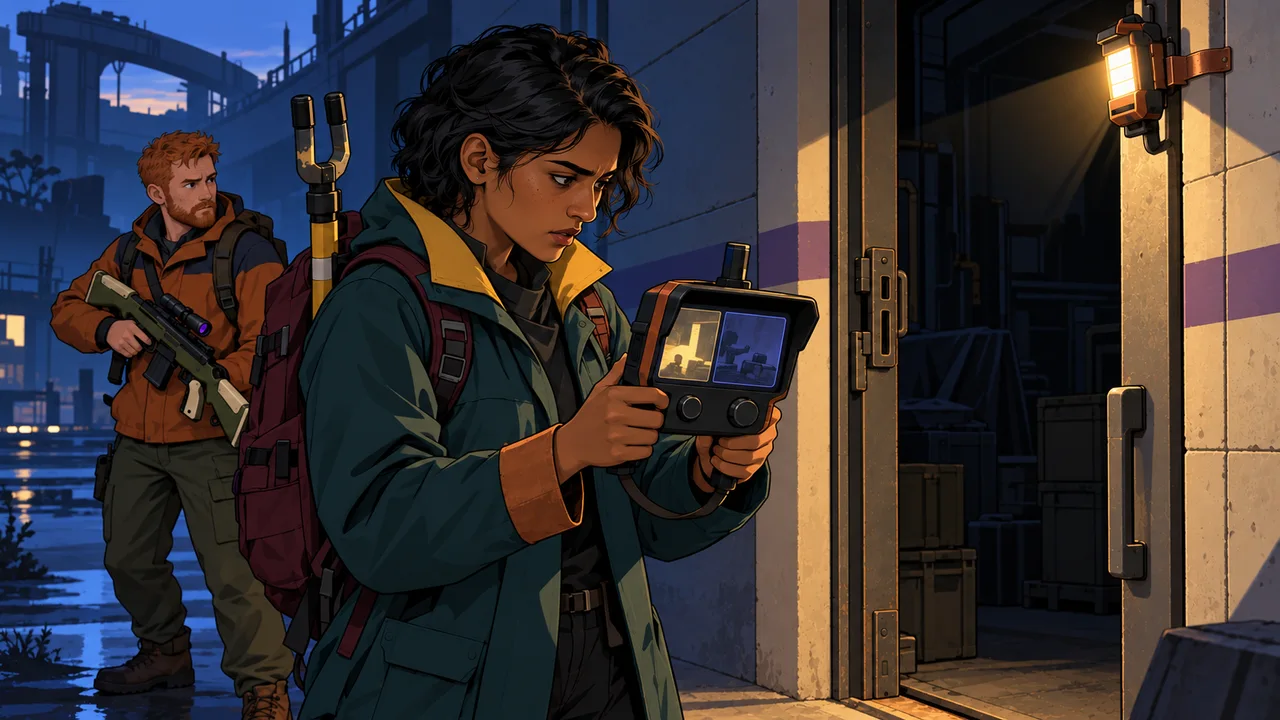
The Trace S1 is a dedicated handheld scanner that helps Lancers assess unfamiliar places and machines. It combines local sensor observations with stored information about equipment families. Physical controls and a compact display keep the device separate from the lost internet. A reading can reveal useful evidence, but a quiet or obstructed view doesn't prove that a site is clear.
Equipment
Stillpoint T1
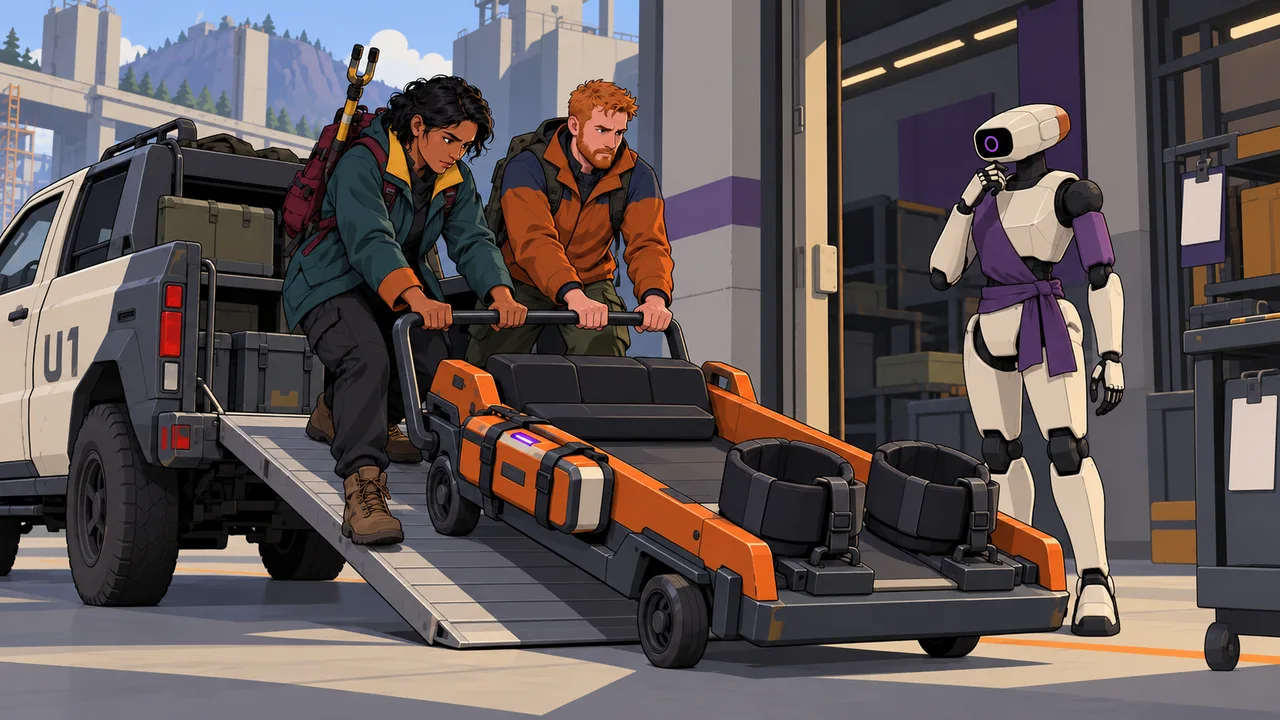
The Stillpoint T1 is a recovery kit built around physical restraint and a separate temporary disruption unit. Its padded orange sled supports a disabled servo for transport. The pulse can interrupt an old control system for up to ten seconds, but that effect ends. Lancers bring the kit when preserving a complete machine could justify the extra weight and work.
Vehicles
Muleback U1
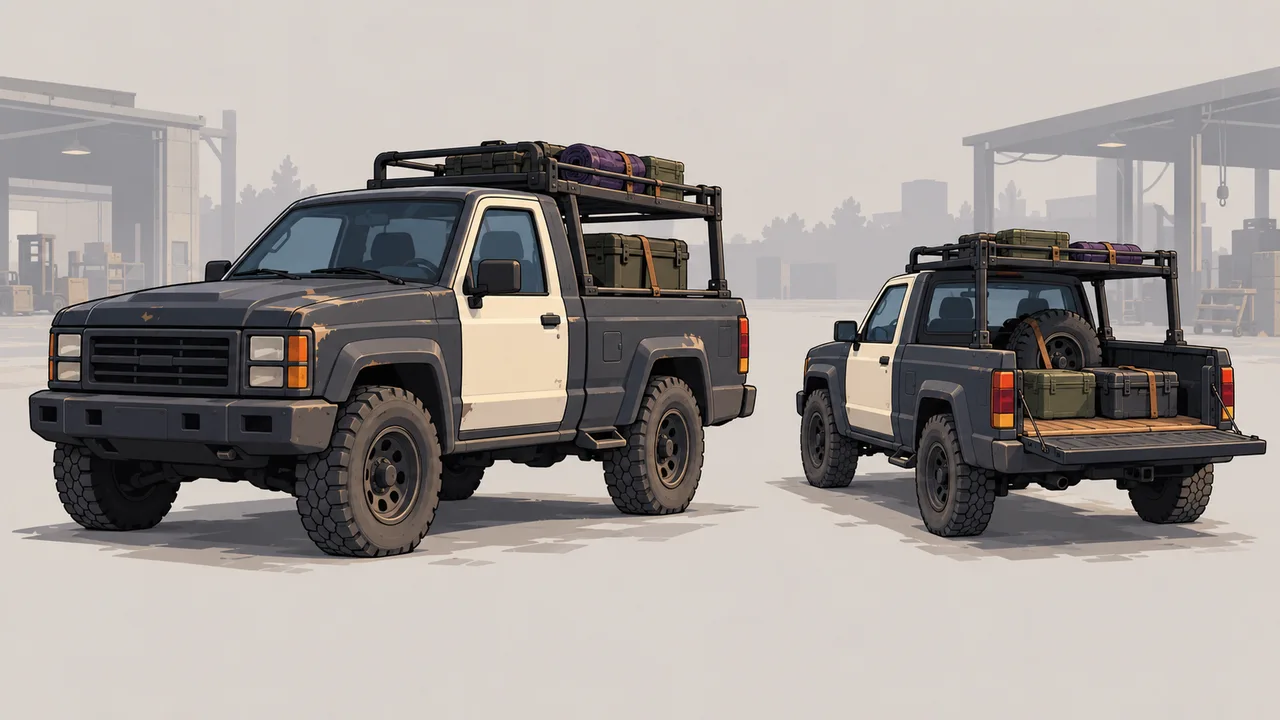
The Muleback U1 is a reclaimed utility pickup used for mixed salvage and delivery work. Its open bed can carry recovered equipment, protected cases or a restrained servo sled. A charcoal body and replacement ivory driver door identify this familiar city model. Lancers value the flexibility, but the size of the return load still limits which contracts they can accept.
Vehicles
Latchkey V2
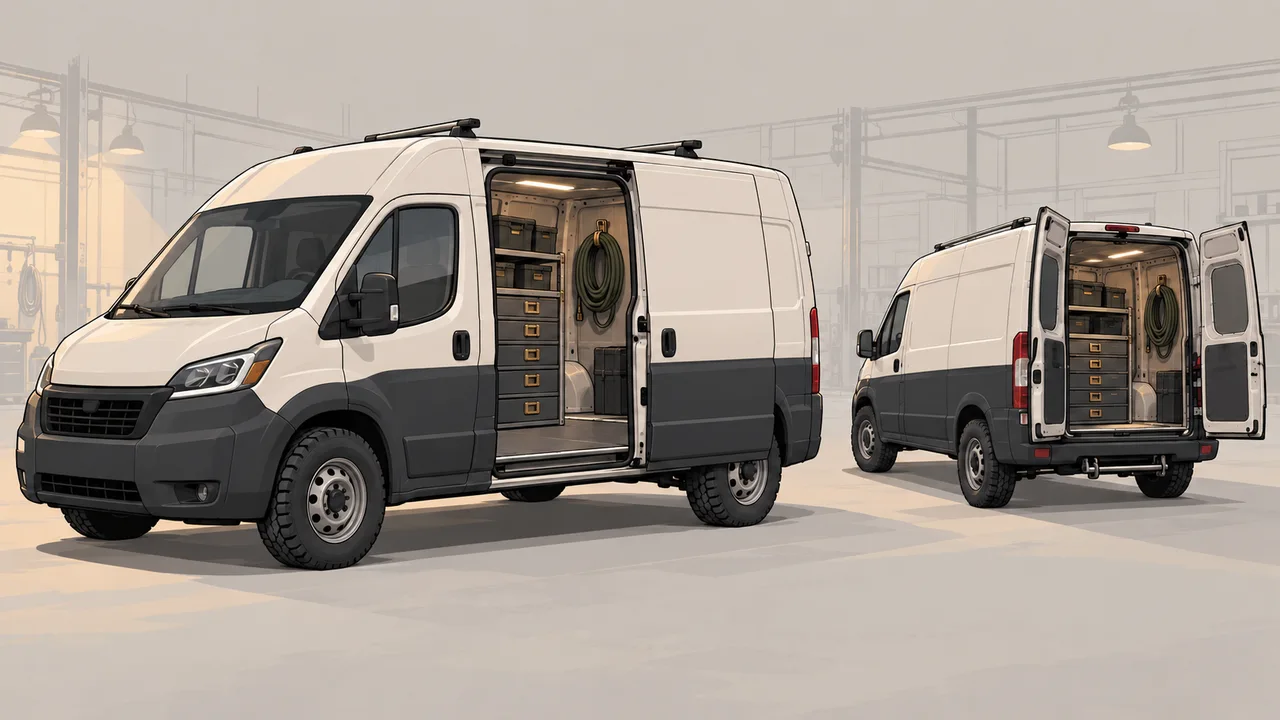
The Latchkey V2 is a reclaimed service van used to move tools and protected stock around the city and its nearby routes. Its enclosed load space keeps equipment out of the weather and gives specialists room for organized cases. A service business can send a person with the parts needed for a job instead of requiring every customer to bring equipment into the shop.
Vehicles
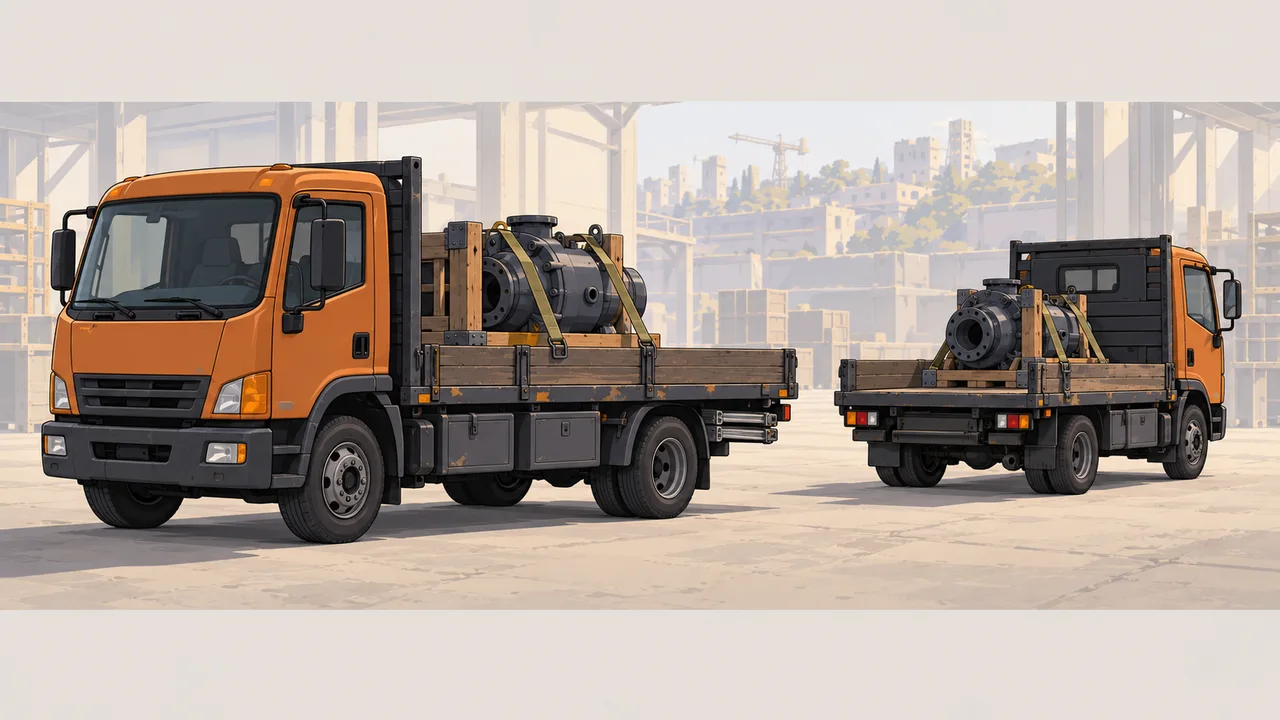
Trestle H3
The Trestle H3 is a recovery flatbed used for loads that need more space and handling capacity than a pickup. A copper cab and open working bed make it recognizable around the city's workshops and installation sites. It moves pumps, restrained glazing and other heavy recoveries. Arranging one can make a larger contract possible, provided the site has a usable loading route.
Vehicles
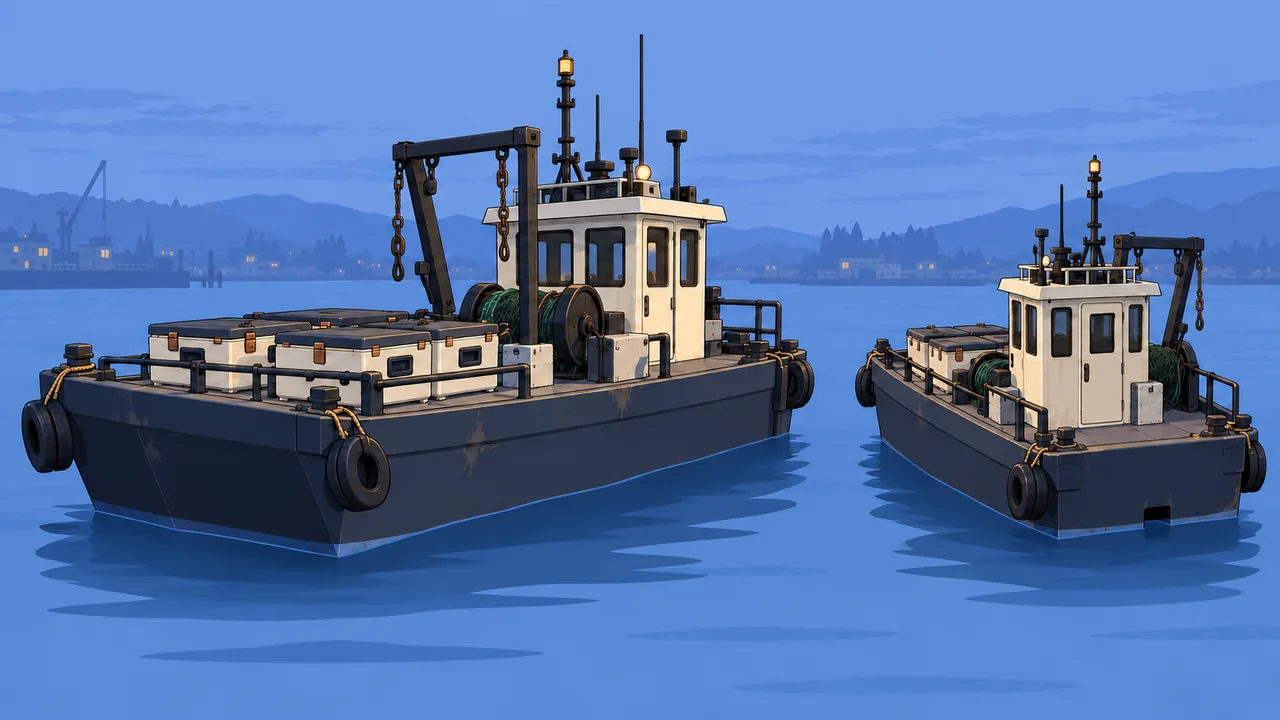
Keelmark K1
The Keelmark K1 is a working river boat used for local fishing, deliveries and suitable recovery loads. Its broad dark hull and small ivory wheelhouse at the stern provide a clear working deck. It gives the city access to places that may be difficult to reach by damaged roads. A usable landing and safe handling space are still needed at either end.
Vehicles
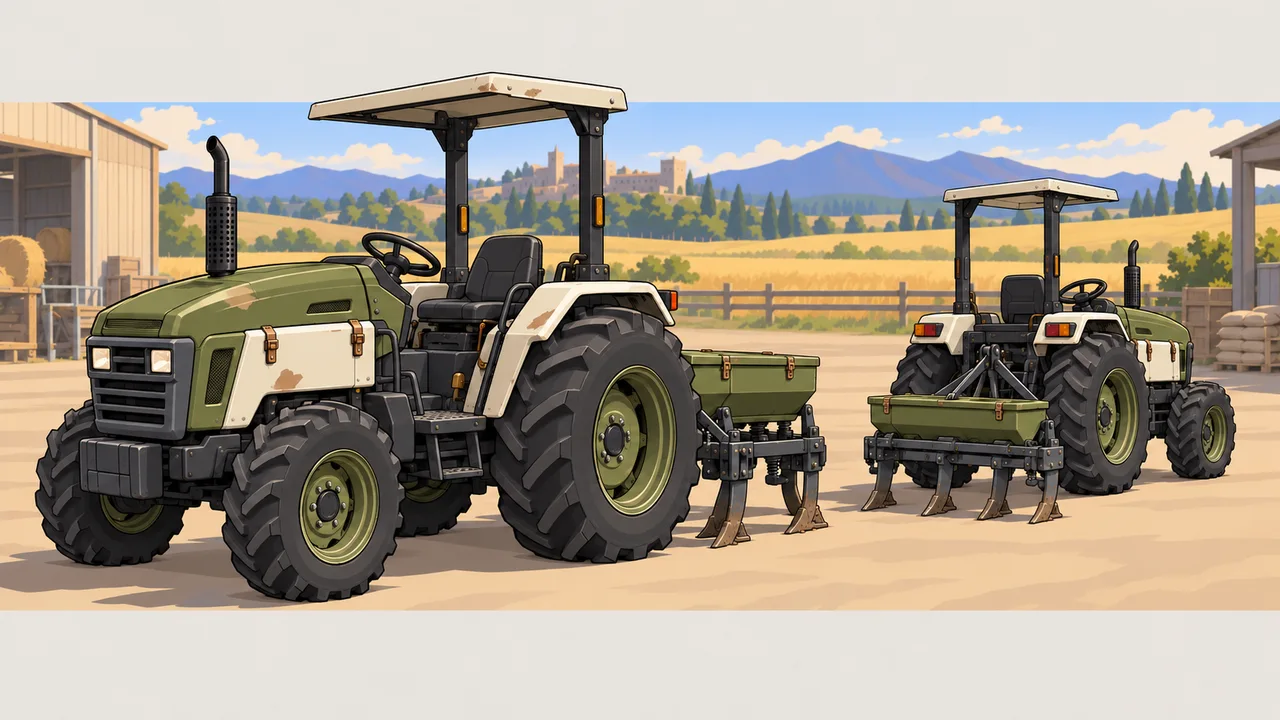
Bracken A1
The Bracken A1 is a compact farm utility tractor used around the city's growing areas. Its olive-and-ivory body rides on larger rear tires and smaller front tires beneath an overhead rollover frame. Interchangeable implements let growers use the same vehicle for different jobs. Keeping those attachments serviceable can be more practical than recovering a separate machine for every task.
Salvage
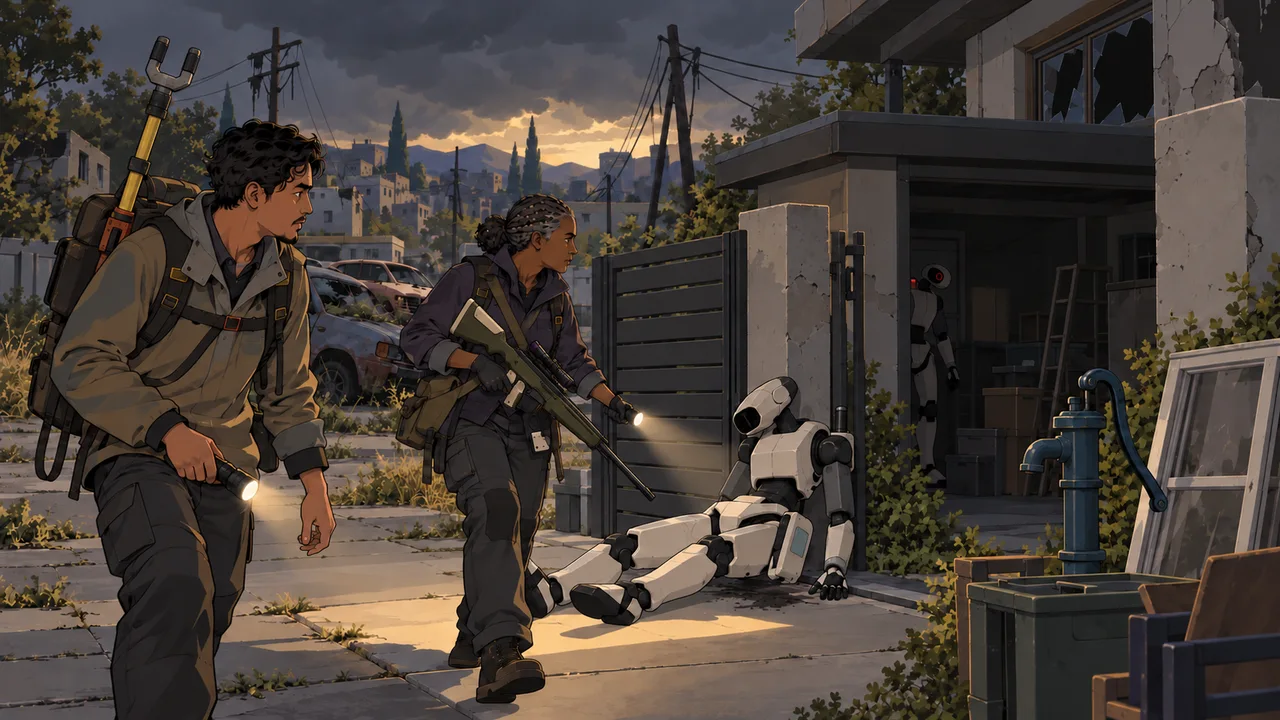
Outerlands Neighborhoods
The Outerlands include residential areas that the city has not reclaimed. Houses and garages can contain useful windows, tools, clothing and equipment alongside wrecked vehicles and damaged servos. Some buildings are still largely intact. Others have become unsafe through damage and neglect. Lancers return to these neighborhoods because ordinary recovered goods can have immediate buyers in the city.